
For Egypt's Liberals, Noise Doesn't Equal Power
Published June 28, 2013 • Read time: 5m
On the face of it, the winds should have been favorable for Egyptian President Mohamed Mursi.
After kings and military dictators, he was Egypt’s first democratically elected president. He prevailed at the polls a year ago by a very narrow margin, with almost 52 percent of the vote in a runoff. It had not been the happiest of choices. The young men and women of Tahrir Square who had brought down the old dictatorship had been disinherited; their revolution, they asserted, had been hijacked.
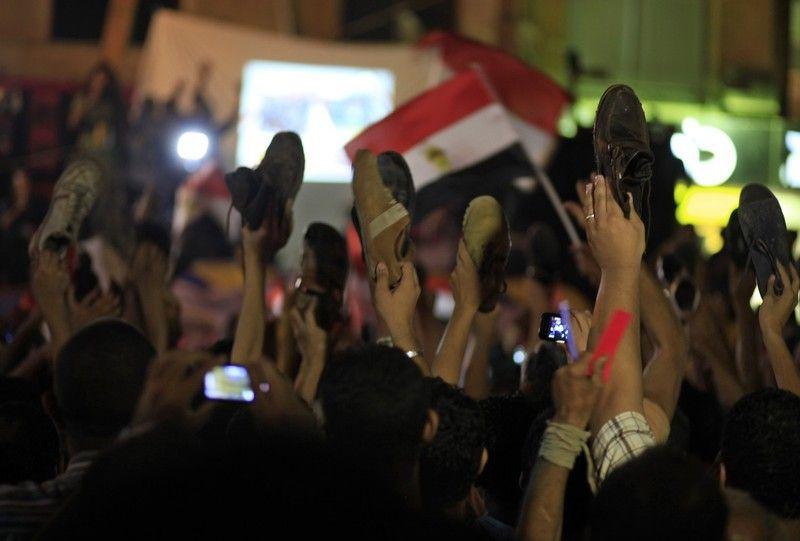
Now, after a tumultuous year, Mursi’s critics have called for a national strike June 30 that is meant to drive him from power. After the last pharaoh -- the label given Hosni Mubarak - - social peace has not come to Egypt.
The liberal-secular coalition seeking the general strike isn’t blameless. Its leaders, known as the National Salvation Front, have feuded among themselves. In the presidential election last year, they failed to unite behind a single candidate. They set up that miserable choice between the old regime and Mursi, the Muslim Brotherhood functionary.
A colorless, uninspiring man, Mohamed Mursi emerged from the history and culture of the Brotherhood. Born to peasant poverty in 1951, he went on to college for a degree in engineering, a gift from the open educational system of Egypt’s Free Officers Movement in the 1950s. In due course, he made his way to the U.S. and secured a doctorate at the University of Southern California. He wasn’t eager to leave: He had lined up a teaching stint at California State University at Northridge.
Nuclear Jihad: The Threats Are Inside Our Tent
Israel's "Sorrow of the Left"
Signs of Progress Against Extremists in Syria
The World Is Getting Worse, But This Time America Won't Save It
Biding Time
He wasn’t unique in his journey. Engineers and physicians swell the ranks of the Brotherhood, and long sojourns abroad aren’t exceptional. Devastated by the secular dictatorship of Gamal Abdul Nasser in 1954, the Brotherhood was forced into the shadows and into exile.
The Brotherhood was willing to bide its time. It wanted no repetition of the terror and political prisons it had known in the 1950s and 1960s. Above all, it wanted no confrontation with the army. Its ideologues never gave up on an alliance with the officer corps. Say what you will about the Brotherhood, it wasn’t in the least a revolutionary organization.
The Brotherhood’s stock in trade was conspiracy and a willingness to dodge mighty storms. It had waited out the protests of Tahrir Square. Those 18 magical days in 2011 that captivated outsiders and gave back Egyptians a measure of political efficacy and dignity were the work of secular liberals, Christian Copts, young men and those daring women who defied custom and tradition to come out in the public square.
Yet the Brotherhood had more than eight decades of political experience behind it. The military dictatorship had atomized the feeble liberals, leaving them unprepared for the contest over the new order. Like liberals elsewhere in hard, illiberal places, they were sure they embodied their country’s spirit.
They were trounced by the Brotherhood and the hardline Salafis in the first parliamentary elections; the judiciary, a bastion of the old order, stepped in and dissolved the parliament. The democrats didn’t own up to the truth: While Egypt has a sophisticated intellectual elite, a modernist camp, and Europe isn’t too far away, it is a poor country with a high illiteracy rate and a population that the Mubarak dictatorship had been content to leave to darkness and the rule of superstition.
In the best of worlds, the Brotherhood would have been willing to tread carefully and to acknowledge the narrow mandate it had secured with Mursi’s election. But a paranoid movement that ached for power wouldn’t show restraint. The Brotherhood lived by a majoritarian logic. Mursi was its frontman. It had a political bureau and a supreme guide.
Divided Country
The Brotherhood was contemptuous of the liberals and wary of the army. They were keen to preempt the judiciary and to drape their rule in legalistic colors. When Mursi issued an odd “constitutional declaration” in November 2012 that put his decrees beyond judicial review, his secular opponents howled in protest. He stepped back, then pushed a draft constitution through an Islamist-dominated assembly, which overwhelmingly approved it. Egyptians were keen to find a way out of the chaos and the lawlessness.
Egypt is intensely divided. The Brotherhood had the mantle of electoral legitimacy, yet millions were unalterably opposed to its drab reign. When Mursi declared a curfew in December in the cities of Port Said, Suez and Ismailia, people came out into the streets to sing and dance and play soccer in the night.
The country had become ungovernable: No one, save for the most strident reactionaries, wanted the restoration of the old order, but Egyptians were coming to terms with the difficulties of arriving at a workable national compact. The contempt shown Mursi by his secular detractors is as uncompromising as the assertions by so many Brotherhood preachers that it is impermissible -- really, a religious sin -- to advocate his ouster from power.
The protests are a desperate throw of the dice. They offer no deliverance: Mursi will not cede power. The suspicion mounts that his rivals are hoping the military will step in and sack the Brotherhood. Mubarak, who has been coming to his trial on a gurney, must have allowed himself a thought or two about the wisdom and the safety of the way he ruled.
This article is reprinted with permission from the Hoover Institution.
Democrats Won the Midterms. Common Sense Won, Too
Jordanne Kemper • RealClearPolitics
The 120th Congress Shapes Up
Carolina Lumetta • RealClearPolitics
Flooding GOP Primaries With Democrats
Robert Natelson • RealClearPolitics
Washington Keeps Rewarding Oracle—Veterans Keep Paying the Price
Darin Gaub • RealClearPolitics
The Seeds of Unrestricted Warfare
John Teichert • RealClearPolitics
The Primary System Is Losing the Next Generation
Sean Trende • RealClearPolitics
RCP Today
Top stories on RealClearPolitics
The Takeaway
Polling intelligence and analysis delivered to your inbox
World News
Featuring the latest world news
Policy
Featuring the latest policy news
Support Our Mission
As part of RealClearPolitics, authors aim to provide balanced, non-partisan analysis by presenting top reporting and commentary from all sides of the political spectrum.
Trusted by policymakers and citizens alike since 2000