Election Conspiracies Voter Rolls
Voter Rolls Like They Oughta Be
COMMENTARY
Published Feb. 19, 2025 • Read time: 3m
Why do we tolerate purposeful government incompetence? Especially when it comes to our voter registration rolls – the lists we use to make sure only qualified voters cast ballots in an election.
These rolls are bloated with ineligible voters, only periodically updated, and opaque to the public.
What if our bank records were like that? How long would that last before we’d spill out into the streets?
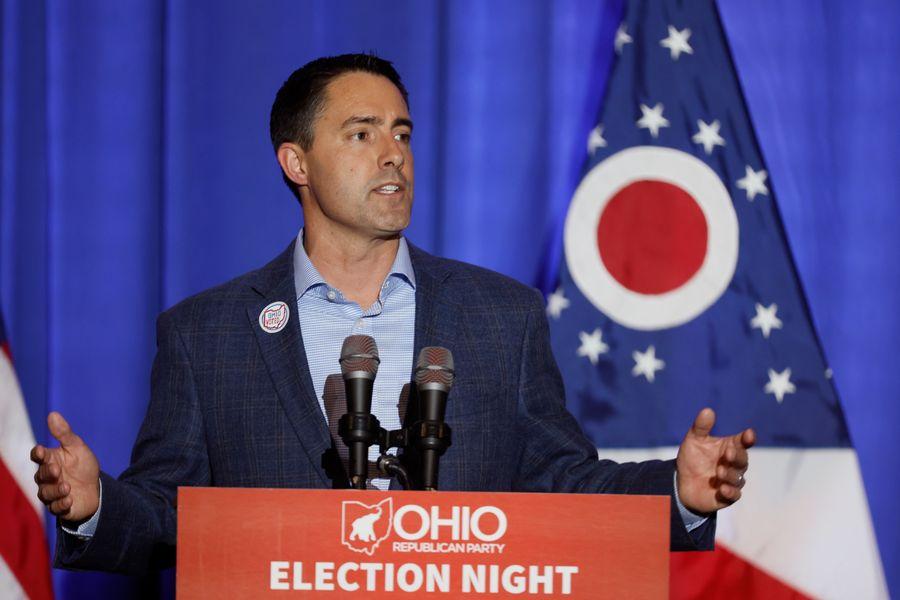
There’s one state official who’s trying to change that. He’s Ohio Secretary of State Frank LaRose, who announced recently he’d make available to the public daily snapshots of the voter rolls to keep up with additions and subtractions to the list. That’s a great reform. LaRose has been ahead of most state election officials, passing a series of reforms that puts Ohio on the leading edge of election transparency.
While LaRose is on the right track, there’s still a long way to go. Our vision at the Voter Reference Foundation is to have all the rolls up to date at all times in an easily consumed format. That was our idea when we created VoteRef.com in 2021, the first attempt ever in America to publish voter rolls in all 50 states.
We understand – as do LaRose and many election experts – that fixing the voter rolls is the lynchpin for clean elections. It makes sense – in order to conduct an election, you need an accurate, up-to-date registration list of eligible voters to start. Any bogus name on the list, including dead voters or those who have moved away, is an open invitation for vote fraud. Those who oppose clean, accurate voter rolls are people not concerned with election integrity.
Gavin Newsom's Misguided Redistricting Initiative
A Warning Against the Overuse of Sanctions
Open The Books on the California State Checkbook
Senate Passes Bill Addressing Heroin, Opioid Crisis
We have made tremendous progress, but some states are more committed to hiding their voting records than exposing them to public scrutiny. More than a dozen either ban their publication or severely hamstring a taxpayer’s ability to examine them. Most of those states are run by Democrats. One, New Mexico, sued us in federal court and referred us for criminal investigation for publishing them. A federal judge agreed with us that we had the legal right to publish the rolls.
Another obstacle is that states charge lots of money for access to the rolls and don’t update them in real-time. We are doing our best to work around these limitations. State officials don’t seem to understand that taxpayers pay for election administration and, under federal law, have a right to examine the records. These are our records, not theirs.
The new Trump administration in Washington is certainly attuned to the election integrity crisis in America. Large swaths of our population lack confidence that elections are free, fair, and accurate. We must change that, and now is the time.
We hope Frank LaRose’s actions in Ohio will be the spark that convinces states to open up their voting records more fully to the public. Our republic cannot tolerate a sloppy and inaccurate government that gives an opening to the corruption of our elections.
Let’s get moving.

A RealClear Thanksgiving: Investing in a Better Future
David DesRosiers • RealClearPolitics
Trump’s Newsom Problem: Antagonist-in-Chief
Carolina Lumetta • RealClearPolitics
America’s Free Spirit
John Maxwell Hamilton • RealClearPolitics
The GOP Majority Should Go Out in Glory
Daniel McCarthy • RealClearPolitics
Republican Majorities Could Return Sooner Than Expected
J.T. Young • RealClearPolitics
The Danger Before the Attack
Leslie J. Sullivan • RealClearPolitics
RCP Today
Top stories on RealClearPolitics
The Takeaway
Polling intelligence and analysis delivered to your inbox
World News
Featuring the latest world news
Policy
Featuring the latest policy news
Support Our Mission
As part of RealClearPolitics, authors aim to provide balanced, non-partisan analysis by presenting top reporting and commentary from all sides of the political spectrum.
Trusted by policymakers and citizens alike since 2000