
Spending Bill Battles, Alliances: A Preview of New Congress?
Published Dec. 12, 2014 • Read time: 5m
Join the Conversation
0This week’s dramatic fight to avoid a government shutdown is perhaps a fitting end to a session of Congress defined by restiveness and rebellion, where brinksmanship was par for the legislative course.
In such an environment, the expected passage of a spending bill to keep government running through the fiscal year instead of the short-term increments to which Congress has been accustomed to passing, is laudable. However flawed, in presentation and in substance, the measure contains actual policy and appropriations, and would stave off at least one big fiscal battle until next fall.
But this ending also sets up an interesting and revealing start to the new Congress that will gavel in next month, one that might be marked by divisions on the left. This week pitted President Obama, John Boehner and Harry Reid on one side and Nancy Pelosi and other agitated liberals on the other. It’s a universe in which Elizabeth Warren’s tactics managed to garner praise from the right.
The spending fight exposed the coming state of play. Republicans, now charged with legislating, will be interested in picking up Democratic votes on bills, while being cognizant of a vocal conservative faction eager for the party to capitalize on its majority and handicap the president. Though diminished in number, a more liberal Democratic caucus is trying to prove its relevancy and exert leverage, while the party overall is searching for its soul after consequential election losses. The White House is trying to keep its head up.
Gavin Newsom's Misguided Redistricting Initiative
A Warning Against the Overuse of Sanctions
Open The Books on the California State Checkbook
Senate Passes Bill Addressing Heroin, Opioid Crisis
Big-ticket items await this new Congress and White House, including immigration reforms, the health care law, tax reforms, and climate and energy policy. Both sides are claiming a focus on jobs and the economy. And both sides will be gearing up for an open presidential contest in 2016, which leaves little time for legislating.
House Speaker John Boehner sold the $1.1 trillion spending bill as a way to hold Obama accountable for the executive action on immigration: The measure extends funding for the Department of Homeland Security only through the end of February, which Republicans say will enable them to extract concessions or build in mechanisms for weakening the order.
That selling point didn’t necessarily win over conservatives who wanted to put pressure on the president now -- 67 Republican defected. Still, the GOP was able to peel off 57 Democrats at the end of an eventful day focused on a rift between the president and his party.
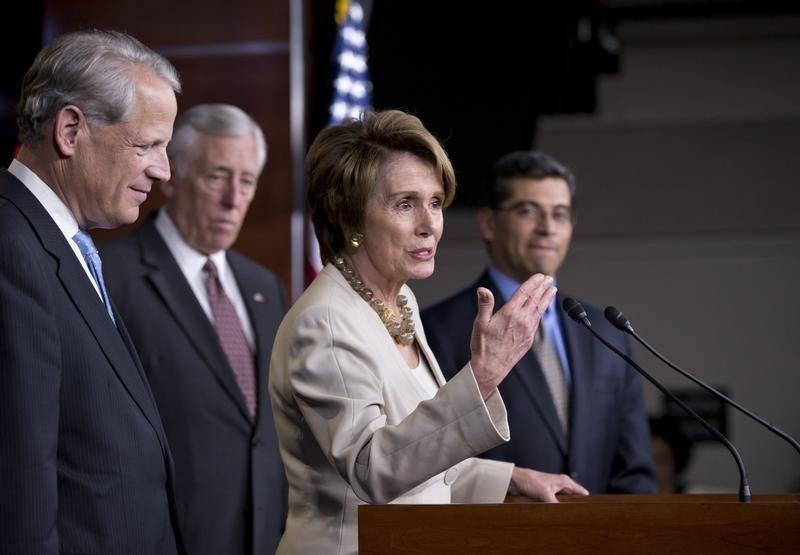
The vote divided Democratic leadership, with Pelosi vehemently opposed to the bill because of a provision that would roll back a financial reform law provision. The White House, hoping to avoid a shutdown and an even tougher bill next year, backed the measure and desperately courted Democrats. The president’s chief of staff was dispatched to Capitol Hill to meet with party members -- who weren’t shy about calling out the White House. The tension underscored the president’s well-documented lack of outreach to members of his own party, but also revealed a more vocal liberal wing, feeling frustrated and unafraid, and hoping to mark its turf for the next Congress, when they worry Obama might be cutting deals with Republicans on various items.
In a letter to her Democratic colleagues Friday, Pelosi tried to spin success for her caucus: “However Members voted, a unity of purpose and a clarity of message came from our House Democratic Caucus.” She then added that Democrats hope to approach legislation next year in a bipartisan way, “but stand ready to sustain the President’s veto when necessary.”
On Friday, White House Spokesman Josh Earnest downplayed the situation between the House minority leader and the president, calling it “a difference over tactics, not over principle.”
Earnest said the bill should be considered a win for Democrats because it didn’t touch the health care law and Republicans were unable to block Obama’s immigration order, among other things.
For his part, the president said Friday that “had I been able to draft my own legislation, get it passed without any Republican votes, I suspect it would be slightly different. That is not the circumstance we find ourselves in, and I think what the American people very much are looking for is responsible governance and the willingness to compromise."
Still, the showdown this week has tested the president’s political capital with his own caucus, one that is now emboldened by the things Elizabeth Warren is talking about.
The Massachusetts senator led the charge against the bill’s banking provision, urging her colleagues to vote against it and pressure Republicans to strip the item from the spending measure. In a floor speech Thursday, as the House was plotting its steps, Warren characterized support for the bill as a vote for Wall Street. Pelosi and other House Democrats called the measure “Boehner’s Bank Bailout.”
Warren’s tactics have been compared to those of Republican Sen. Ted Cruz, who opposes the spending measure because he believes it doesn’t do enough to weaken the president’s immigration order. Oddly, Cruz and Warren are on the same side this time around, albeit for different reasons. It is unclear whether they will try to jam the bill in the upper chamber, which is expected to vote soon. On Friday, the House passed another short-term extension, giving the Senate more time to take up the bill, if needed.
Warren is now a member of the Senate’s Democratic leadership team. Harry Reid, the soon-to-be minority leader, appointed her to the post as a liaison to the party’s progressive wing. On this bill, she and the leader have a difference of opinion.
On the floor on Friday, Reid urged swift passage of the funding legislation. The measure is far from perfect, he said, but it provides the best option. “It’s a compromise,” he said. “Legislation is the art of compromise.”
Democrats Won the Midterms. Common Sense Won, Too
Jordanne Kemper • RealClearPolitics
The 120th Congress Shapes Up
Carolina Lumetta • RealClearPolitics
Flooding GOP Primaries With Democrats
Robert Natelson • RealClearPolitics
Washington Keeps Rewarding Oracle—Veterans Keep Paying the Price
Darin Gaub • RealClearPolitics
The Seeds of Unrestricted Warfare
John Teichert • RealClearPolitics
The Primary System Is Losing the Next Generation
Sean Trende • RealClearPolitics
RCP Today
Top stories on RealClearPolitics
The Takeaway
Polling intelligence and analysis delivered to your inbox
World News
Featuring the latest world news
Policy
Featuring the latest policy news
Support Our Mission
As part of RealClearPolitics, authors aim to provide balanced, non-partisan analysis by presenting top reporting and commentary from all sides of the political spectrum.
Trusted by policymakers and citizens alike since 2000