
Legislating in an Election Year: A Look at History
COMMENTARY
Published Dec. 29, 2021 • Read time: 5m
Sen. Joe Manchin’s declaration that he could not support President Biden’s Build Back Better legislation in its current form and that Congress should start over again has been widely interpreted as the death knell for the measure. There are substantive reasons to believe this view might be correct; what would make the bill acceptable to the West Virginia Democrat might well make it unacceptable to the left wing of his party.
However, many analysts across the political spectrum have also suggested that BBB is dead because it has run out of time. Congress, the theory goes, is simply incapable of passing important legislation in an election year. This view deserves a second look.
Historically, members of Congress have certainly not shown themselves averse to hunkering down — some out of confidence, others out of fear, preferring to wait out the election. Skeptics can furnish many examples of legislative efforts that died on the vine, overcome by onrushing electoral politics. In 1994, congressional Democrats shelved Bill Clinton’s proposed health care reform, assuming they would be able to pick it up early the next year. (Fourteen years later, they finally had another opportunity.) More recently, immigration pushes by presidents George W. Bush and Donald Trump failed in 2006 and 2018, and election year politics killed any meaningful chance for compromise legislation on police reform in 2020.
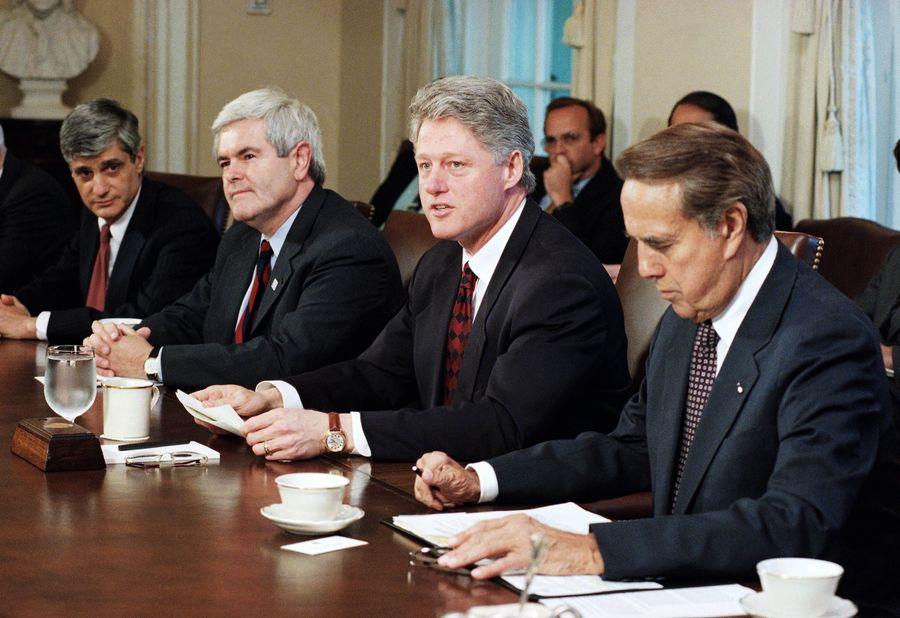
Nevertheless, one should not make assumptions about the prospects for a revival of BBB based purely on the calendar. One can compile a long list of important pieces of legislation that were enacted in both presidential and midterm election years. The most dramatic example may have come in 1996, when Bill Clinton and the Republican Congress reached an accord on welfare reform, enacting the most important federal reform in cash welfare since passage of the Social Security Act of 1935. In short order, Congress and the president also agreed to raise the minimum wage and ease the portability of health insurance. Despite the collapse of police reform, 2020 presented a mixed picture otherwise: the $2.3 trillion COVID relief CARES bill passed on a bipartisan basis in the spring, but a follow-up bill in the fall was snarled in maneuvering until after the election.
Gavin Newsom's Misguided Redistricting Initiative
A Warning Against the Overuse of Sanctions
Open The Books on the California State Checkbook
Senate Passes Bill Addressing Heroin, Opioid Crisis
Midterm election years, more directly relevant to the prospective situation in 2022, also offer a lengthy list of legislative accomplishments over the last 4½ decades. (I am excluding bills passed by an opposition Congress to highlight wedge issues and provoke a presidential veto.) These include:
- 1978: Congress passed and Jimmy Carter signed the Steiger Amendment cutting the tax on capital gains nearly in half. Carter was initially opposed, but the bill had broad bipartisan support. The Steiger Amendment, in concert with California’s Proposition 13 that same year, is widely seen as the onset of the “Tax Revolt” that ultimately led to Ronald Reagan’s 1981 individual tax cuts.
- 1982: Now facing unexpectedly large federal deficits, Congress passed the Tax Equity and Fiscal Responsibility Act. Enacted by a Democratic House and a Republican Senate and signed reluctantly by Reagan, TEFRA was one of the largest tax increases in U.S. history.
- 1986: Signed by Reagan (this time enthusiastically), the Tax Reform Act was the result of an intricate legislative dance between Republican Senate, Democratic House, the White House, and the Treasury Department. The legislation produced the most extensive reform of the income tax since 1916, reducing 14 tax brackets to two, reducing the top rate from 50% to 28%, eliminating scores of deductions, and taking 4 million working poor off the tax rolls.
- 1990: The Omnibus Budget Reconciliation Act was a major deficit reduction bill. It included a major tax increase, violating George H.W. Bush’s “No new taxes” campaign pledge, as well as the Budget Enforcement Act establishing a set of spending caps enforced by automatic spending cuts. The 1990 OBRA was passed less than a month before Election Day.
- 1994: While Bill Clinton’s health care reform bill was pulled from consideration, a major federal crime bill was enacted over the summer despite the opposition of both the National Rifle Association and the Congressional Black Caucus. In the House, though most support came from Democrats, Clinton relied on 46 Republican votes to pull the bill over the finish line.
- 2010: Slogging through the legislative process in fits and starts, the Affordable Care Act was enacted in March.
Altogether since 1978, midterm election years have seen two fundamental reform measures (the 1986 tax reform and the ACA), two large tax increases (1982 and 1990), and a couple of other highly significant policy changes.
The first lesson from this recitation is that legislating in an election year is possible. However, it has historically required either large partisan majorities or a strong perception of common interest that crossed party lines.
The second lesson is that, as party lines have hardened, such moments have become unusual. Every midterm election year from 1978 through 1994 saw an example. There has only been one obvious case since then, and it consisted of a party-line vote in a Democratic-dominated Congress (2010).
A third lesson is that parties that seek to win legislative victories in midterm years by leveraging their majorities to maximum advantage should be careful what they wish for. Popular backlash against the 2010 ACA contributed to the biggest midterm election wipeout in the House since 1938.
If history is any guide, supporters of the BBB should not despair quite yet, and opponents should not assume that all is well, just because the calendar is about to turn. Some significantly diminished compromise might yet emerge, if progressives are willing to accept it and if Joe Manchin comes to perceive any electoral gain for his part. (What could cause him to do so is far from clear at this point.) But it is hanging by a thread, and the conditions that have propelled major election-year legislative action in the past do not seem to be present.

Democrats Won the Midterms. Common Sense Won, Too
Jordanne Kemper • RealClearPolitics
The 120th Congress Shapes Up
Carolina Lumetta • RealClearPolitics
Flooding GOP Primaries With Democrats
Robert Natelson • RealClearPolitics
Washington Keeps Rewarding Oracle—Veterans Keep Paying the Price
Darin Gaub • RealClearPolitics
The Seeds of Unrestricted Warfare
John Teichert • RealClearPolitics
The Primary System Is Losing the Next Generation
Sean Trende • RealClearPolitics
RCP Today
Top stories on RealClearPolitics
The Takeaway
Polling intelligence and analysis delivered to your inbox
World News
Featuring the latest world news
Policy
Featuring the latest policy news
Support Our Mission
As part of RealClearPolitics, authors aim to provide balanced, non-partisan analysis by presenting top reporting and commentary from all sides of the political spectrum.
Trusted by policymakers and citizens alike since 2000