
Congress Tax Cuts
Is It One Big Beautiful Bill or One Big Mess? Both
COMMENTARY
Published July 10, 2025 • Read time: 4m
RALEIGH, N.C. — How should the American right view the passage of President Trump’s signature tax and budget law? Is it really, as Republicans came to call it, One Big Beautiful Bill? Or is it one big mess?
Many conservatives are praising provisions that retain earlier tax reductions, encourage business investment, expand school choice, strengthen defense and public safety, and initiate needed reforms of Medicaid, nutrition assistance, and student-loan subsidies. Other conservatives are criticizing the legislation for exempting other entitlement programs from reform, widening future deficits by trillions of dollars, slow-walking repeal of former President Biden’s faddish energy policies, and junking up the tax code with gimmicks that neither make it fairer nor promote economic growth and family formation.
After decades in the movement as a writer, think tank CEO, and now co-leader of the Freedom Conservatism project, I find myself agreeing with both groups. Undeniably big, the bill looks beautiful from some angles and hideous from others – a chimera hatched not from judicious compromise but from brinksmanship.
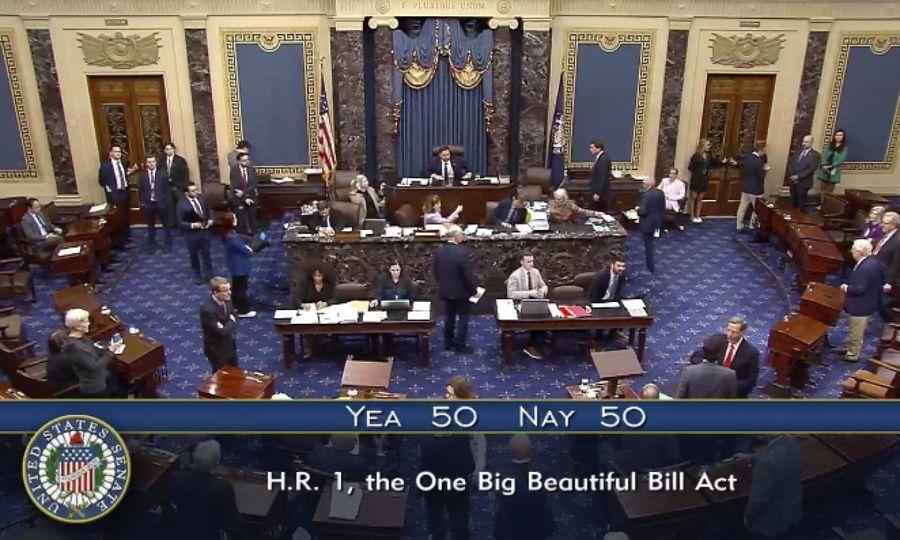
It began in 2017 when Republicans enacted on a party-line vote “temporary” tax cuts that no future Congress could allow to expire without dire economic and electoral consequences. Knowing this, lawmakers and the Trump administration tacked onto the 2025 bill a wide range of other policies, some prudent, some foolish. The House version was more fiscally responsible than the Senate’s, but the latter only passed the chamber when Vice President JD Vance broke a tie. So, it was the Senate bill or nothing. Promised more budget cuts via future executive action, nearly all House conservatives played along.
Gavin Newsom's Misguided Redistricting Initiative
A Warning Against the Overuse of Sanctions
Open The Books on the California State Checkbook
Senate Passes Bill Addressing Heroin, Opioid Crisis
To be fair, the bill could have been far worse. Right-wing populists such as Steve Bannon and Oren Cass actually wanted to raise taxes on many American households and businesses, not reduce them, and objected even to slowing the growth of Medicaid spending. Fortunately, they lost the debate.
All’s well that ends well? Hardly. Our public finances remain a sorry mess. And over the coming months and years, attempts to implement the bill’s policy provisions will produce incessant conflict. You’ll find my fellow Freedom Conservatives on the frontlines of these battles in Washington and in state capitals – just as FreeCons helped craft and defend many of the provisions in question, such as eligibility changes for subsidized health plans and work requirements for public benefits.
Announced two years ago as a response to the rise of nationalist-populists such as Bannon, Cass, and Tucker Carlson, the Freedom Conservatism project is rebuilding an American right firmly committed to free enterprise, free trade, free speech, balanced budgets, decentralization, equal opportunity, and the rule of law.
Since we released the Freedom Conservatism Statement of Principles, more than 300 conservative leaders and activists have signed on. Some formerly served as governors, members of Congress, state legislators, mayors, White House and Capitol Hill staffers, party executives, veteran consultants, and other roles in government and politics. Others include leaders of America’s leading conservative nonprofits, right-leaning commentators for major networks and media outlets, business CEOs, top litigators, and conservative professors from such campuses as Stanford, Duke, Cornell, Princeton, Pepperdine, Grove City, and Hillsdale.
Through a committee process, we recently revised the FreeCon statement to highlight the indispensable role played by families, congregations, and other institutions of civil society in inculcating virtue and fostering community. We also observed that the right of all Americans to be free from the restrictions of arbitrary force derives from the laws of nature and nature’s God.
Our rivals on the right, calling themselves National Conservatives and other labels, see things quite differently. They reject our fiscal and regulatory agenda as “zombie Reaganism” and our commitment to localism and pluralism as evidence we “don’t know what time it is.”
In truth, the fight for American conservatism has just begun. My fellow FreeCons and I are celebrating the undeniable policy wins contained in the reconciliation bill while getting ready for the harder policy fights to come – with the progressive left, yes, but also with the nationalist-populist right. Neither offers realistic solutions to America’s greatest challenges. We do.

Jon Finer’s Old and Dangerous ‘New Approach’ to Israel
Peter Berkowitz • RealClearPolitics
The President Deserves Better
John Ullyot • RealClearPolitics
Congress Doesn’t Need Another Blame Game. It Needs To Find What’s Broken
Jarrod Bernstein • RealClearPolitics
Democrats Won the Midterms. Common Sense Won, Too
Jordanne Kemper • RealClearPolitics
The 120th Congress Shapes Up
Carolina Lumetta • RealClearPolitics
Flooding GOP Primaries With Democrats
Robert Natelson • RealClearPolitics
RCP Today
Top stories on RealClearPolitics
The Takeaway
Polling intelligence and analysis delivered to your inbox
World News
Featuring the latest world news
Policy
Featuring the latest policy news
Support Our Mission
As part of RealClearPolitics, authors aim to provide balanced, non-partisan analysis by presenting top reporting and commentary from all sides of the political spectrum.
Trusted by policymakers and citizens alike since 2000