
Musk Twitter Employees
Big Tech Look Ahead
ANALYSIS
Published Dec. 27, 2022 • Read time: 6m
A fortnight ago, political handicappers expected that if any legislation passed regulating Big Tech before the end of the 117th Congress, it would likely be safety and privacy language designed to protect minors. Supporters of the Children and Teens’ Online Privacy Protection Act, the Kids Online Safety Act, and the American Data Privacy and Protection Act were optimistic. But none of the three made it into the 4,000-page, $1.7 trillion year-end omnibus spending bill, the vehicle that had been seen as the best chance to get legislative language into law. The omnibus did, however, provide cover for some anti-trust language meant to keep Big Tech from getting bigger, including text of the Merger Filing Fee Modernization Act, the State Antitrust Enforcement Venue Act, and the Foreign Merger Subsidy Disclosure Act.
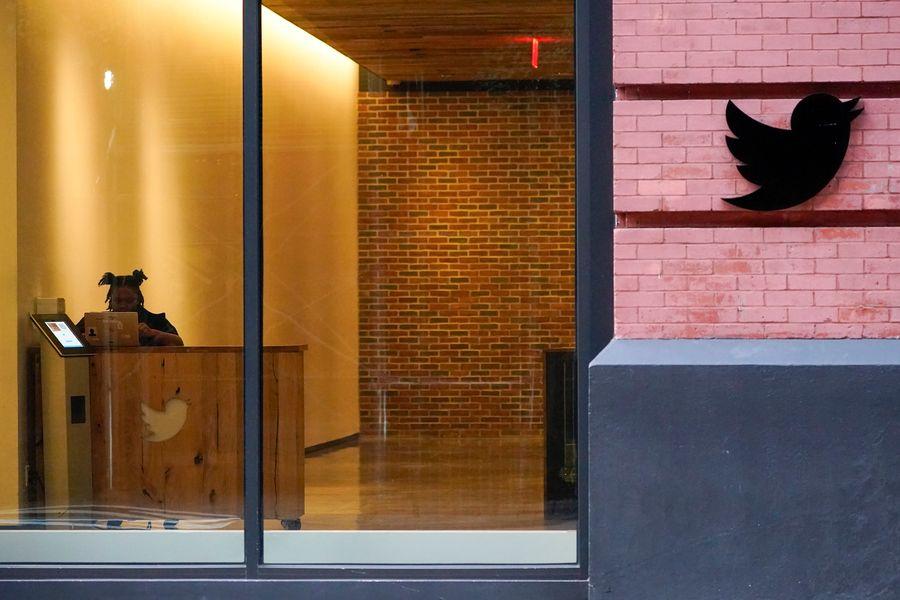
When the next Congress convenes, Big Tech will find itself facing fresh headwinds on Capitol Hill. Twitter will be in the dock before the House Judiciary Committee, of which Jim Jordan is expected to be chairman. The social media company will be asked about the many company documents that Twitter’s new owner, Elon Musk, has made public through releases to journalists opposed to censorship.
The first tranche of the “Twitter Files” detailed how the social media platform squelched information about Hunter Biden’s laptop. Later digital document dumps exposed the role of the FBI in directing Twitter to block the viral spread of conservative tweets.
“The Twitter Files are definitely going to lead to the House GOP launching investigations,” said Jon Schweppe, director of policy and government affairs at the American Principles Project. “James Comer plans to bring Big Tech executives named in the reports – Vijaya Gadde, Yoel Roth – before House Oversight.” Schweppe added that Jordan has similar plans for the House Judiciary Committee, and that other committee chairs might as well.
Gavin Newsom's Misguided Redistricting Initiative
A Warning Against the Overuse of Sanctions
Open The Books on the California State Checkbook
Senate Passes Bill Addressing Heroin, Opioid Crisis
The Senate is a different matter. With Democrats holding a majority and enjoying control of that body’s investigations, Musk can expect to find himself in front of senators critical of how he is handling Twitter, according to a Big Tech company lobbyist on the Hill. “Musk ignores them at his peril because Tesla and SpaceX are at the mercy of the government,” he told RealClearPolitics. To the extent that Twitter’s new owner comes to be seen as a conservative political provocateur, he and his businesses may find it harder to make deals with federal and local governments. That isn’t merely a question of federal and state tax incentives. Tesla enjoys many benefits from various levels of government that bolster sales. For example, as the company itself advertises: “Many states also offer non-cash incentives for electric vehicles, such as carpool lane access and free municipal parking.”
Schweppe hopes the Twitter affair “will finally spur action” – in particular, action on legislation to reform Section 230 of the Communications Decency Act of 1996. Section 230 is the outmoded feature of federal law that states flatly that ”interactive computer service(s)” are not to be legally regarded “as the publisher or speaker of any information provided by another information content provider.” It is this feature that shields online platforms from lawsuits stemming for the content posted by users.
Changes to Section 230 are being sought by both sides of the aisle. President Biden has declared he wants to revoke Section 230 because it allows Internet companies to propagate “falsehoods they know to be false.” Republicans want Section 230 rewritten so that large Internet platforms respect freedom of speech if they want to continue to be immune from libel suits for what is said on their platforms.
If there is a significant change in federal law governing Big Tech, the most likely is “some sort of reform to Section 230” says Matt Stoller, director of research at the American Economic Liberties Project.
Tech companies could also conceivably face anti-trust legislation in the next Congress, such as the bipartisan Open Apps Market Act and the Sen. Mike Lee-sponsored Competition and Transparency in Digital Advertising Act. Stoller told RCP there could be “Legislation to open up Apple and Google app stores, and legislation to address Google’s adtech business.” He said the most important Big Tech reforms taken up by the new Congress will be issues of market power.
But according to an advocate active in encouraging such bills, key House Republicans “have an aversion to anti-trust legislation.”
Tom Wheeler, a visiting fellow at the Brookings Institution and former chair of the FCC, told RCP that those looking for Big Tech reform in the United States should “lower their expectations regarding legislation.”
By contrast, Europe has not hesitated to wade in. Wheeler points to new regulations in Europe, rules being implemented as part of the EU’s Digital Markets Act and Digital Services Act. For example, in its European operations, Apple will no longer be able to keep third-party apps out of its app store. The European Union has stated its goal is to “comprehensively regulate the gatekeeper power of the largest digital companies.”
If the U.S. leaves a regulatory void, other countries may fill the space: “In an interconnected world, the de jure rules in one place become de facto elsewhere,” Wheeler said, especially if “the jurisdiction hasn’t acted.”
Mark Jamison, who teaches at the Warrington College of Business, rejects the idea that European rules will insinuate themselves into American commerce. Among the European regulations that some reformers hope will make their way across the Atlantic are net neutrality, search neutrality, and app store neutrality. These are “terrible ideas” and “innovation killers,” said Jamison, who is also a senior fellow at the American Enterprise Institute.
Big Tech may also find that its business with China has attracted a level of congressional and federal agency scrutiny that is only likely to increase. This month, the Commerce Department’s Bureau of Industry and Security placed Yangtze Memory Technologies on its Entity List, blacklisting the company and limiting its ability to acquire or use American technology.
Perhaps more significant than particular legislation or regulations, 2023 may be a year when the electorate comes to see Big Tech as an empowering tool, or simply as too powerful.

Jon Finer’s Old and Dangerous ‘New Approach’ to Israel
Peter Berkowitz • RealClearPolitics
The President Deserves Better
John Ullyot • RealClearPolitics
Congress Doesn’t Need Another Blame Game. It Needs To Find What’s Broken
Jarrod Bernstein • RealClearPolitics
Democrats Won the Midterms. Common Sense Won, Too
Jordanne Kemper • RealClearPolitics
The 120th Congress Shapes Up
Carolina Lumetta • RealClearPolitics
Flooding GOP Primaries With Democrats
Robert Natelson • RealClearPolitics
RCP Today
Top stories on RealClearPolitics
The Takeaway
Polling intelligence and analysis delivered to your inbox
World News
Featuring the latest world news
Policy
Featuring the latest policy news
Support Our Mission
As part of RealClearPolitics, authors aim to provide balanced, non-partisan analysis by presenting top reporting and commentary from all sides of the political spectrum.
Trusted by policymakers and citizens alike since 2000