
NERDWALLET
Lawmakers Can Help America's Restaurants Feed Economy
COMMENTARY
Published April 17, 2024 • Read time: 3m
The restaurant industry is the nation’s second-largest private employer – two out of three adults in this country have worked in it at some point in their lives. This includes many members of Congress, their families, and their constituents. There is a unifying power of America’s restaurants that calls for rare bipartisan action to enact policies that fuel our ability to serve and strengthen the nation’s economy.
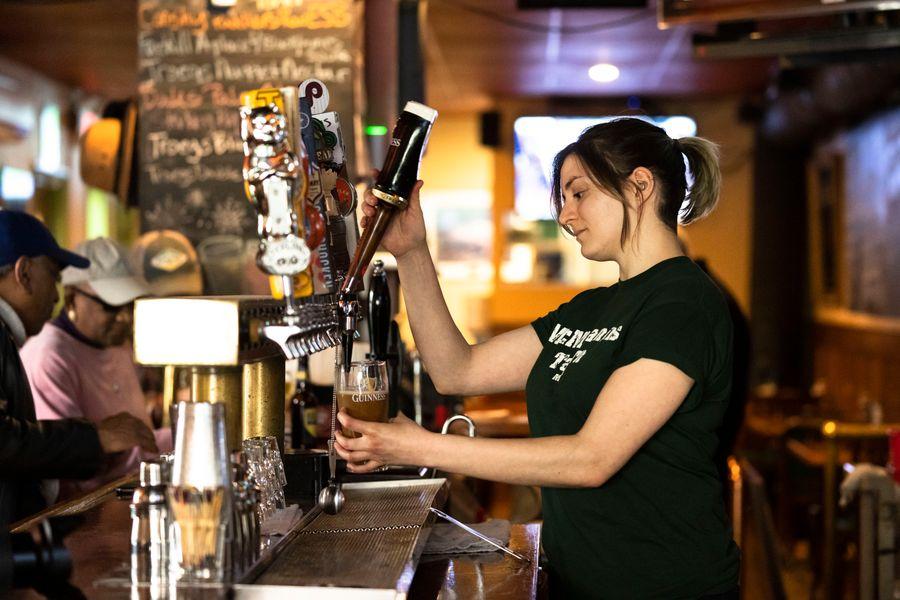
This week, almost 600 restaurant owners and operators are in Washington, D.C., sharing their personal stories. Many of these business owners started as wait staff, bartenders, or dishwashers before they became leaders in the industry. In college I waited tables at the local TGI Fridays, where I picked up skills that have served me in every professional position I’ve had through today. It’s been exciting to talk with members of Congress about the common-sense policies they can support that will stimulate growth for our industry and the economy.
There are three important areas where Congress can have an impact right now.
The biggest impact Congress could make for restaurant owners right now is passing the Credit Card Competition Act. Swipe fees are often the third-highest cost for a restaurant operator – behind food and labor – and lack of competition in the market has allowed these fees to tick up, costing business owners and consumers around $15 billion a year. The bipartisan CCCA would introduce competition in the market, bringing down costs for restaurant owners and diners. And we know consumers want this. According to a new survey, 74% of adults support legislation lowering credit card swipe fees for restaurant operators.
The Empty Promises of Trump and Sanders
Good News for Discouraged Workers
A Vote for Trump Is a Vote Against American Consumers
First Lady Honors Pioneering Female Air Force Officer
The second addresses where most workers are focused right now – their personal income. Thanks to the tip credit, the median take-home pay for a tipped server is over $27 an hour, and in some places, they can make $41 or more an hour. The tip credit compensation model has been a foundation of this industry for decades, and it’s one of the main reasons people seek out tipped restaurant positions like servers and bartenders. For most, a 9-to-5 job doesn’t have the same flexibility or the high take-home pay. Tipped incomes pay for college, buy homes and cars, fund travel, and more. Preserving the tip credit at the federal level will ensure these desired jobs remain available in our communities.
Finally, the Federal Trade Commission recently put a bull’s-eye on restaurant surcharges, unfairly sweeping them into its far-reaching “junk fee” rule. Common restaurant fees aren’t junk fees. They add value for additional services or greater conveniences diners choose, like large party fees. The FTC rule wouldn’t just change how prices are listed on a menu, but also force restaurant owners to fundamentally change how they operate. For many small business restaurant owners, the estimated cost of making the menu changes alone – nearly $5,000 according to the FTC – would be about 10% of what they make in a year. Congress still has time to help the FTC understand the consumer value in these common and understood fees.
Restaurants play a major role in most of our lives. From first jobs to graduation parties, weddings to anniversaries, restaurants draw us in and comfort us. With more than 15.5 million employees and sales forecast to exceed $1 trillion, the restaurant and food service industry powers the economy and provides opportunities for all. We look forward to partnering with lawmakers to champion the policies that will allow this industry – and our country – to thrive.
Support Our Mission
The Internet provides an endless stream of content. Not all of it is worth your time. That's why, every day, RealClearPolitics curates the most essential news and information—from all sides and across mediums. The links, videos, and podcasts curated here are the product of human judgment, not algorithms or AI. Please help power our mission of presenting a thoughtful, balanced public discourse through a tax-deductible donation.
Would you consider supporting us today?

Democrats Won the Midterms. Common Sense Won, Too
Jordanne Kemper • RealClearPolitics
The 120th Congress Shapes Up
Carolina Lumetta • RealClearPolitics
Flooding GOP Primaries With Democrats
Robert Natelson • RealClearPolitics
Washington Keeps Rewarding Oracle—Veterans Keep Paying the Price
Darin Gaub • RealClearPolitics
The Seeds of Unrestricted Warfare
John Teichert • RealClearPolitics
The Primary System Is Losing the Next Generation
Sean Trende • RealClearPolitics
RCP Today
Top stories on RealClearPolitics
The Takeaway
Polling intelligence and analysis delivered to your inbox
World News
Featuring the latest world news
Policy
Featuring the latest policy news
Support Our Mission
As part of RealClearPolitics, authors aim to provide balanced, non-partisan analysis by presenting top reporting and commentary from all sides of the political spectrum.
Trusted by policymakers and citizens alike since 2000