
Election 2025 NYC Mayor
A $20 Mistake: At-Risk Teens Will Pay for Cuomo's Wage Hike
COMMENTARY
Published June 3, 2025 • Read time: 4m
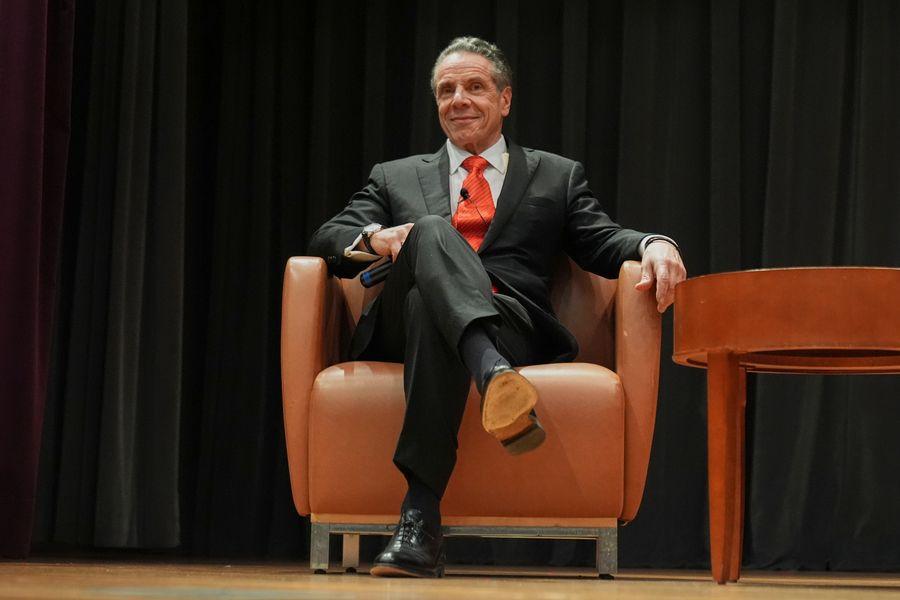
Former governor and current mayoral candidate Andrew Cuomo wants to raise New York City’s minimum wage to $20 by 2027. His political theatrics may benefit his poll numbers, but they’ll only make it harder for at-risk youth to find work. Given the undeniable link between youth delinquency and unemployment rates, New York should be making it easier – not harder – for young people to land a job.
Teenage crime rates are up in NYC. A New York Times report published in November showed that since 2018, New York saw a 25% increase in major crimes where a minor was arrested. Robberies and murders rose by 25% and 24%, respectively.
It’s not a coincidence that as local school attendance declines, crime rates among young people rise. A third of New York City public school kids were “chronically absent” last year – an astonishing 300,000 students. When students aren’t in school, they’re out making trouble. In February, a 14-year-old boy was stabbed to death at a Queens McDonald’s after a fight broke out among a large group of teenagers, presumably right after school. It’s due to disturbances like these that local restaurants and stores are banning school-age “patrons.”
Part-time employment is essential for keeping teenagers busy, reducing their risk of dropping out of school, and helping them to develop the skills their generation lacks. The success of gainful employment in keeping young people out of jail is well documented.
New York City’s Summer Youth Employment Program (SYEP) places New Yorkers aged 14 to 24 from underserved communities in various paid jobs. Participants were 23% less likely to be arrested for a felony and 38% less likely to be convicted of such a crime. A similar study in Chicago found that youths employed through summer employment were 43% less likely to be arrested for violent crimes.
The Empty Promises of Trump and Sanders
Good News for Discouraged Workers
A Vote for Trump Is a Vote Against American Consumers
First Lady Honors Pioneering Female Air Force Officer
One reason for this is that employed students are more engaged in school and enjoy greater upward mobility as a result. One study shows a correlation between part-time employment – specifically 20 hours or less – and a decreased risk of dropping out of high school. Research from the University of Virginia and Middle Tennessee State University shows that students with part-time engagements earned 20% more, six to nine years after graduating. This revelation can be partly explained by the work ethic and soft skills young workers cultivate while working.
City Hall understands this. That’s why, in fiscal year 2024, New York allocated $638 million to workforce programs, specifically its SYEP, which engages a record 100,000 young New Yorkers. Eric Adams even proposed making SYEP a year-round offering during his campaign for mayor.
But youth employment programs can only do so much when the city insists on repeatedly raising the minimum wage.
The minimum wage’s effect on youth employment is undeniable. A 10% increase in the minimum wage causes up to about a 11% and 4% decrease in employment among workers aged 15-19 and 20-24, respectively. One study by the University of Washington showed that after Seattle increased the minimum wage from $11 to $13 an hour, young workers saw a reduction in their hours, resulting in an income loss of $125 per month.
This year, NYC’s minimum wage increased 10% to $16.50 from $15 two years ago. Cuomo’s $20 minimum wage proposal adds insult to injury.
Still, he’s not the only one. Socialist mayoral candidate Zohran Mamdani proposed a $30 minimum wage by 2030.
While these candidates engage in political grandstanding, NYC’s adolescents are reeling from pandemic-era job losses.
Young men – the demographic most at risk for joining the criminal element – were particularly devastated by the pandemic. In 2019, the unemployment rate for young male New Yorkers aged 16 to 24 was 11.8%. The group’s unemployment rate remained stubbornly high at 23% two years after COVID-19 first swept the five boroughs.
New York’s at-risk youth see a City of Dreams but are divorced from it. They’re a train ride away from Brooklyn Heights townhouses and Midtown high-rises, but cannot take the first step toward living there. They hear about Jay-Z’s “Empire State of Mind” but are barred from cultivating it in the workforce. Amid their opportunity crisis, they find solace in Nas’ “N.Y. State of Mind” and eventually revere it – a damning negative feedback loop.

Jon Finer’s Old and Dangerous ‘New Approach’ to Israel
Peter Berkowitz • RealClearPolitics
The President Deserves Better
John Ullyot • RealClearPolitics
Congress Doesn’t Need Another Blame Game. It Needs To Find What’s Broken
Jarrod Bernstein • RealClearPolitics
Democrats Won the Midterms. Common Sense Won, Too
Jordanne Kemper • RealClearPolitics
The 120th Congress Shapes Up
Carolina Lumetta • RealClearPolitics
Flooding GOP Primaries With Democrats
Robert Natelson • RealClearPolitics
RCP Today
Top stories on RealClearPolitics
The Takeaway
Polling intelligence and analysis delivered to your inbox
World News
Featuring the latest world news
Policy
Featuring the latest policy news
Support Our Mission
As part of RealClearPolitics, authors aim to provide balanced, non-partisan analysis by presenting top reporting and commentary from all sides of the political spectrum.
Trusted by policymakers and citizens alike since 2000