AP Poll Economy
Tone-Deaf on Inflation: Elites, Deficit Spending and Climate Change
Published Dec. 10, 2021 • Read time: 7m
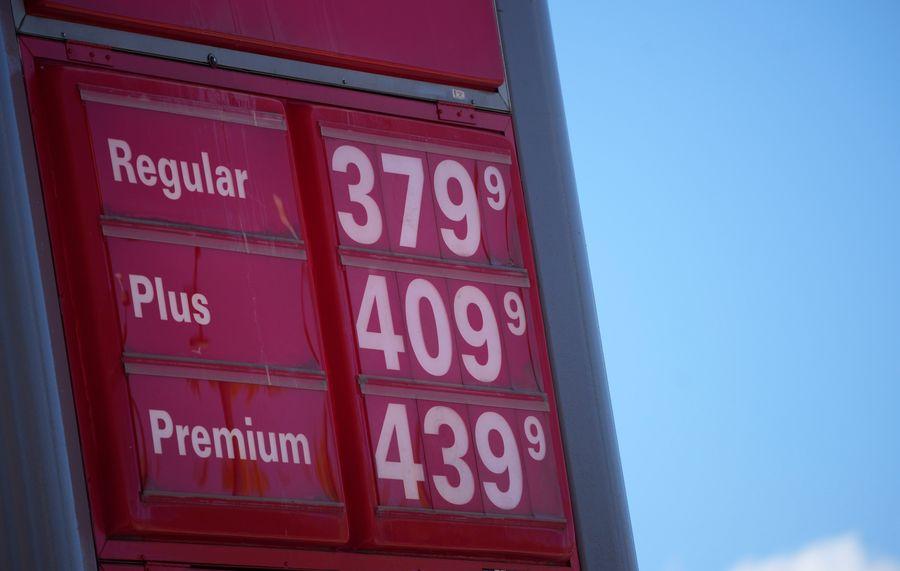
Like it or not, when it comes to inflation the word transitory started out as a forecast, then became a hope, and then turned out to be, with the Fed’s abandonment of the term last week, a punchline. With price levels rising at a faster pace than at any time since 1990, the bill finally appears to be coming due for nearly 13 years of “unconventional” monetary policy that has been relied upon to fix a variety of issues, from social justice to rising sea levels, for which it is at best ill-equipped, and at worst, useless. Since the start of quantitative easing in response to the Global Financial Crisis (GFC) in 2009, accommodative monetary policy has been used as a kind of Swiss Army Knife for public policy to address issues well beyond its charter of price stability and full employment. Add in unrestrained government deficit spending to deal with a global pandemic and regulatory policies in the United States and Europe that make it more difficult to access and transport the sources of energy upon which the global economy is so currently dependent, and it should be of little surprise that the CPI has been running at levels of greater than 5% for six months. (The consensus estimate for Friday’s latest CPI announcement is for an increase of 6.8%) What is so sad about all of this is that there is no more regressive tax and no more potentially destabilizing political force than inflation. In the end, the poor always pay more.
A nearly 25% increase in the S&P 500 and a 10-year Treasury yield of about 1.5% can hide a multitude of sins and allow those in charge to double down on policies that risk structurally high levels of inflation. Some bottlenecks and supply chain issues are undoubtedly sources of higher prices and will, with the passage of time, work themselves out. Nevertheless, once started, expansionary fiscal and monetary policies are very hard to stop without economic pain. Like the Hotel California, you can check out any time you want, but you can never really leave. This is especially true if one considers the fact that China is unlikely to be as large a source of disinflation in the future as it was in the past, that there appears to be a structural change in the number of adults who can or want to participate in the workforce, and environmental goals that will increase the cost of doing business and also likely drive up the price of a variety of commodities.
Middle Class Aided Its Own Decline
Ten Years to Greece
What Occupy Wall Street Gets Wrong
The 99-Percent Solution
The Biden Administration did itself, the economy, and the financial markets no favors by delaying its announcement to reappoint Jay Powell as Chairman of the Federal Reserve. It is likely that inflation will be a major political issue in next year’s midterm elections and the less-than-enthusiastic embrace of the Chairman will put the central bank in the middle of a political debate that will render it difficult to be seen as independent at a time when the need for independence will be critical for investor confidence.
For a good portion of the last 30 years, the body politic has generally accepted the attempts at social engineering from intellectuals and other expensive experts of both parties. One would have thought that the Brexit movement and the election of Donald Trump might have given elected officials some pause in pursuing grand schemes that have been promised to improve the lives of ordinary people but have often come up short. Unrestrained “free trade” with large economies that fix their own currencies, the invasion of Iraq, nation-building in Afghanistan, financial repression, and negative interest rates have all enriched coastal elites and served the career interests of those inside the Beltway. As to whether these policies have actually improved the lives of regular people far from the corridors of power is another story. Nowhere is this disconnect between the attitudes of the political class and those whom they serve more obvious and potentially economically harmful than when it comes to the manner in which countries will address climate change generally and the potential knock-on effects those policies will have on inflation more specifically.
While it seems clear that the Davos crowd and those who attend other self-aggrandizing conferences in places like Glasgow view climate change as an existential threat that must be dealt with immediately regardless of the costs of their plans, everyday people don’t seem to be so sure. According to a Gallup Poll conducted ahead of last year’s elections, the issue of climate change was ranked second to last among 16 issues deemed very important or extremely important when voting for President in 2020. Despite this inconvenient truth, the political elite seems insistent on reordering the global economy and risking the prospects of structurally high inflation to fix a problem that they apparently believe their constituents are either too dumb or too uninformed to understand.
What is important for those of us who ply our trade in the financial markets is how committed politicians are to policies that appear to be creating a shortage of fossil fuels and greater-than-usual demand for industrial commodities like copper, lithium, cobalt, and manganese. Year-to-date, this has translated into exceptional performance for both the commodities and the stocks. The S&P Energy sector has greatly outperformed the broader Index, up + 50% this year, while the S&P Materials sector, up +21%, has provided returns close to the broader market in a very strong year. Given the commitment of the new Administration to render such industries superfluous, there is, of course, a certain irony in this.
President Trump loved the energy sector and stated publicly at the start of his Administration that he wanted the U.S. to be a net exporter of fossil fuels. Sadly for investors in the sector, the Administration fed into the worst instincts of those who run energy companies from a capital allocation perspective. Returns reflected this lack of discipline. This was good for society but for the stocks. President Biden, on the other hand, immediately ordered a pause on all oil and gas leasing on federal lands and killed the Keystone pipeline. Energy stocks have never looked back but the average consumer was ill-prepared for an increase in prices at the pump.
Also ironic for those of us who care about the environment is the near-pathological obsession with electric vehicles among those in political power given the fact that the EV industry is extraordinarily dependent upon a variety of commodities - from lithium to cobalt to copper - whose extractive processes could hardly be described as “green.” According to a World Bank study, a full-fledged commitment to electric vehicles would result in “relative increases in demand of up to 500 percent…for certain minerals…such as lithium, graphite, and cobalt.”[1] The growing power of the ESG movement to influence capital allocation decisions at “dirty” companies (e.g. Engine No. 1) has had the perverse impact of making them far better investments.
To the extent to which Davos man is committed to the rapid adoption of renewable energy sources, investors are likely to be presented with opportunities in relatively small and cheap sectors within the S&P 500 (Energy 3% and Basic Materials 2%) over the next several years. Oddly, one can’t help but wonder whether the rapid adoption of renewable energy sources would be possible only if the price of oil stayed artificially high. Unfortunately, oil at $50 a barrel is unlikely to cut it. The people be damned.
[1] “Minerals for Climate Action: The Mineral Intensity of the Clean Energy Transition,” The World Bank, 2020.

A RealClear Thanksgiving: Investing in a Better Future
David DesRosiers • RealClearPolitics
Trump’s Newsom Problem: Antagonist-in-Chief
Carolina Lumetta • RealClearPolitics
America’s Free Spirit
John Maxwell Hamilton • RealClearPolitics
The GOP Majority Should Go Out in Glory
Daniel McCarthy • RealClearPolitics
Republican Majorities Could Return Sooner Than Expected
J.T. Young • RealClearPolitics
The Danger Before the Attack
Leslie J. Sullivan • RealClearPolitics
RCP Today
Top stories on RealClearPolitics
The Takeaway
Polling intelligence and analysis delivered to your inbox
World News
Featuring the latest world news
Policy
Featuring the latest policy news
Support Our Mission
As part of RealClearPolitics, authors aim to provide balanced, non-partisan analysis by presenting top reporting and commentary from all sides of the political spectrum.
Trusted by policymakers and citizens alike since 2000