
Senate Booker
America's Legacy and a New Generation
Published April 21, 2023 • Read time: 5m
Join the Conversation
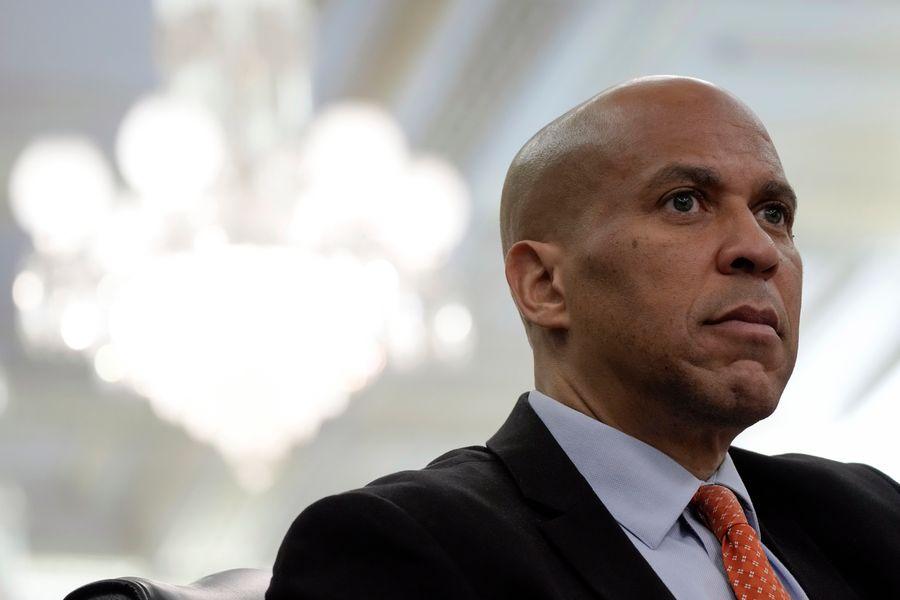
0It’s Friday, the day of the week when I reprise quotations meant to be uplifting or educational. Today’s words of wisdom come from Sen. Cory Booker of New Jersey, and they serve as validation of William Faulkner’s memorable line in “Requiem for a Nun” about the past never really being dead.
Today’s date is the birthday of a Virginian who was once a household name on both sides of the Mason-Dixon Line. Portly and clean-shaven, he reminded some critics of an oversized egg. His name was Robert M.T. Hunter.
A slave owner with 3,000 acres of land in his native Essex County, Va., and a protege of John C. Calhoun, Hunter became, at 32, the youngest House speaker in American history. In 1847, the year Abraham Lincoln became a congressman, Hunter ascended to the Senate where he became – along with Jefferson Davis of Mississippi and Robert Tombs of Georgia – a member of the Senate’s “Southern Triumvirate.”
Not as bombastic as the other two, Hunter attempted to prevent the Civil War with a far-fetched scheme that envisioned two simultaneous U.S. presidents, North and South, with alternating roles. After failing to prevent rebellion he joined it, serving for seven short months as secretary of state in the Confederacy.
In the war’s final year, Sen. Hunter tried one last time to curb the bloodshed, joining in peace talks with Abraham Lincoln – negotiations deliberately undermined by Jefferson Davis. Some 10,000 more Americans died because those talks failed, many of them Virginians.
Robert Mercer Taliaferro Hunter was largely forgotten in America’s historic memory until recently, as were the ill-fated efforts of the Southern peace commissioners. Three unrelated events brought him back to life, as it were.
Rethinking the Pledge; Trump and Women; One Last Egg Roll; Eulogizing Ike
2016: A Repeat of the 1960s
An Apology, Fashioned for Nancy Reagan
Nancy Reagan, Guardian of a Legacy
The first was the extraordinary 2012 Steven Spielberg movie “Lincoln,” starring Daniel Day Lewis in the title role. The second was the publication 15 months later by first-time author James Conroy of an extraordinary book, “Our One Common Country.” Hunter and the peace commissioners appear in both works of art exploring the efforts to end the Civil War earlier.
The scale of death in that war almost defies modern imagination. Estimates vary, but the most current scholarship holds that fatalities on both sides combined were about 750,000. In a country of fewer than 40 million, this extrapolates to some 7 million if the equivalent number of American soldiers were to die today.
Two-thirds of those deaths come from disease in the unsanitary camps and hospitals of the war, which underscores another point that often escapes modern observers: Early death was a common feature of 19th-century America.
Robert Hunter’s own life underscored this grim fact. His mother died in childbirth. So did his stepmother, leaving the boy – at 2 years of age – “twice motherless,” in his words. His eldest son died of tuberculosis a month into the Civil War (while at home, not at the front), and another child, a teenage daughter, died of consumption during the war. And in 1865, while Hunter was in a federal prison, his 15-year-old son drowned.
The man who sat across the table from him at the Hampton Roads peace conference could relate to such calamity. Only two of Abraham Lincoln’s four sons reached adulthood, and only one of the four lasted until the 1900s. When his second son, Willie, died in 1862 at age 11, the president and first lady were nearly inconsolable.
“My poor boy,” President Lincoln muttered in his grief. “He was too good for this earth. God has called him home. I know that he is much better off in heaven, but then we loved him so. It is hard, hard to have him die!”
This same unfathomable sadness was experienced thrice by Sen. Hunter, one of the many hardships shared between the warring parents in our one common country.
I wrote that italicized sentence above nine years ago for RealClearPolitics. I certainly stand by its ecumenical spirit today. But in those ensuing years America has done what it periodically does: Take a fresh accounting, through the eyes of a new generation, of America’s legacy on race.
Yes, Robert Hunter suffered greatly, but was his suffering equal to that of the 100 enslaved people who worked his land in bondage? Yes, he tried to end the war, but that war should never have been fought and was, as Ulysses S. Grant observed at Appomattox, the worst cause for which a people ever fought.
Nonetheless, until three years ago, Robert M.T. Hunter’s portrait hung, alongside all previous House speakers, in the U.S. Capitol. Two others, James L. Orr of South Carolina and Howell Cobb of Georgia, served in Congress before the Civil War and accepted high ranking civilian positions in the Confederacy. A fourth, Charles F. Crisp, also from Georgia, didn’t enter politics until the 1870s, but as a young man had served as a lieutenant in a rebel unit, the 10th Virginia Infantry.
Crisp perhaps belongs in a different category than the other three, but all four portraits were taken down, on the orders of House Speaker Nancy Pelosi, on the eve of Juneteenth in 2020. The rationale for removing them was furnished passionately and succinctly in a speech on the Senate floor that day by Cory Booker.
“Individuals who committed treason against the United States of America and led our nation into its most painful and bloody war to preserve the institution of slavery are not patriots and should not be afforded such a rare honor in this sacred space,” Booker said. “The continued presence of these statues in the halls of Congress is an affront not just to black Americans, but to the very ideals we as a nation proclaim, that we are a place of liberty and justice for all.”
And that is our quote of the week.

Democrats Won the Midterms. Common Sense Won, Too
Jordanne Kemper • RealClearPolitics
The 120th Congress Shapes Up
Carolina Lumetta • RealClearPolitics
Flooding GOP Primaries With Democrats
Robert Natelson • RealClearPolitics
Washington Keeps Rewarding Oracle—Veterans Keep Paying the Price
Darin Gaub • RealClearPolitics
The Seeds of Unrestricted Warfare
John Teichert • RealClearPolitics
The Primary System Is Losing the Next Generation
Sean Trende • RealClearPolitics
RCP Today
Top stories on RealClearPolitics
The Takeaway
Polling intelligence and analysis delivered to your inbox
World News
Featuring the latest world news
Policy
Featuring the latest policy news
Support Our Mission
As part of RealClearPolitics, authors aim to provide balanced, non-partisan analysis by presenting top reporting and commentary from all sides of the political spectrum.
Trusted by policymakers and citizens alike since 2000