
Nigeria Oil Refinery
Nigeria Should Release Prisoner Accused of Blasphemy
COMMENTARY
Published May 27, 2023 • Read time: 4m
As controversies and turmoil surround the Nigerian presidential transition, with the inauguration set for May 29, a young musician named Yahaya Sharif-Aminu sits quietly in prison where he has been for the last three years. In 2020, he was charged with blasphemy because he shared two brief audio messages peacefully expressing aspects of his faith as a Sufi Muslim. For that, a mob burned down his home in Kano, he faced trial without a lawyer, and he was convicted and sentenced to death by hanging.
But this young man’s plight could become a tipping point for human rights in Nigeria. Yahaya’s case has now reached the Supreme Court, where he is hoping to overturn as unconstitutional the blasphemy law that condemned him to death. That is why I have joined with over 200 international and Nigerian organizations and leaders to call for Yahaya Sharif-Aminu’s immediate release.
His case has been on hold while the legal challenges regarding the presidential election proceed. What is clear from the election turmoil is that so many Nigerians are dissatisfied with how their government has treated them. One way for the Nigerian government to begin to move in a new direction would be to turn the page on their human rights commitment and immediately free Yahaya.
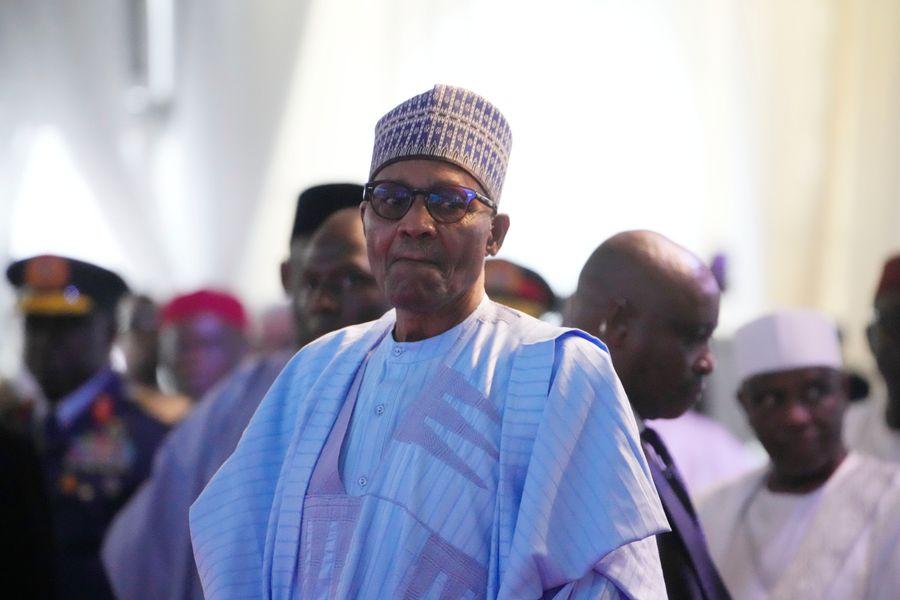
Nigerians believe the government does not want to listen to everyday citizens and that it actively suppresses their voices. There is good reason for this belief: The Lekki toll gate massacre of 2020 against protesters of police brutality is one shocking example, as is the attempt by President Buhari (pictured) to shut down Twitter in 2021. Nigeria’s blasphemy laws, and their deadly consequences, are emblematic of a government that wishes to stamp out differences rather than protect the freedom to express differing views and hold differing beliefs. Freeing Yahaya is an opportunity for the Nigerian government to show it genuinely values the diverse communities and varied voices that make up the country.
An Easter Lesson in Judging Not
Is ISIS Faithful to Islam?
Press Club Welcomes Rezaian Back Home
Hostility to Tradition
The many victims of Nigeria’s blasphemy laws should be remembered, in particular. It has been just over one year since the humanist writer Mubarak Bala was sentenced to 24 years in prison for alleged blasphemy. Christian college student Deborah Emmanuel Yakubu was murdered just a year ago by her classmates when they formed a mob and attacked her for alleged blasphemy. And Rhoda Jatau has been held in prison for a year without the ability to communicate — not even with her family or lawyers — for alleged blasphemy when she re-posted a message condemning the murder of Deborah Yakubu.
All of these incidents have taken place in the context of increasingly severe violence. Some violence is connected to religious tensions. The U.S. Commission on International Religious Freedom recently reported, “Criminal activity and violent armed group incidents impacting religious freedom worsened” over the past year in Nigeria. One report found that from October 2021 to September 2022, 4,877 Christians and 2,262 Muslims were killed for their faith or their resistance to extremist religious ideology. Other examples of violence, like the recent attack on a U.S. Embassy convoy in Anambra, demonstrate an alarming trend that will certainly impact international relations moving forward.
Make no mistake – the international community is becoming increasingly vocal when it comes to Nigeria. Last month, the European Parliament overwhelmingly called on Nigeria to immediately release Yahaya Sharif-Aminu, repeal its blasphemy laws, and work towards justice for the victims of blasphemy allegations. I continue to believe it was a serious mistake for the U.S. to withdraw its designation of Nigeria as a Country of Particular Concern for its severe religious freedom violations. But even without that important designation, the U.S. needs to engage meaningfully with the Nigerian government to ensure that the victims of Nigeria’s blasphemy laws, such as Yahaya, are freed immediately.
For decades, I have advocated for human rights and religious freedom for the oppressed and persecuted. One of the things that regularly astonishes and humbles me is the simple bravery of the victims of persecution.
During this year’s International Religious Freedom Summit in Washington, D.C., which I co-chair and helped establish, I met with Yahaya’s lawyer, Kola Alapinni. I asked him how Yahaya and his defenders in Nigeria were able to keep going even in the face of violence and unjust imprisonment. Kola simply answered me, “It’s too late to be afraid now.”
What has happened to Yahaya — and to Deborah and Mubarak and Rhoda — should never have happened. During this turbulent period of transition for Nigeria, so many have lost hope. Freeing Yahaya now — moving towards a Nigeria where the rights and lives of its people are truly valued — will be an important first step to restoring that hope.

Democrats Won the Midterms. Common Sense Won, Too
Jordanne Kemper • RealClearPolitics
The 120th Congress Shapes Up
Carolina Lumetta • RealClearPolitics
Flooding GOP Primaries With Democrats
Robert Natelson • RealClearPolitics
Washington Keeps Rewarding Oracle—Veterans Keep Paying the Price
Darin Gaub • RealClearPolitics
The Seeds of Unrestricted Warfare
John Teichert • RealClearPolitics
The Primary System Is Losing the Next Generation
Sean Trende • RealClearPolitics
RCP Today
Top stories on RealClearPolitics
The Takeaway
Polling intelligence and analysis delivered to your inbox
World News
Featuring the latest world news
Policy
Featuring the latest policy news
Support Our Mission
As part of RealClearPolitics, authors aim to provide balanced, non-partisan analysis by presenting top reporting and commentary from all sides of the political spectrum.
Trusted by policymakers and citizens alike since 2000