
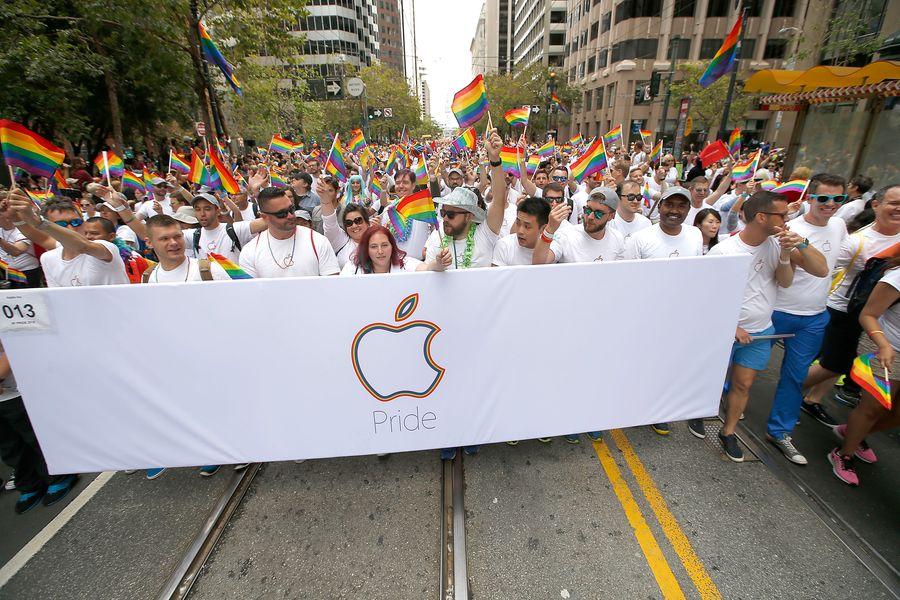
Gay Pride Parade San Francisco
'Woke' Businesses, Meet the New Republican Congress
COMMENTARY
Published Oct. 22, 2022 • Read time: 4m
In a nation bitterly divided between political partisans, corporations face fraught choices. The staying power of the new “woke” will likely face its greatest test if Republicans, as expected, capture a majority in the House of Representatives after the November elections.
For example, CPAC’s Matt Schlapp recently sent a letter to House Republicans warning that his organization won’t endorse any candidate for a leadership race unless they vow to reject meetings with “woke” corporations. “Pledge you will not meet with these CEOs or their leadership teams, especially their Government Affairs staff, who have been hostile to policies that help all Americans, until they change their ways.”
Companies increasingly find themselves caught between two intractable forces: a majority of their customers, fueled by social media activism, who expect them to take a stand on issues that are important to them, and a growing backlash from conservatives who say consumer products have no business dictating social and environmental policy.
Just look at J.P. Morgan CEO Jamie Dimon’s notable pivot at a hearing on Capitol Hill when he said his bank would not refrain from making new investments in major oil and gas development projects, telling House Democratic members, “Absolutely not, and that would be the road to hell for America.”
The shift is a harbinger of broader political expectations: an emboldened Republican majority with more populists in its ranks itching to take on companies for a variety of perceived transgressions, including statements and policies that are seen as nods to political correctness, as well as “socially responsible” and environmental investment policies.
When Protesters Trample Trump's Rights
Donald Trump Should Read Up on Libel Laws
The Left May Well Get Trump Nominated
Trump Foes Should Stay Off His Stage
One only has to look at the recent past. When Major League Baseball moved the 2021 All-Star Game from Atlanta to protest Georgia’s voter law, a handful of Republican lawmakers moved to strip the league of its antitrust protections. Governor Ron DeSantis signed a law to abolish Disney World’s self-governing district. He signed another law dubbed the “Stop WOKE Act” to restrict how race is discussed in schools, colleges, and workplaces. Additionally, 19 Republican state attorneys general are calling on BlackRock to justify its ESG policies.
With risks jumping out from every corner, what’s a conscientious brand leader to do?
With decades of experience supporting business decisions and communications related to social impact, we can point to a few answers. Our research with Penn State University found that 76% of voters feel that companies should be held accountable for making a positive impact on the communities in which they operate – with the sentiment shared almost equally among Democrats and Republicans. Yet only 37% of companies think they are doing a good job and, what’s worse, the gap between voters’ preferences and political rhetoric seems to be growing.
There’s no one-size-fits-all approach for businesses and other brands to turn the ship. The C-suite must identify social risks that may require a response because of their impact on employees, customers, or other key stakeholders – and this requires a self-assessment
Specifically, self-assessments to understand a company’s unique position in the marketplace from not only the product perspective but also a reputational one are critical. Paired with an analysis of internal and external stakeholders, as well as a review of the relationship between business lines and relevant external issues, this kind of audit prepares companies to build a framework for response that is cross-functional, aligned to priorities, and authentic. Finally, companies should be prepared to pressure-test their system for responding to external issues to ensure they have considered all potential landmines.
These recommendations may seem easier said than done, but for those companies seeking a measured approach that allows them to both act on their values and maintain key relationships with policymakers, avoiding the preparation for a Republican Congress now all but ensures crisis down the road. By assessing the connection between business and brand values and creating structure around their decision-making frameworks, modern brand leaders, too, can emerge from the very different challenges of today with renewed bonds with policymakers, customers, and their communities.

Jon Finer’s Old and Dangerous ‘New Approach’ to Israel
Peter Berkowitz • RealClearPolitics
The President Deserves Better
John Ullyot • RealClearPolitics
Congress Doesn’t Need Another Blame Game. It Needs To Find What’s Broken
Jarrod Bernstein • RealClearPolitics
Democrats Won the Midterms. Common Sense Won, Too
Jordanne Kemper • RealClearPolitics
The 120th Congress Shapes Up
Carolina Lumetta • RealClearPolitics
Flooding GOP Primaries With Democrats
Robert Natelson • RealClearPolitics
RCP Today
Top stories on RealClearPolitics
The Takeaway
Polling intelligence and analysis delivered to your inbox
World News
Featuring the latest world news
Policy
Featuring the latest policy news
Support Our Mission
As part of RealClearPolitics, authors aim to provide balanced, non-partisan analysis by presenting top reporting and commentary from all sides of the political spectrum.
Trusted by policymakers and citizens alike since 2000