
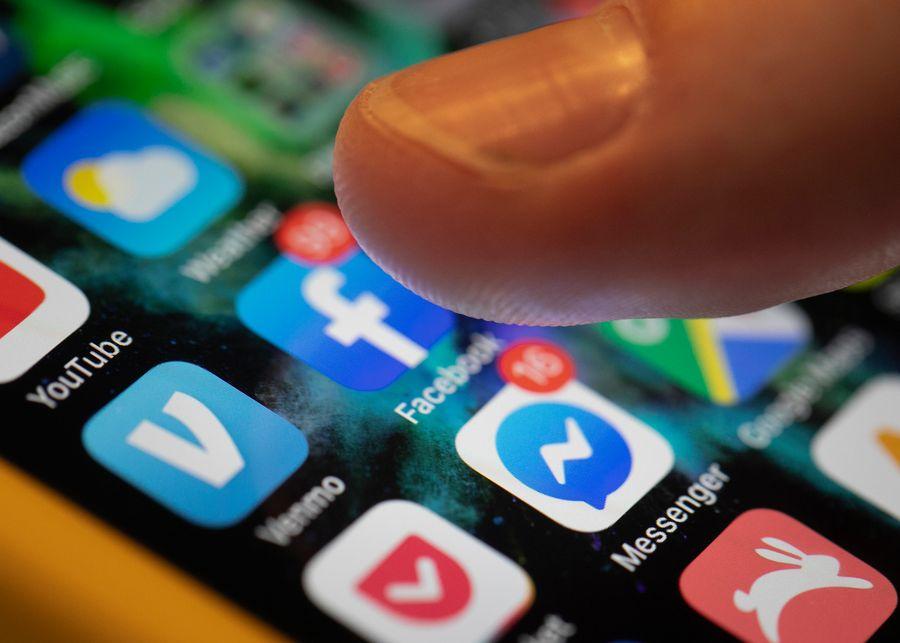
Facebook Papers House of Cards
Trending: Unconstitutional Social Media Restrictions
Published July 22, 2023 • Read time: 8m
Starting next September, minors in Texas will need parental consent before creating a social media account. In so requiring, Texas will join three other Republican-controlled states – Utah, Louisiana, and Arkansas – in raising the age threshold for access to these platforms. It is a political trend that is gaining traction on both sides of the political spectrum.
Earlier this year, U.S. Surgeon General Vivek Murthy told CNN Business he “believes that 13 is too early” for a child to begin traversing social networking apps. However, most platforms maintain 13 as their age threshold.
Less than two weeks after Murthy’s statement, Sen. Josh Hawley introduced legislation aimed at bolstering age verification systems, raising the minimum user age to 16, and commissioning a report that examines the effects of social media use.
“Big Tech has exploited children on social media for far too long,” Hawley said. “It’s time for a federal age verification law that leaves parents, not companies, in charge.”
On May 11, Republican Sens. Tim Cotton and Katie Britt teamed up with Democratic colleagues Chris Murphy and Brian Schatz and followed suit by introducing the Protecting Kids on Social Media Act. Their bill requires parental consent for users under the age of 18 and enforces this limit with a “rigorous” age verification system. Additionally, the measure would prohibit social media companies from using algorithms to recommend content to minors.
Lawmakers on both sides of the aisle have expressed concern about the correlation between social media use and the rise of mental illness among children and teens. And though Republican-led legislatures and governors have been leading the way in pushing for legislation addressing these concerns, Democrats are not far behind.
When Protesters Trample Trump's Rights
Donald Trump Should Read Up on Libel Laws
The Left May Well Get Trump Nominated
Trump Foes Should Stay Off His Stage
Utah’s Republican majority legislature recently passed the Social Media Regulation Act requiring that everyone under 18 must provide parental permission to download platforms like TikTok, Instagram, and Facebook. Moreover, minors who obtain permission can only use the app between 6:30 a.m. and 10:30 p.m.
Utah Gov. Spencer J. Cox said it “would be irresponsible not to do something” to keep social media’s damaging effects in check.
In solidly Democratic California, the state Senate has attempted to pass bills in 2022 and 2023 that prohibit platforms from using a design, feature, or affordance that the companies knew could cause a child to become addicted – AB 2408 and SB 287, respectively. Neither bill went through, but the latter was placed on “inactive file” on June 1.
Regulations regarding minors on social media are also being debated by lawmakers in Minnesota, Ohio, Connecticut, and New Jersey. In Minnesota and New Jersey, like California, the primary concern is mitigating the addictive aspects of social media apps.
While bipartisanship is a rare and welcome development in these state capitals, foundational questions remain, many pertaining to the enforceability and effectiveness of such curbs.
Social Media Use and Mental Well-Being
The emerging social science characterizes America’s digital-native generations as anxious, depressed young people glued to their devices. Not everyone agrees that social media is the primary culprit, but a consensus is emerging that it is at least part of the problem. A big part.
In a 2022 Pew Research survey, some 95% of teens aged 13-17 reported using some form of social media, while 54% said giving up social media would be too difficult for them.
Adding to the concerns regarding teen dependency, a leaked internal Facebook presentation from 2019 admitted the company’s internal qualms about the effects of its app. “We make body image issues worse for one in three teen girls,” the memo said, “Teens blame Instagram for increases in the rate of anxiety and depression. This reaction was unprompted and consistent across all groups.”
Jean Twenge is a psychology professor at the University of San Diego State University who has written several books about Generation Z. In an opinion piece with The Globe and Mail on April 26, she discussed the depression epidemic among adolescents.
“One precursor to these feelings is loneliness,” Twenge said. “Feeling close social connections to others is crucial for mental health, especially for young people.” She added that reports of teen loneliness, which had been declining since the early 1990s, “suddenly shot upward” after 2012. Twenge believes that Gen Z’s tendency to socially engage via virtual platforms is a significant reason why they report feeling lonelier than previous generations.
“Teens and young adults who reduced their social media use by 50% for just a few weeks saw significant improvement in how they felt about both their weight and their overall appearance compared with peers who maintained consistent levels of social media use,” the American Psychological Association said in a 2023 study.
In 2022, the American Economic Association published an article by Luca Braghieri, Ro’ee Levy, and Alexey Makarin that compared the introduction of Facebook on 775 campuses to several years’ worth of answers to the National College Health Assessment. The study found a significant correlation between the introduction of Facebook and elevated reports of depression – about a 24% increase.
In another study by the American Economic Association, a random group of Facebook users voluntarily shut down their accounts for four weeks in 2018, and 80% reported that the time away “was good for them.”
Regardless of age, most studies demonstrate a negative correlation between the amount of time spent on social media and the user’s mental health or self-image. The general acknowledgment of this relation, compounded by the rate of teenage social media use and Meta’s own admissions, paints a precarious portrait of what it is to be a young American today.
Will the Proposed Curbs Work?
Despite most studies’ conclusions that pre-teens and teenagers are generally healthier after reducing social media use, there is much less certainty about whether government restrictions are enforceable.
Utah’s Social Media Regulation Act, which goes into effect March 1, 2024, is still ironing out “a good process for age verification for adults and parental consent for minor accounts” with the Department of Commerce.
According to NetChoice Associate Director Nicole Saad Bembridge, government-issued IDs and birth certificates will be used to verify every new user's age, and that any adult waiving a minor’s age restriction is actually that minor’s parent. The act's enforcement is “putting their private data at risk of breach,” Bembridge said.
“Utah has come out and basically said kids shouldn't be allowed any privacy online,” Facebook whistleblower Frances Haugen said at a Q&A event with Free the Facts on July 10. She is concerned that the legislative response to the dangers of social media is too “extreme” and stressed that the government needs to “react sooner on practical things.”
Haugen believes the government is too constrained by content moderation, and the appropriate level of government intervention would be along the lines of “mandated transparency,” a reference to the European Union’s Digital Services Act.
Passed in late 2022, this act requires digital marketplaces that connect users to goods, services, and content to counter illegal content or services, increase user safeguards, allow researchers access to their data, and be transparent about the algorithms and advertisements they use. It also bans dark patterns and certain targeted advertisements and sets the European Commission as the primary regulator. Given how recently DSA was enacted, it’s too soon to say whether it has helped address reports of elevated mental health issues among young Europeans.
Haugen argues that if governments do not seek out “moderate” transparency laws like the EU now, then they will likely resort to shooting blind and “do[ing] emotional, extreme things later.”
Each opinion vies to best represent the needs and safety of America’s youth, but the concerns about enforceability, civil rights infringements, and legislative good practice shrouds the viability of Utah’s new laws – and by extension, other laws like it – with doubt.
Will Such Laws Pass Constitutional Muster?
Organizations like the Foundation for Individual Rights and Expression (FIRE) have also spoken out against the Utah, Texas, and Louisiana statutes as infringements on a minor’s right to free expression outside of a public school context.
“The Supreme Court has made clear for decades now that minors are entitled to a significant measure of personal protection,” said Will Creeley, FIRE’s legal director. “It's the role of parents, not the government, to decide how and if kids are going to log on and engage with the broader world of ideas.”
Beyond the privacy issues raised by age verification, strict interpreters of the First Amendment are also concerned that age verification enforcement curtails an individual’s right to speak anonymously.
There are also the rights of private social media companies to consider. In NetChoice v. Attorney General of Florida (2022), the 11th U.S. Circuit Court of Appeals reasoned that social media companies are “private actors” protected by the First Amendment. Furthermore, the responsibility of companies to moderate content falls under “protected exercises of editorial judgment.”
Such a precedent undermines Haugen’s “moderate” proposals regarding mandated transparency and cuts bills like California’s off at the knees. This decision makes it nearly impossible for the U.S. government to legally demand information or product adaptations from social media companies the way the EU has.
The First Amendment infringement concerns for both individuals and private companies that arise out of government-instituted social media regulations cannot be ignored. However bipartisan or nobly intentioned these nationwide trends are, legislative action is still a far cry from being either practical, enforceable, or constitutional.

Democrats Won the Midterms. Common Sense Won, Too
Jordanne Kemper • RealClearPolitics
The 120th Congress Shapes Up
Carolina Lumetta • RealClearPolitics
Flooding GOP Primaries With Democrats
Robert Natelson • RealClearPolitics
Washington Keeps Rewarding Oracle—Veterans Keep Paying the Price
Darin Gaub • RealClearPolitics
The Seeds of Unrestricted Warfare
John Teichert • RealClearPolitics
The Primary System Is Losing the Next Generation
Sean Trende • RealClearPolitics
RCP Today
Top stories on RealClearPolitics
The Takeaway
Polling intelligence and analysis delivered to your inbox
World News
Featuring the latest world news
Policy
Featuring the latest policy news
Support Our Mission
As part of RealClearPolitics, authors aim to provide balanced, non-partisan analysis by presenting top reporting and commentary from all sides of the political spectrum.
Trusted by policymakers and citizens alike since 2000