
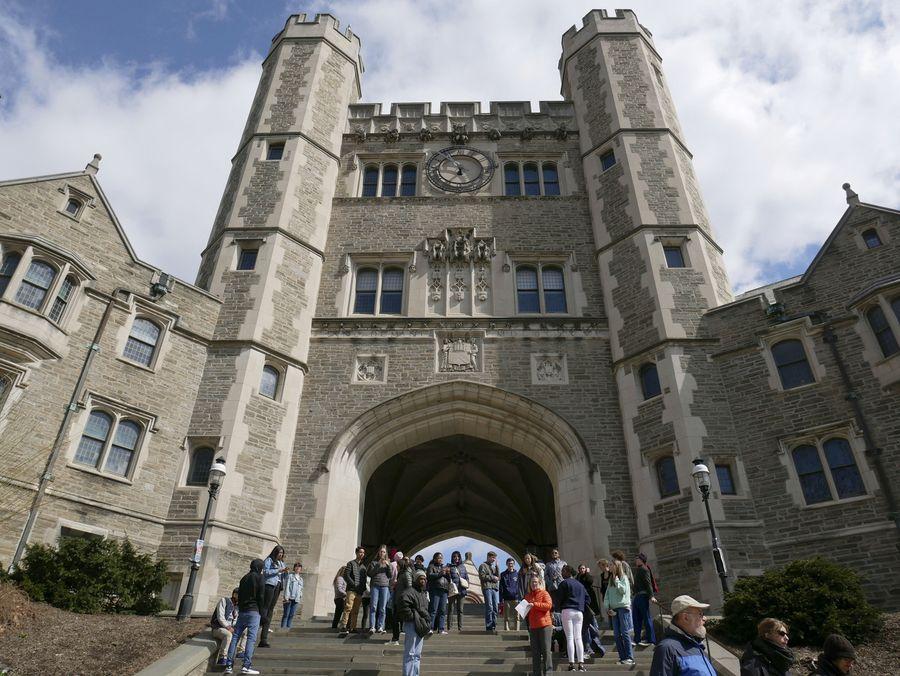
Virus Outbreak Wealthy Universities
The Year Campus Free Speech Groups Started Fighting Back
COMMENTARY
Published Nov. 19, 2021 • Read time: 8m
Every day, it seems, there is another story about a speaker being cancelled or a professor being fired over something said or written. The forces against free speech and academic freedom are strong and seem to be getting stronger. But in 2021 things began to change.
Is this the early stirring of a movement that could stem the cancel culture tide? Or the last gasp of the freedom of thought that was once the soul of our universities? Time will tell. But it is at least possible that the fatalistic fears of many free speech supporters may prove premature.
For the first time, there are very serious, and potentially powerful, organizations of faculty and of alumni fighting for free speech and academic freedom. Some college administrations are realizing that pro-actively supporting the principles of free speech and academic freedom is not only the right thing to do, but that doing so will attract students and faculty to their campuses. There is even a new university starting up explicitly based on these principles, with an all-star board of advisers that includes leading champions of free speech and academic freedom.
Last March, a group of professors launched an important organization – the Academic Freedom Alliance – dedicated to supporting professors who are threatened for exercising free speech and academic freedom. AFA has grown rapidly, attracting professors from across the political spectrum. The AFA also has a legal arm, supported by some of the most acclaimed constitutional lawyers in the country. A university threatened with legal action by AFA for violating a professor’s legal rights has reason to worry. AFA’s legal arm, together with that of the Foundation for Individual Rights in Education, will establish legal precedents protecting both faculty and students. Soon the implicit threat of a lawsuit may often be enough to accomplish its goal.
When Protesters Trample Trump's Rights
Donald Trump Should Read Up on Libel Laws
The Left May Well Get Trump Nominated
Trump Foes Should Stay Off His Stage
Alumni of many colleges and universities have been growing increasingly unhappy for many years with the direction in which their alma maters are headed. But this year they have begun to organize. When five alumni free speech groups – from Cornell, Davidson, U-VA, Washington & Lee, and Princeton (which we co-founded) – announced the creation of a federation of such groups, the Alumni Free Speech Alliance, on Oct. 18, the response from around the country was overwhelming. Within three weeks, the new alliance heard from alumni from over 75 colleges and universities interested in starting an alumni free speech group for their schools. Many groups have already started the process of forming and joining the alliance. These groups are from schools of all sizes, both private and public, and from every section of the country. Soon there will be a national network of nonpartisan alumni groups dedicated to supporting free speech, academic freedom, and viewpoint diversity on their campuses.
Alumni free speech groups will be a powerful force. They can shine a light on actions that up until now often were below the radar – such as a demand from a faculty or student group or an orientation program that violates principles of free speech or academic freedom. A public petition to a school’s board of trustees signed by thousands of alumni will have an impact.
Increasingly there is talk among alumni of stopping or decreasing contributions and alumni involvement. A recent poll of Davidson College alumni, by the alumni group Davidsonians for Freedom of Thought and Discourse and the American Council of Trustees and Alumni, found that 41% of alumni, unhappy with the direction of Davidson, planned to either lower their contributions or cease contributing altogether. Other alumni who may still want to support their alma maters are no longer making contributions to the schools’ general funds. Instead, their contributions are going directly to specific programs they support.
It is possible that to some college administrations – those with multibillion-dollar endowments – a significant reduction in giving will not be a big financial problem. But it will look bad. And it may well be a big financial problem for the vast majority of colleges and universities. For example, 15% of Davidson’s operating budget comes from donor gifts and private grants.
Furthermore, a decline in alumni involvement will affect any school. For one thing, it is one of the factors in the U.S. News & World Report rankings, which, rightly or wrongly, are important to many schools. Such a decline at any university will also bring bad publicity, especially when large, organized groups of alumni speak out against trends that they deplore. Alumni support and involvement also is important for attracting strong applicants and creating a sense of connection over generations.
Although alumni are now organizing to “save” their alma maters, in many cases they are pessimistic about their chances. They look at the almost total lack of diversity in the faculties of their schools; they see official statements and events on campus that show disdain for free speech and academic freedom; and they think to themselves, “It is too late.” We talk to alumni from all over the country, and increasingly we hear some version of: “I would not want my child to go to the school I went to.” This is the case no matter how prestigious their alma maters may be.
However, it is now clear that leaders of some colleges and universities are realizing that taking strong, affirmative stances on free speech and academic freedom can be an advantage in the competition for the best faculty and students. Taking such stances should be easy in the sense that these values are at the core of what all universities until recently stood for. And while some schools may well be too far gone to be redeemable, those that conspicuously champion free speech and related values will increasingly be able to attract better faculty, with a more diverse spectrum of views. Many professors will want be part of a school where they can say and teach what they think; where they can undertake research on any topic; and where they can publish what they believe to be true without fear of being canceled.
Likewise, student applicants and their parents will increasingly base their choices on where a college or university stands on free speech and academic freedom. There have already been examples of schools – the University of Missouri in 2015 and Evergreen State University in 2017 – that had dramatic decreases in applications, and resulting budget cuts, after publicity over events that were anti-free speech. The annual FIRE free speech rankings will likely become an important source for applicants and their parents in judging schools, and some schools will work to improve their FIRE rankings just as schools work to improve their U.S. News & World Report rankings. People looking to make large contributions to improve education will also be drawn in many cases to those schools with strong reputations on free speech and academic freedom.
It seems likely that prospective employers will increasingly take notice of this trend and increase their recruitment at schools where students learn in an atmosphere of free speech and academic freedom and where they learn the critical thinking and the listening and the inter-personal skills that will be increasingly important in a diverse, complex world.
Two recent examples show that some schools will increasingly focus on principles of free speech and academic freedom. On Nov. 10, Larry Stimpert, the president of Hampden-Sydney College in Virginia, sent a letter to his college’s community in which he laid out the school’s commitment to freedom of expression and civil discourse. He went on to say, “Actively sharing the widest possible range of views … is essential to intellectual development and learning.” He drew a clear distinction between his college and institutions of higher learning where there is no longer such a commitment.
One well-organized group has taken things a step further. On Nov. 9, the creation of a new university, the University of Austin (UATX), was announced, with backing from a wide range of distinguished supporters. A core principle of UATX is: “For universities to serve their purpose, they must be fully committed to freedom of inquiry, freedom of conscience, and civil discourse.” Again, the founders drew a clear distinction between what their university will be like and what is happening on many campuses today.
There is little doubt schools like Hampden-Sydney and UATX will draw faculty and students. As one alumnus quipped about the founding of UATX: “Well, at least there is one place my grandchildren will be able to go to college.”
Because of demographics, college enrollment will decrease in the coming years and there is a threat to the very existence of a number of colleges and universities. Over the next 10 or 20 years, a school’s reputation on free speech and academic freedom will increasingly make a difference. At many of the most prestigious schools, faculty and administrators may be unconcerned. After all, they have multibillion-dollar endowments and so many applicants every year that losing some will not matter. But as the diversity of viewpoints in their student bodies shrinks – and gives way to the kind of groupthink that is already pronounced in their faculties – those students who want to be independent thinkers may increasingly find these schools unappealing. Such students will understand that an institution that does not welcome and nurture free thought is not a university at all.

Democrats Won the Midterms. Common Sense Won, Too
Jordanne Kemper • RealClearPolitics
The 120th Congress Shapes Up
Carolina Lumetta • RealClearPolitics
Flooding GOP Primaries With Democrats
Robert Natelson • RealClearPolitics
Washington Keeps Rewarding Oracle—Veterans Keep Paying the Price
Darin Gaub • RealClearPolitics
The Seeds of Unrestricted Warfare
John Teichert • RealClearPolitics
The Primary System Is Losing the Next Generation
Sean Trende • RealClearPolitics
RCP Today
Top stories on RealClearPolitics
The Takeaway
Polling intelligence and analysis delivered to your inbox
World News
Featuring the latest world news
Policy
Featuring the latest policy news
Support Our Mission
As part of RealClearPolitics, authors aim to provide balanced, non-partisan analysis by presenting top reporting and commentary from all sides of the political spectrum.
Trusted by policymakers and citizens alike since 2000