
Virus Outbreak Wealthy Universities
Colleges Should Compete on Free Speech
COMMENTARY
Published June 20, 2023 • Read time: 5m
The lists of “top colleges” have varied little in many years. They always include the Ivies, Stanford, MIT, Cal Tech, etc. But that could change. Colleges of all types can differentiate themselves on the core values of free speech and academic freedom, and those that do will increasingly attract more and better students, faculty, and employment opportunities for their graduates.
There are many factors that go into choosing a college or grad school – affordability, location, and strength in specific disciplines – but many parents and students are overly focused on the prestige of the school.
However, most of these “prestige” schools have low ratings in the annual survey of students on free speech issues conducted by the Foundation for Rights and Expression (FIRE). Many have had recent embarrassments that rightfully tarnished their image on free speech. And many have atmospheres that smack of indoctrination and huge bureaucracies to enforce those atmospheres.
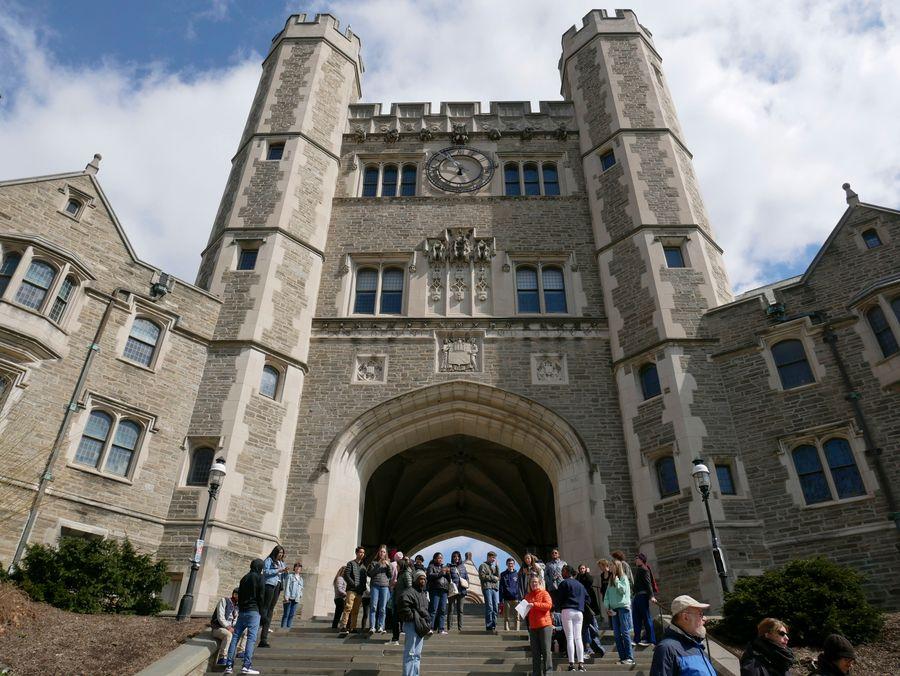
Certainly that is the case with the university, Princeton, that we both attended and with the law school, Stanford, that one of us attended and at which the other briefly taught. Both schools have received negative publicity on free speech. Would we go to either school today? In a recent survey by Princetonians for Free Speech, only 24% of Princeton students said it is never appropriate to shout down a speaker; only 57% said it is never appropriate to block other students from attending a speech; and 16% said it might, on at least rare occasions, be appropriate to use violence to stop a speaker.
When Protesters Trample Trump's Rights
Donald Trump Should Read Up on Libel Laws
The Left May Well Get Trump Nominated
Trump Foes Should Stay Off His Stage
At Stanford Law, a large group of students shouted down a federal judge and then tried to intimidate the dean for having apologized to the judge.
The deeper problem, students have told us, is not such high-profile events. It is the campus culture. Views not in keeping with the orthodoxy are not valued; they are often viciously attacked.
In our Princetonians survey, 70% of students say they would be very or somewhat uncomfortable publicly disagreeing with a professor on a controversial topic. 56% say they would be very or somewhat uncomfortable expressing their views in class on a controversial topic. Another survey shows it is much worse for conservative students.
At Princeton, where we talk regularly with students, there is no question there is a negative culture. A student in the ballet club received a memo from the club’s leaders stating that ballet was “white supremacy” and “perfectionism,” and requiring members to do specified community service. Conservative students have received no contact orders from the university for normal political disagreements. This type of thing goes on every day.
There are better choices. The University of Chicago and Purdue have a history of promoting free speech. The University of North Carolina and Vanderbilt have recently demonstrated a strong commitment to free speech by adopting institutional neutrality. While some colleges are now focusing more on free speech, they should go further and develop a strong reputation for promoting free speech values.
Why wouldn’t students want to attend great colleges that have cultures of free speech and academic freedom rather than Princeton, Stanford, Yale, or Harvard, where the culture stifles the free exchange of ideas? Why wouldn’t parents want their children to choose schools where students are not afraid to say what they think? Why wouldn’t more faculty want to teach at schools where academic freedom flourishes? Why wouldn’t employers want to recruit at schools where students are taught how to think for themselves, rather than to bow to orthodoxy? Why would alumni want to continue to give to schools that no longer support the core values they were created to promote?
There are anecdotal signs that a reaction against such orthodoxy has already started. For example, some federal judges have said they will no longer look to the law schools at Yale and Stanford for law clerks. Alumni giving participation rates are down substantially at Princeton.
As parents, students, faculty, and employers increasingly look to colleges’ records on free speech and academic freedom, more resources will become available to meet the demand. The annual FIRE free speech report will become more influential, and other measurements and reviews of colleges’ records on free speech and academic freedom will be developed. FIRE and the American Council of Trustees and Alumni, among others, already provide resources to help colleges advance a free speech agenda.
Maybe the elite colleges will not care about such competition. Their endowments are so large they have little need for contributions. Their acceptance rates are in the single digits. But over time they may lose their elite status. As students, faculty, and employers look to other schools, the elite colleges will become even more narrow in their orthodoxy and even more unattractive for most. Over time the elites could be forced to change.
This is not about becoming a conservative oasis. It is about returning to the core mission of a university – advancing knowledge and learning through free speech, academic freedom, and viewpoint diversity. Colleges that state that mission clearly and follow through on it will have a competitive advantage.

Democrats Won the Midterms. Common Sense Won, Too
Jordanne Kemper • RealClearPolitics
The 120th Congress Shapes Up
Carolina Lumetta • RealClearPolitics
Flooding GOP Primaries With Democrats
Robert Natelson • RealClearPolitics
Washington Keeps Rewarding Oracle—Veterans Keep Paying the Price
Darin Gaub • RealClearPolitics
The Seeds of Unrestricted Warfare
John Teichert • RealClearPolitics
The Primary System Is Losing the Next Generation
Sean Trende • RealClearPolitics
RCP Today
Top stories on RealClearPolitics
The Takeaway
Polling intelligence and analysis delivered to your inbox
World News
Featuring the latest world news
Policy
Featuring the latest policy news
Support Our Mission
As part of RealClearPolitics, authors aim to provide balanced, non-partisan analysis by presenting top reporting and commentary from all sides of the political spectrum.
Trusted by policymakers and citizens alike since 2000