
The Iraq War Was No Cake Walk
Published March 21, 2013 • Read time: 3m
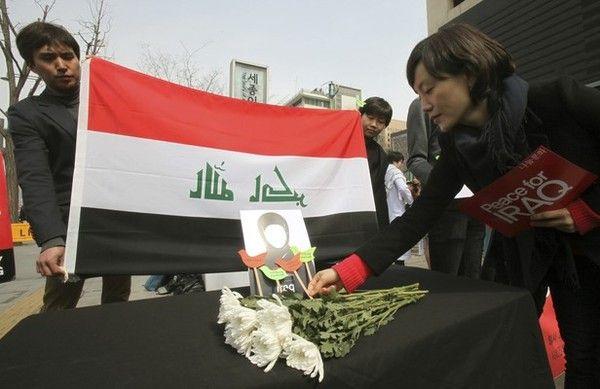
Tragically, the Iraq War was not worth the costs. The leading advocates for war understated the costs and exaggerated the benefits. They claimed that the war would be cheap, perhaps even profitable, thanks to lower oil prices. They suggested that it would be easy, a “cakewalk,” not requiring a long-term U.S presence to stabilize the country after Saddam Hussein’s ouster. They blithely dismissed concerns about the tensions between Arabs and Kurds, and between Sunnis and Shiites.
We now know how wrong they were. A new report from the Watson Institute for International Studies at Brown University tallies up the costs: nearly 4,500 U.S. troop fatalities, more than $1.7 trillion spent, and another $490 billion owed. Estimates of the number of Iraqis killed in the sectarian bloodletting that occurred after the collapse of Saddam’s regime exceed 130,000. Millions were displaced, many still have not returned to their homes. The Iraqi Christian community has been decimated.
The war’s benefits are few, and could have been obtained by other means. The demise of a brutal dictator is a result worth celebrating, but the imperfect and fragile government that has emerged in Iraq was hardly worth the costs incurred. As for U.S. security, war boosters declared that Saddam Hussein was actively developing nuclear weapons. Equally important, they asserted that he would use them, or give them to terrorists who would. War skeptics pointed out that this was unlikely, and they also identified crucial holes in the evidence of Saddam’s nuclear program.
Over Here: Competence Amid Repulsive Politics
We're Not a Poor Country, Donald
What America Should Learn from the Attack in Brussels
Anti-Muslim Rhetoric Profits the Enemy
War supporters hinted at possible linkages between Saddam Hussein and the 9/11 attacks; most Americans believed them. Some still do. But al-Qaida has been decimated since 2001, and the war in Iraq was, at best, irrelevant to this successful effort. If anything, the misallocation of resources to Iraq impeded the hunt for bin Laden and his cronies.
Elected officials who backed the wars have been punished at the polls. The unpopular war probably cost the Republican Party control of Congress in 2006, and Hillary Clinton’s support for the war arguably cost her the presidency. (The reputations of pundits and think tank scholars who promoted the war on faulty pretexts remain strangely intact.)
But the voices of those who warned that the war would not be worth it are now being heard. The burden of proof has shifted toward those making the case for war, in Iran, or Syria, or Yemen, or countless other places. If the country has salvaged anything constructive from this war, it seems to be a greater appreciation for war’s unpredictability and the limits of American power.
This article appeared on US News and World Report Online on March 20, 2013; it is reprinted with permission from the Cato Institute.
The Danger Before the Attack
Leslie J. Sullivan • RealClearPolitics
Jon Finer’s Old and Dangerous ‘New Approach’ to Israel
Peter Berkowitz • RealClearPolitics
The President Deserves Better
John Ullyot • RealClearPolitics
Congress Doesn’t Need Another Blame Game. It Needs To Find What’s Broken
Jarrod Bernstein • RealClearPolitics
Democrats Won the Midterms. Common Sense Won, Too
Jordanne Kemper • RealClearPolitics
The 120th Congress Shapes Up
Carolina Lumetta • RealClearPolitics
RCP Today
Top stories on RealClearPolitics
The Takeaway
Polling intelligence and analysis delivered to your inbox
World News
Featuring the latest world news
Policy
Featuring the latest policy news
Support Our Mission
As part of RealClearPolitics, authors aim to provide balanced, non-partisan analysis by presenting top reporting and commentary from all sides of the political spectrum.
Trusted by policymakers and citizens alike since 2000