High Explosives Do Not Constitute a Syria Policy
Published April 17, 2018 • Read time: 4m
WASHINGTON -- "Mission Accomplished" may be the most famous presidential words never actually uttered by a president. I know because, as head of presidential speechwriting at the time, I didn't write them. They were found on a banner, but never in a single draft of President George W. Bush's 2003 remarks aboard the USS Lincoln.
But now that this phrase has been tweeted and defended by President Trump, it is worth examining what he has accomplished by his missile strikes in Syria.
High explosives do not constitute a Syria policy, which has been lacking across two administrations. So it might be more useful to ask a narrower question: What principle is America trying to enforce?
Trump seems committed to the norm that chemical weapons attacks against civilians should bring kinetic consequences. That is superior to President Obama's version, in which chemical attacks brought only unenforced threats. Trump's carefully calibrated application of Tomahawks easily clears his predecessor's bar, which was barely off the floor.
Trump's position, however, has its own share of inconsistencies. It prioritizes the lives of children killed by a nerve agent above the lives of children killed by a barrel bomb. Targeting civilians -- through terror bombing, forced starvation, torture and the repeated use of chemical weapons -- has been an essential element of Bashar Assad's strategy in the Syrian civil war. His aim has not merely been to reclaim territory from the rebels; it has been to terrify the Syrian people into submission or flight. And, with the help of Russia and Iran, he has largely succeeded.
Is Trump Right About NATO?
Over Here: Competence Amid Repulsive Politics
We're Not a Poor Country, Donald
U.S. Officials Say 2 Americans Died in Brussels Attack
There is a further inconsistency. The images of children after a chemical weapons attack seem to move the president. The images of 5 million refugee children -- many out of school, many traumatized by violence and loss -- seem to lack that power. So far this year, America has taken 11 -- yes, 11 -- Syrian refugees. The Trump administration, apparently, will avenge the deaths of Syrian children, but not welcome them.
In spite of all this, it can be argued that the norm prohibiting the use of chemical weapons is a special one. In a world where wars often involve criminal barbarity, it is useful to place at least one act beyond the pale.
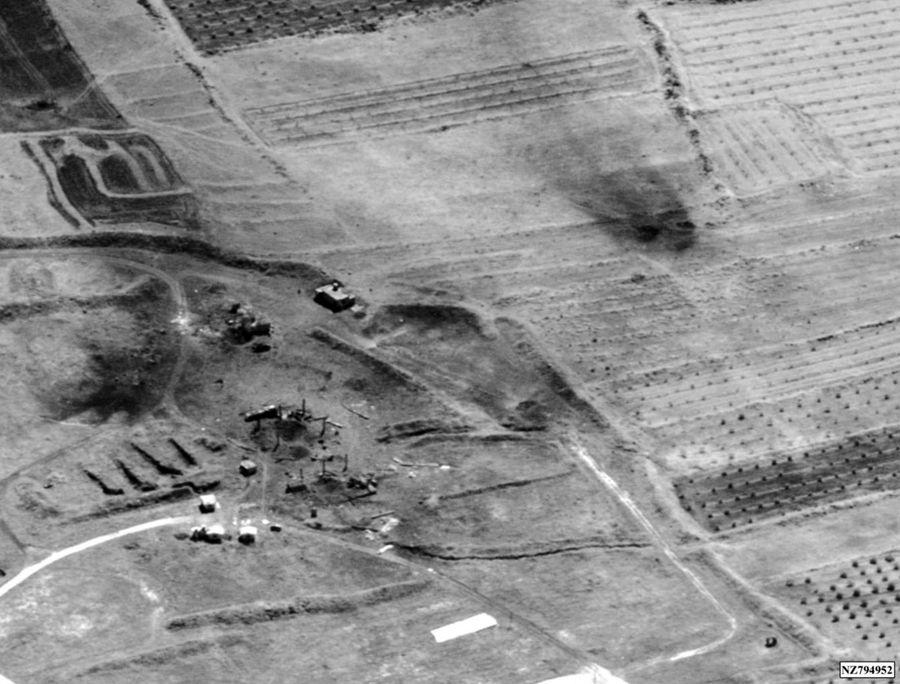
But this should not be mistaken for the deterrence of future chemical attacks. Hitting a few sites with perhaps 100 missiles may reduce Assad's capability to make more sophisticated chemical weapons. But the chemical attack on Douma was fairly primitive. The coalition strike probably did not deprive Assad of the ability to repeat this kind of tactic. And Assad still has a powerful incentive to do so, since press reports indicate that it was the chemical attack that finally broke the spirit of resisters in Douma.
Trump's standard -- that a dictator can indiscriminately kill his people as long as he doesn't use chemical weapons -- is nearly lost in the overarching lesson of the Syrian conflict. Assad has established his own international norm: If you make war on your own people -- if you kill enough of them, brutalize enough of them and displace enough of them -- the world will let you stay in power.
Here is the norm that America might have defended: Mass atrocities against civilians as a method of warfare won't be allowed to succeed. This would involve not only punishing the use of chemical weapons as a tactic, but also making sure that the use of chemical weapons and other violence directed at civilians fails as a strategy.
The last two administrations have placed their main emphasis on two goals -- defeating the Islamic State and opposing the use of chemical weapons -- for a reason. In the chaos that once was Syria, Obama and Trump have wanted to define America's mission in ways that are discrete, limited and achievable. Both men can claim credit in the campaign against the Islamic State -- not a trivial matter. One of them has, at least, maintained the pretense of an international norm on chemical weapons.
In the real world, however, battles are not won by limiting your objectives. The outcome in Syria that would have best served American values and interests? A well-armed coalition of moderate rebels forcing the regime to the negotiating table, resulting in a coalition government that includes some regime elements but not Assad. After several wasted years of indecision and indifference, this is a distant, perhaps impossible, dream. But it is the only result that would have re-established the norm that murdering innocents as part of a military strategy won't be allowed to prevail. This mission was never even attempted.
(c) 2018, Washington Post Writers Group

A RealClear Thanksgiving: Investing in a Better Future
David DesRosiers • RealClearPolitics
Trump’s Newsom Problem: Antagonist-in-Chief
Carolina Lumetta • RealClearPolitics
America’s Free Spirit
John Maxwell Hamilton • RealClearPolitics
The GOP Majority Should Go Out in Glory
Daniel McCarthy • RealClearPolitics
Republican Majorities Could Return Sooner Than Expected
J.T. Young • RealClearPolitics
The Danger Before the Attack
Leslie J. Sullivan • RealClearPolitics
RCP Today
Top stories on RealClearPolitics
The Takeaway
Polling intelligence and analysis delivered to your inbox
World News
Featuring the latest world news
Policy
Featuring the latest policy news
Support Our Mission
As part of RealClearPolitics, authors aim to provide balanced, non-partisan analysis by presenting top reporting and commentary from all sides of the political spectrum.
Trusted by policymakers and citizens alike since 2000