
Election 2025 New Jersey Governor
Rising Electricity Rates Front and Center in NJ Gov Race
COMMENTARY
Published Oct. 31, 2025 • Read time: 4m
With skyrocketing electricity rates now front and center for most Garden State voters, New Jersey’s 2025 gubernatorial race is rapidly setting up as the first clear-cut referendum in this country on the true cost and false promises of the clean energy revolution.
New Jersey, like many other Democrat-run states, is now dealing with the consequences of years of bad energy policy driven by artificial emissions constraints and unattainable net-zero goals. Over the past decade, the state has replaced reliable coal and natural gas generation with intermittent solar and wind power and moved from electricity self-sufficiency to import dependency. Since 2015, average residential power prices in New Jersey have increased by 64% despite anemic load growth up until the recent AI-related demand boom.
New Jersey’s participation in blue-state climate affinity groups such as the Regional Greenhouse Gas Initiative (RGGI) and the Pennsylvania-New Jersey-Maryland (PJM) transmission organization has only compounded the state’s electricity price woes. RGGI membership requires individual power plants to purchase carbon dioxide allowances to operate, which raises the cost of electricity production for in-state fossil fuel generators.
Increasing reliance on PJM for the state’s excess power needs means that New Jersey is also importing electricity price inflation, given that this regional grid operator is similarly plagued by anti-fossil fuel bias and capacity mismanagement, leading to increased auction market volatility. The pass-through of sharply higher PJM wholesale prices caused New Jersey utility bills to jump by an average of 17-20% in June of this year, with another increase looming in 2026.
As of July 2025, New Jersey ranked ninth in the country for the highest retail electricity prices, roughly 40% above the U.S. average. The issue is now top of mind for New Jersey voters heading into next week’s gubernatorial election, with most polls showing a very close race within the margin of error.
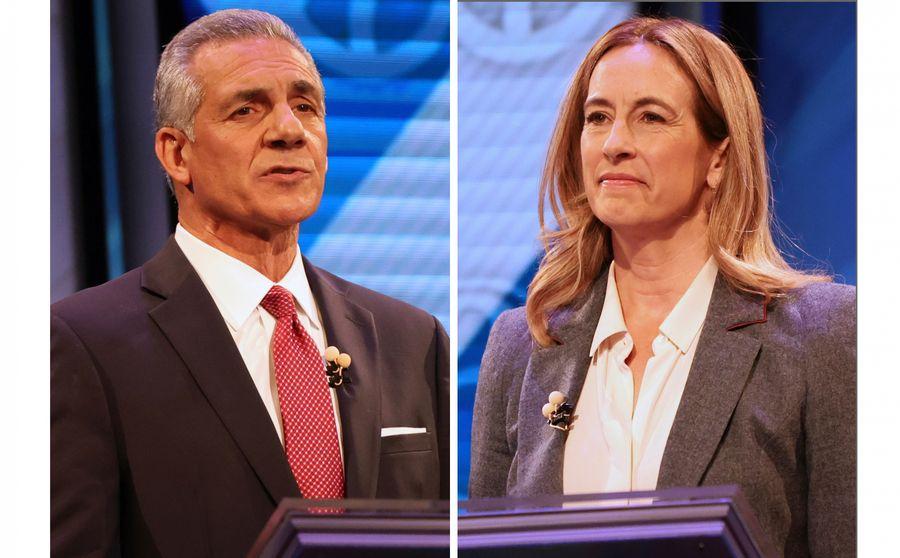
The Democratic candidate, Mikie Sherrill, the current U.S. Representative for the 11th District, believes that the solution to New Jersey’s rising power prices is to double down on the clean energy policies that created them in the first place. She remains committed to the 2035 zero-emissions electricity mandate set by Democratic Gov. Phil Murphy under Executive Order 315 and supports the continued buildout of wind and solar, battery storage, and energy efficiency projects across the state.
Sherrill has mainly laid the blame for New Jersey’s high utility costs on the Trump administration – variously because of higher international tariffs, federal permitting delays, and the green spending cuts of the One Big Beautiful Bill Act – despite the chronological flaws with such an argument. If elected, she has promised to “declare a state of emergency on utility costs” on day one and freeze electricity rates for New Jersey consumers, even though she would appear to lack the legal authority to do so and such a move would financially impair the state’s two main investor-owned private utility companies.
Like Gov. Murphy, Sherrill would continue to use state funds to both subsidize higher-cost clean energy production and mask the financial impact on ratepayers through one-off utility bill credits. A Sherrill gubernatorial victory would be a vote for the policy status quo and would mean four more years of Democratic denial about the physics and economics of renewables.
The Republican candidate, former state Assemblyman Jack Ciattarelli, has proposed adding more natural gas and nuclear generation capacity, which would get directly at the root cause of New Jersey’s escalating power prices: a dearth of dispatchable in-state electricity supply.
While Ciattarelli has offered anodyne public comments about climate change and sent a decidedly mixed message on renewables – proposing a ban on offshore wind farms while voicing support for rooftop solar in a state where it is cloudy an average of three out of four days each year – he has promised to pull New Jersey out of the self-destructive RGGI emissions reduction compact if he becomes governor. He has also proposed reconstituting the state’s Department of Energy, which was eliminated back in 1988, to help wrest energy policymaking from climate-captured regulatory agencies such as the Board of Public Utilities and the Department of Environmental Protection.
Ciattarelli should follow this up with the repeal of Gov. Murphy’s Executive Order 315 and replace it with a new goal of New Jersey becoming self-sufficient for its power requirements by the year 2035 or sooner. Regaining its electric independence would, in turn, facilitate an exit from the PJM regional grid, thus insulating New Jersey consumers from further price hikes caused by ill-conceived net-zero targets in neighboring states.
In the 2025 gubernatorial race, New Jerseyans are being offered a stark choice when it comes to sound energy policy. Hopefully, Garden State voters will trust the evidence of their eyes and ears about which political party is to blame for the current spike in New Jersey power prices and vote accordingly on November 4.
Support Our Mission
The Internet provides an endless stream of content. Not all of it is worth your time. That's why, every day, RealClearPolitics curates the most essential news and information—from all sides and across mediums. The links, videos, and podcasts curated here are the product of human judgment, not algorithms or AI. Please help power our mission of presenting a thoughtful, balanced public discourse through a tax-deductible donation.
Would you consider supporting us today?
Contributing to RealClear Politics through the RealClear Media Foundation supports essential initiatives that drive meaningful change.


RCP Today
Top stories on RealClearPolitics
The Takeaway
Polling intelligence and analysis delivered to your inbox
World News
Featuring the latest world news
Policy
Featuring the latest policy news
Support Our Mission
As part of RealClearPolitics, authors aim to provide balanced, non-partisan analysis by presenting top reporting and commentary from all sides of the political spectrum.
Trusted by policymakers and citizens alike since 2000