Keystone XL Passes Another Hurdle
Published March 6, 2013 • Read time: 3m
On Friday, the State Department released its draft Environmental Impact Statement (EIS) on the Keystone XL pipeline. It could not have been much worse for pipeline opponents.
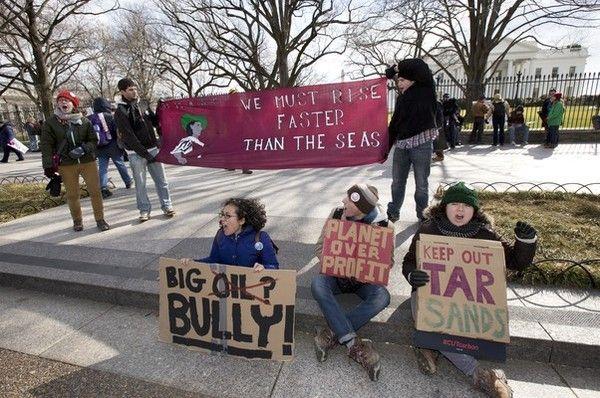
The majority of the opposition has united around the climate change meme—that the approval of the Keystone XL will assure the viability of the Alberta tar sands as a major global oil supplier, a situation which they claim would mean “game over” for the climate.
I have been arguing that such a characterization of the project is nonsense.
The State Department sees things the same as me.
Here is a particularly salient point from the just-released EIS:
If all such pipeline capacity were restricted in the medium-to-long-term, the incremental increase in cost of the non-pipeline transport options could result in a decrease in production from the oil sands, perhaps 90,000 to 210,000 barrels per day (bpd) (approximately 2 to 4 percent) by 2030. If the proposed Project were denied but other proposed new and expanded pipelines go forward, the incremental decrease in production could be approximately 20,000 to 30,000 bpd (from 0.4 to 0.6 percent of total [Alberta tar sands] production) by 2030. (As examined in section 4.15, such production decreases would be associated with a decrease in greenhouse gas emissions in the range of 0.35 to 5.3 MMTCO2e annually if all pipeline projects were denied, and in the range of 0.07 to 0.83 million metric tons carbon dioxide equivalent (MMTCO2e) annually if the proposed Project were not built.)
Translating the State Department’s calculated emissions reductions into global temperature savings, 0.35 to 5.3 MMTCO2e becomes 0.0000002°C to 0.000003°C of temperature savings annually for not building the Keystone XL and all other pipelines for transporting tar sands oil (in both Canada and the U.S.), and the 0.07 to 0.83 MMTCO2e becomes 0.00000004°C to 0.0000005°C of annual temperature savings if the Keystone XL were denied but other proposed new and expanded pipelines go forward.
Even for our climatically-concerned president, these amounts are insignificant and not worth pursuing.
Basically, the State Department’s EIS offers nothing for President Obama to hide behind if he were to deny the project on climate concerns.
Environmental activists Bill McKibben, James Hansen, Robert Kennedy Jr., and the likes have lost the battle in terms of the science.
All they can hope for now is a decision heavy on symbolism and emotion and light on facts and science.
The rest of us can hope that common sense prevails.
Being that we are dealing with Washington DC decision-making, the odds are probably pretty much stacked against us.
This article originally appeared in Cato @ Liberty and is reprinted with permission.

A RealClear Thanksgiving: Investing in a Better Future
David DesRosiers • RealClearPolitics
Trump’s Newsom Problem: Antagonist-in-Chief
Carolina Lumetta • RealClearPolitics
America’s Free Spirit
John Maxwell Hamilton • RealClearPolitics
The GOP Majority Should Go Out in Glory
Daniel McCarthy • RealClearPolitics
Republican Majorities Could Return Sooner Than Expected
J.T. Young • RealClearPolitics
The Danger Before the Attack
Leslie J. Sullivan • RealClearPolitics
RCP Today
Top stories on RealClearPolitics
The Takeaway
Polling intelligence and analysis delivered to your inbox
World News
Featuring the latest world news
Policy
Featuring the latest policy news
Support Our Mission
As part of RealClearPolitics, authors aim to provide balanced, non-partisan analysis by presenting top reporting and commentary from all sides of the political spectrum.
Trusted by policymakers and citizens alike since 2000