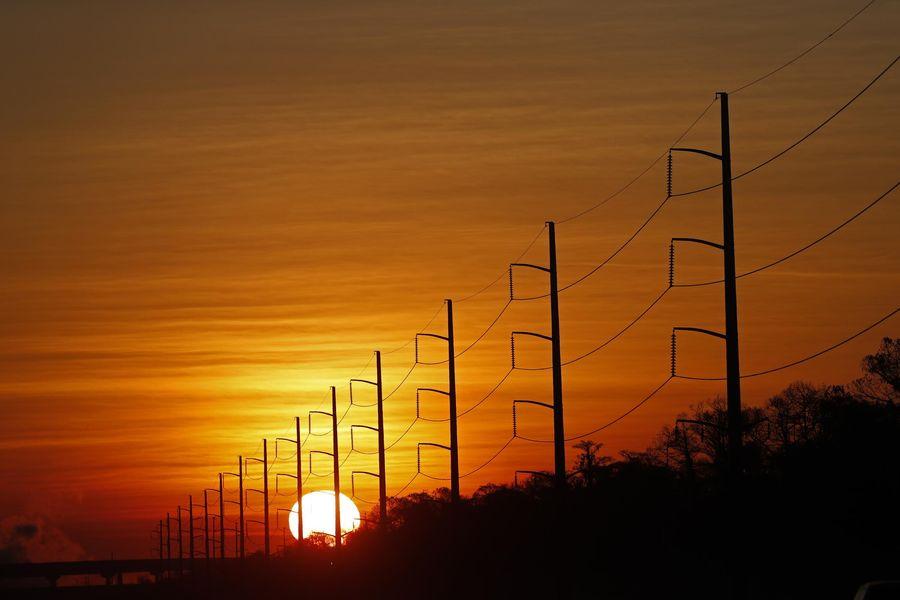
Power Grid
Infrastructure Bill Must Secure, Not Expose, Our Energy Grid
COMMENTARY
Published Sept. 30, 2021 • Read time: 5m
The road of good intentions must avoid the blind alleys of unintended consequences.
For decades, Americans have watched as our country’s infrastructure has deteriorated, and have long hoped that Washington would finally upgrade the arteries that connect our nation. As veterans who have dedicated our careers to this country, we have long been waiting for legislation like the bipartisan infrastructure bill, which passed the Senate 69-30 in August and awaits approval in the House.
However, there is a provision in the bill that could put the United States’ security and energy independence in peril, exacerbating the very problems that the legislation wishes to fix. We believe that the legislation addresses many of the infrastructure issues plaguing our country, but we hope Congress takes quick action to ensure that one provision doesn’t wind up creating even bigger security issues in the future.
That provision, buried deep within the 2,700-page bill (on page 1633 in Section 40412), is language that requires the federal government, within 90 days of the measure’s enactment, to establish a publicly accessible online dashboard of real-time data that tracks the operation of the bulk electric grid system in the 48 contiguous states.
If the infrastructure bill is signed into law as currently written, any disgruntled individual or group of individuals with access to a computer and an Internet connection will gain access to the entire repository of real-time, structural market pricing indicators, critical congestion locations, and other critical data with harmful impacts to the electrical infrastructure in the United States. The bill would essentially grant public access to incredibly detailed power-generating information of entire cities and Department of Defense installations and would provide key information to any adversary seeking to attack or dismantle the U.S. bulk electric grid.
Senate Heads Toward Approval of Keystone XL Pipeline Bill
GOP Senators Make Case for Keystone; Scott Walker Off To N.H.; FDR on Baseball
New GOP Senators Make Economic Case for Keystone
GOP Stays Stubborn About Climate Change
The language in the infrastructure bill would require the federal government to make public data that no fewer than four security agencies are currently trying to sequester, and for good reason. After all, we have seen entire regional grids fail from bad actors without access to this type of roadmap, ranging from a rifle-toting shooter in San Diego in 2013 to the recent SolarWinds breach that allowed hackers to gather information about the infected networks and inform others of how to enter that network without detection. This bill would make future attacks so easy that it almost feels like the U.S. would be inviting them.
Imagine the harm adversaries could do if they can access, disrupt and dismantle our electric grid, without our ability to stop them? What if New York City’s grid went down and needed an alternate power route, but all possible circuits were overloaded? The backup could not distribute power because a hack told the system that it was overloaded. What if grids were overloaded in Texas, on the heels of failing due to unprecedented cold and ice, as occurred this past winter?
In previous incidents, the larger, bulk electric grid was generally able to absorb or recover from one or two outages. However, Congress is also allowing access to the entirety of the distribution infrastructure and data as well. Hackers could attack both the bulk electric and the distribution grid, all at once. In fact, the hackers could attack the bulk electric grid from the distribution grid. Accordingly, this level of disclosure would invite a potential safety and security crisis that this country has never seen. Imagine the 2003 blackout in New York City and across the Northeast, but nationwide and for much longer.
Hackers can, do, and will continue to attack our electric infrastructure systems. However, If hackers knew how the grid’s interactivities were managed in real-time, they could determine how to target the backup systems while attacking the primary systems they support.
The data that the bill seeks to provision would allow hackers to do just that: create maximum damage with minimal effort, anywhere they wanted.
This is the danger the U.S. faces from this troubling language in the Senate bill and from our migration to clean energy that doesn’t address the larger vulnerabilities of our electric grid. Not only do we need to do everything we can to protect our overloaded system, but we need to think creatively about how we source the energy of tomorrow. It needs to be from new sources beyond our current grid, like locally sourced hydropower and wind.
As renewable energy and national security experts, who have used our decades of business and military experience to develop projects that would help restore the health of this planet, we believe strongly that the only way to truly build a renewable energy future is to reduce our reliance on electricity infrastructure that is vulnerable to weather and cyberattacks.
We have devoted our careers to this country and its security. Our mission today is to ensure that we protect our country from both crises we face today: climate change and energy security threats — both physical and cyber. It is a national imperative to remove this critical vulnerability from the infrastructure bill.
When it comes to energy security, which is vital to our national security, we must never allow unlimited transparency to our country’s electricity infrastructure and exposing it to foreseeable dangers. When President Biden says that we must Build Back Better, we know he’s not suggesting that we build energy resources that can be, and will be, interrupted or damaged in an instant. We urge Congress to heed his message and move to fortify rather than expose our electric grid.

Newsom Defies Voters, Juries and Lawmakers To Spare Murderers While Defending Abortion
Curtis Hill • RealClearPolitics
The Algorithmic Tilt
Frank Filingeri • RealClearPolitics
A RealClear Thanksgiving: Investing in a Better Future
David DesRosiers • RealClearPolitics
Trump’s Newsom Problem: Antagonist-in-Chief
Carolina Lumetta • RealClearPolitics
America’s Free Spirit
John Maxwell Hamilton • RealClearPolitics
The GOP Majority Should Go Out in Glory
Daniel McCarthy • RealClearPolitics
RCP Today
Top stories on RealClearPolitics
The Takeaway
Polling intelligence and analysis delivered to your inbox
World News
Featuring the latest world news
Policy
Featuring the latest policy news
Support Our Mission
As part of RealClearPolitics, authors aim to provide balanced, non-partisan analysis by presenting top reporting and commentary from all sides of the political spectrum.
Trusted by policymakers and citizens alike since 2000