Investigating Benghazi: Why We Need a Select Committee
Published Nov. 28, 2012 • Read time: 6m
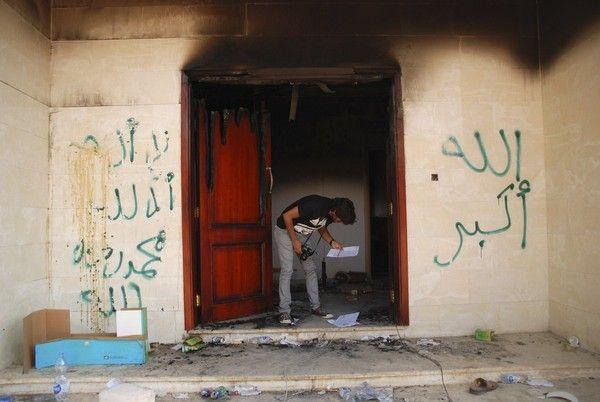
As we fixate on the latest version of Gen. David Petraeus’ testimony or the misleading statements of Susan Rice, I suggest that we stop and think about the size of what we are dealing with. The Benghazi tragedy raises questions concerning the protection of our embassies, the performance and capabilities of our military and our intelligence community, as well as the decisions of high-ranking officials in the Department of Defense, the State Department, the White House and possibly the Justice Department.
The scope of the questions that involve an array of officials, and sensitive agencies and departments of our government, is unprecedented. The inquiry into what happened and why, along with who is or should be accountable, calls for a focused, responsible effort equal to the seriousness and the complexities the issues.
I’ve seen this rodeo before, both in a constructive manner (Watergate, where I served as a counsel) and a less-than-constructive one (Clinton-era investigations, where I chaired a committee that probed at least one facet of the various scandals). On our present course, the prospects for a relatively short but thorough, credible, bipartisan congressional investigation are not good. The prospects for a disjointed, drawn-out mess, replete with partisan bickering, are much better.
It is easy to identify at least eight congressional committees (four in each chamber) with claims of jurisdiction in the Benghazi matter. No committee has jurisdiction over all of it, and several committees have jurisdiction over parts that overlap with the jurisdictions of other committees. Some of the committee hearings will involve classified information and will be conducted behind closed doors. Members of “Committee A” will not know what a witness told “Committee B” in a closed hearing. Gen. Petraeus’ recent appearance on Capitol Hill demonstrates how difficult it can be to get a consistent story when the witness is making multiple appearances before even the same committee.
Charge Against Trump Campaign Manager Eclipses Wisconsin Race
Arizona's Voting Rights Fire Bell
Judge Garland and the Left's Disdain for Truth
Military Has Wide Discretion on Bergdahl Charges
Perhaps not all committees with jurisdiction will have hearings, but if half of them do it will produce competing hearings, with competing staffs and competing press conferences over much of Capitol Hill. It will also take longer than necessary, as government officials shuffle back and forth giving repeat performances. Different committee chairmen and their committees will make different rulings on document production, whether to move for immunity for witnesses who refuse to testify on the basis of the 5th Amendment, and a host of other matters.
This is simply not the most efficient and credible way to proceed. And it is less likely to arrive at the truth. The seriousness of the matter calls for something better. It calls for a select committee that is given a specific mandate, a budget and a cut-off date that can be adjusted if it is agreed upon. It needs to be comprised of members of both parties who have been selected by their leadership because of their proven integrity, reputation for fairness, and expertise in a given area.
In a matter fraught with political implications, it is especially important that Congress accept its responsibility and minimize partisanship as much as possible. History demonstrates that this goal is much easier to achieve with a handful of selected people than it is with many. Since 1789, when Congress investigated a failed military expedition, select committees have been utilized to serve such important and sensitive functions, and the Benghazi matter should follow in that long tradition, whether by means of a joint committee of both houses of Congress or by either chamber.
Most select committees have become historical footnotes. Some, however, are well remembered because of the contribution they made to helping Congress carry out its duties of legislating, overseeing the executive branch and educating the American people as to the operation of their government. Ironically, it is because of the success of these panels that some members of Congress and others oppose the formation of one in this case.
They say that forming a select committee for a matter such as Benghazi, where a consulate and four American lives were lost, would attach too much importance to the investigation. They fear that it would be equating it with Watergate. Of course, if the Watergate standard, as they define it, is now the operative standard for the formation of a select committee, then seldom, if ever, will another select committee be formed.
Critics of the select committee miss the point on several levels. First of all, if indeed a comparison is to be made, one must look at the seriousness of facts and issues presented concerning Benghazi and compare them with the seriousness of facts and issues presented at the times when other select committees, such as Watergate, were formed. So compare the Watergate burglary with what we have here. Can there be any doubt that Benghazi passes the Watergate test?
The wisdom of utilizing a select committee should not just be judged on the outcome of the committee’s work; dramatic results are not always achieved or warranted. The select Watergate Committee is a beneficial reference point, not because of the end result of its investigation a year and a half after it was formed, but because of the process Congress utilized to deal with a difficult situation.
At that time, we had a Republican president and a Congress controlled by the Democrats. Yet the Senate voted unanimously to form the committee. Democratic leadership appointed Sen. Sam Ervin, reputed to be the chamber’s leading constitutional scholar, to chair the committee. The Republican leader appointed Sen. Howard Baker to be the vice chairman and leading member of his party on the committee -- a senator who was respected on both sides of the aisle. These men protected the legitimate partisan interests of their respective parties and the path was not always smooth, especially behind closed doors, but they understood that their colleagues, as well as the nation, were depending upon them to be responsible and seek the truth. Authority and accountability were clearly placed on the committee, and its members performed accordingly.
Select committees are not perfect creations by any means. A clear narrative is often difficult to produce under any circumstances. However, a select committee is simply much more likely to produce focused and credible results. Soon we will see if the United States Congress is still capable of coming together toward the common goal of getting to the bottom of a very serious matter. Or, are decisions about select committees simply reflective of positions based upon whose ox is in danger of being gored?

A RealClear Thanksgiving: Investing in a Better Future
David DesRosiers • RealClearPolitics
Trump’s Newsom Problem: Antagonist-in-Chief
Carolina Lumetta • RealClearPolitics
America’s Free Spirit
John Maxwell Hamilton • RealClearPolitics
The GOP Majority Should Go Out in Glory
Daniel McCarthy • RealClearPolitics
Republican Majorities Could Return Sooner Than Expected
J.T. Young • RealClearPolitics
The Danger Before the Attack
Leslie J. Sullivan • RealClearPolitics
RCP Today
Top stories on RealClearPolitics
The Takeaway
Polling intelligence and analysis delivered to your inbox
World News
Featuring the latest world news
Policy
Featuring the latest policy news
Support Our Mission
As part of RealClearPolitics, authors aim to provide balanced, non-partisan analysis by presenting top reporting and commentary from all sides of the political spectrum.
Trusted by policymakers and citizens alike since 2000