
Congress Oversight FBI
FISA Reauthorization Will Be Contentious. Again.
Published July 14, 2023 • Read time: 4m
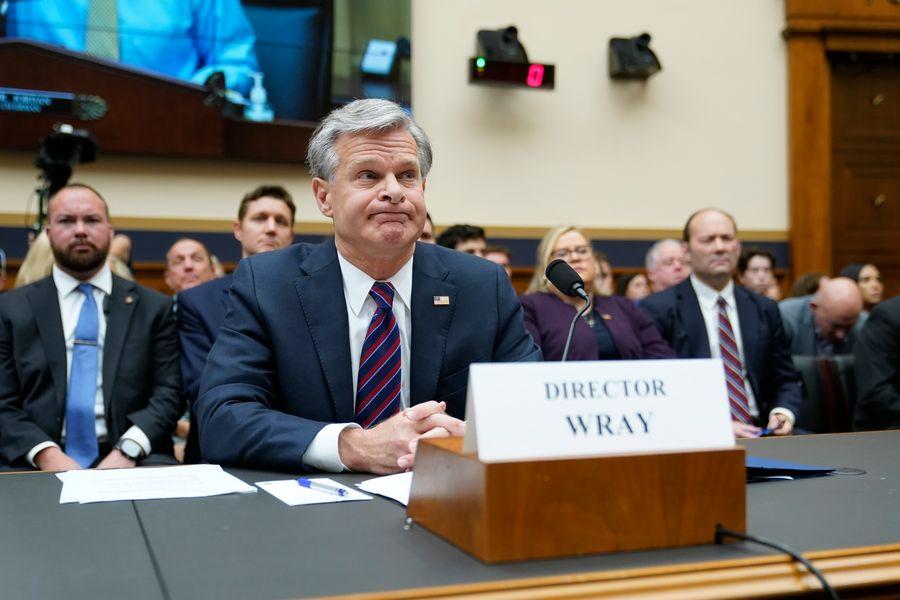
FBI Director Christopher Wray appeared before the House Judiciary Committee for over five and a half hours on July 12.
Representatives’ questions spanned everything from domestic terrorism to school board meetings, but more than a dozen members on both sides of the aisle expressed concerns about the FBI’s execution of the Foreign Intelligence Surveillance Act (FISA) that expires at the end of the year.
“We need to thoroughly review what the FBI is doing,” said Rep. Thomas Tiffany. “At a minimum, I will be allowing FISA to sunset if we don’t see significant reforms in the administration.”
“We [the FBI] have, on the issue of FISA, clearly had failures in the past. I've been very plain about that,” Wray said in response to a later question from Rep. Ken Buck.
FISA was first enacted in 1978 to institute congressional and judicial oversight of foreign intelligence surveillance activities and maintain the necessary level of secrecy for monitoring threats. FISA provisions “establish procedures for the authorization of electronic surveillance, use of pen registers and trap and trace devices, physical searches, and business records for the purpose of gathering foreign intelligence.”
The procedure states that, to get a FISA warrant, the FBI must find probable cause that the target of the FISA surveillance is a foreign power or agent. Then they must outline that cause in an affidavit, receive approval from the special agent in charge of the field office, have all statements verified by the National Security Division, and get their application approved by the Foreign Intelligence Security Court (FISC).
Charge Against Trump Campaign Manager Eclipses Wisconsin Race
Judge Garland and the Left's Disdain for Truth
Military Has Wide Discretion on Bergdahl Charges
Was Sierra Pacific Victim of Government Shakedown?
This hearing is not the first time the House Judiciary Committee has examined issues related to FISA this year. On April 27, Inspector General Michael Horowitz gave a statement before the committee that stressed the need for “transparency and oversight” to avoid or mitigate the repetition of “mistakes, errors, and abuses.” Horowitz explained that factual accuracy when showing probable cause was a pervasive problem among bureau agents before 2021.
“FISA applications were inaccurate, incomplete, or unsupported by appropriate documentation, based upon information the FBI had in its possession at the time the applications were filed,” Horowitz said.
In conjunction with other concerns about FBI agents’ “significant compliance issues” with factual accuracy review processes – known as Woods Procedures – the Office of Inspector General made nine recommendations to the FBI to avoid future issues and initiated an audit. By March 2020, the office also wrote a management advisement memorandum to FBI Director Wray because none of the 29 FISA applications they had reviewed by that point had complied with Woods Procedures between 2015 and 2019.
During the audit, the FBI implemented 40 corrective actions, including creating the Compliance Trends Analysis Group. In response to the DOJ’s 2021 FBI FISA Query Guidance, the FBI began an updated training course for its agents.
However, Horowitz said there were still disputes between the FBI Office of General Counsel and the DOJ National Security division over “query-related compliance incidents.” He called for more effective real-time supervisor review, internal oversight, and periodic external oversight of FISA warrants.
Wray assured the committee at the July 12 hearing that the reforms have helped the FBI move in the right direction and that the most recent FISC opinion had the FBI’s compliance with Woods procedures up to 98%.
This data did not put an end to the questions or accusations regarding the FISA policy. Rep. Matt Gaetz said that according to the inspector general, 1 million FISA queries in 2021 were made in error. Wray disagreed with the “characterization” of the inspector general’s findings but did not comment further within Gaetz’s allotted speaking time.
There was also some confusion among committee members regarding the use of FISA queries. Rep. Zoe Lofgren referred to all 3.4 million FISA queries in 2021 as warrantless “back-door searches.”
“Those are not queries in violation of rules,” Wray said. Section 702 of the Foreign Intelligence Surveillance Act allows the government to conduct targeted surveillance on foreign people. However, Reps. Ben Cline and Victoria Spartz still characterized the searches as “warrantless” later in the hearing. Cline also insisted that FISA was used as a “domestic surveillance tool,” while Wray reiterated that the FISA use is “focused on foreigners overseas in the context of national security investigations.”
FISA will expire on Dec. 31 of this year, and Congress will have to decide whether to reauthorize it for a third time or leave it in the dustbin of history. The contention in these committee hearings over the FBI’s past blunders and confusion over FISA's basic, factual uses and misuses leaves the policy’s future in a precarious position.

Democrats Won the Midterms. Common Sense Won, Too
Jordanne Kemper • RealClearPolitics
The 120th Congress Shapes Up
Carolina Lumetta • RealClearPolitics
Flooding GOP Primaries With Democrats
Robert Natelson • RealClearPolitics
Washington Keeps Rewarding Oracle—Veterans Keep Paying the Price
Darin Gaub • RealClearPolitics
The Seeds of Unrestricted Warfare
John Teichert • RealClearPolitics
The Primary System Is Losing the Next Generation
Sean Trende • RealClearPolitics
RCP Today
Top stories on RealClearPolitics
The Takeaway
Polling intelligence and analysis delivered to your inbox
World News
Featuring the latest world news
Policy
Featuring the latest policy news
Support Our Mission
As part of RealClearPolitics, authors aim to provide balanced, non-partisan analysis by presenting top reporting and commentary from all sides of the political spectrum.
Trusted by policymakers and citizens alike since 2000