New Congress
New Lawmakers' Rude Awakening to the Realities of Congress
COMMENTARY
Published Feb. 19, 2021 • Read time: 5m
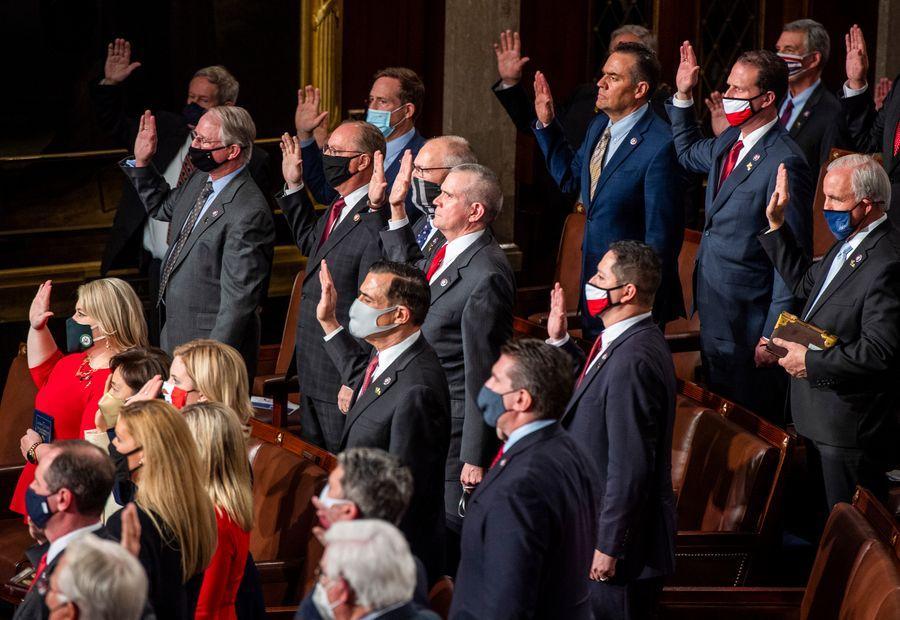
Last month, the 117th Congress arrived in Washington with plenty of fresh faces and new ideas for governing. More than five dozen new members entered the House and Senate. Only a handful of them, such as Wyoming Republican Rep. Cynthia Lummis, have previous experience in Congress.
These new-to-Capitol Hill officeholders made plenty of promises on the campaign trail, and they are eager to show voters that they can get things done. They want to write legislation, engage in oversight at hearings, and debate matters important to their constituents back home.
Unfortunately, their dreams of getting things done will soon be frustrated. Why? Obviously, the madness of Jan. 6 and the ensuing impeachment drama were intensely disruptive. No member of the House or Senate had planned to spend time dealing with traumatized staff, responding to constituents and colleagues who wanted to know what to do, and the crush of media requests.
There also is a new president, who wants Congress to pass a massive and controversial COVID-19 relief bill -- pronto. And the Democratic leaders of both chambers have their own priorities, including H.R. 1, the nearly 800-page bill that would remake American elections and more. The Senate, for its part, will also need to review and confirm more than 300 individuals who will be nominated to Cabinet positions by President Biden.
But the bigger problem is that they came to Congress under a misapprehension: that they would be allowed and empowered to govern. That is not the way Congress works these days. The newly arrived legislator is quickly confronted with a few basic demands: raise money for reelection; obey party leadership; and don’t fraternize with members of the other party.
McCain to Code Pink Protestors: Get Out of Here You Low Life Scum
AG Nominee Lynch Deflects Cruz Missile
Senate to Begin Hearings on Obama Attorney General Nominee
Democrats, Republicans Spar Over Benghazi Investigation
After weeks of delay, new members are finally finding themselves being seated on committees and subcommittees, whose first order of business will be to adopt committee rules with little input from minority legislators. Thereafter each committee chairperson will move to hold a televised hearing on a topic that the speaker of the House and Senate majority leader will view as helpful to party fundraising and building a good media narrative. Right about then is when the junior legislator will begin to wonder in earnest, “When do I get to govern?”
What new legislators should know is that it does not have to be this way. This current arrangement of Congress being run in a top-down, rabidly partisan fashion -- with most legislators relegated to a role akin to a court eunuch -- is a historically peculiar, and relatively recent, development.
It was not too terribly long ago that power in Congress was distributed among both leadership and committees. Newly arrived legislators could learn the crafts of policymaking, oversight, and bargaining through toil on committees. They could approach committee chairs to ask for funds to help their voters back home -- whether it be for paving a crumbling road, dredging a silted-up harbor, or sprucing up a local attraction to draw more tourists.
As recently as the early 1990s, the newly arrived lawmaker would have sufficient personal staff to answer the relentless requests from constituents who wanted help, and representatives of interest groups who came knocking on their office doors to talk. They also could promptly get nonpartisan, expert advice and analysis from the legion civil servants at legislative branch support agencies, such as the Congressional Research Service.
No more. Congress began cutting its capacity around 25 years ago despite the work of governing growing larger and more complex, and despite each legislator representing 750,000 constituents on average. Today, Congress has fewer staffers and fewer support staff than it did in the 1980s, and its internal organization and rules are ill-designed to meet the challenges of governing. In a fit of self-righteous pique, both parties swore off earmarks a decade ago, which snatched from most legislators the power to fix problems in their districts and states. (The big dogs in both chambers kept their power to direct spending.)

The good news is that newly arrived members need not shrug and tolerate this situation. The Constitution permits Congress to structure itself and fund itself as it sees fit. Congress has reformed itself previously and it can reform itself again.
Freshmen should demand that they be empowered to govern. They can work with the Select Committee on the Modernization of Congress, which has been making upgrades to the House of Representatives. They can approach the legislative branch appropriations subcommittees, and request more funds, better technology, and other changes to enable legislators to better serve the voters who pay their salaries. They also can get together and form Article I caucuses that will bargain with chamber leaders for upgrades.
Newly arrived legislators have an inherent interest in making Congress work better for them, and the country. With the public approval rating of Congress hovering at 25%, they can make the case that business-as-usual hasn’t been working. Seldom in the life of an elected official does self-interest and the public good so neatly coincide. New legislators should seize the opportunity to be changemakers.

A RealClear Thanksgiving: Investing in a Better Future
David DesRosiers • RealClearPolitics
Trump’s Newsom Problem: Antagonist-in-Chief
Carolina Lumetta • RealClearPolitics
America’s Free Spirit
John Maxwell Hamilton • RealClearPolitics
The GOP Majority Should Go Out in Glory
Daniel McCarthy • RealClearPolitics
Republican Majorities Could Return Sooner Than Expected
J.T. Young • RealClearPolitics
The Danger Before the Attack
Leslie J. Sullivan • RealClearPolitics
RCP Today
Top stories on RealClearPolitics
The Takeaway
Polling intelligence and analysis delivered to your inbox
World News
Featuring the latest world news
Policy
Featuring the latest policy news
Support Our Mission
As part of RealClearPolitics, authors aim to provide balanced, non-partisan analysis by presenting top reporting and commentary from all sides of the political spectrum.
Trusted by policymakers and citizens alike since 2000