
Redistricting
Gerrymandering Fuels More Radicalized Primaries
COMMENTARY
Published Feb. 28, 2022 • Read time: 5m
As this decade’s redistricting process comes to a close, political prognosticators are finalizing their tally of which party will win or lose relative advantage – with a preliminary scorecard showing a gain of 11 Democratic-leaning seats in Congress.
The redistricting horse race, however, overlooks the outcome that will impact our democracy the most: the further decline of competitive districts and the resulting influence of radicalized primaries. As renowned redistricting tracker David Wasserman summarized, “The House's pro-GOP bias may be reduced or eliminated, but the House is also on pace to be more anti-competitive than ever.”
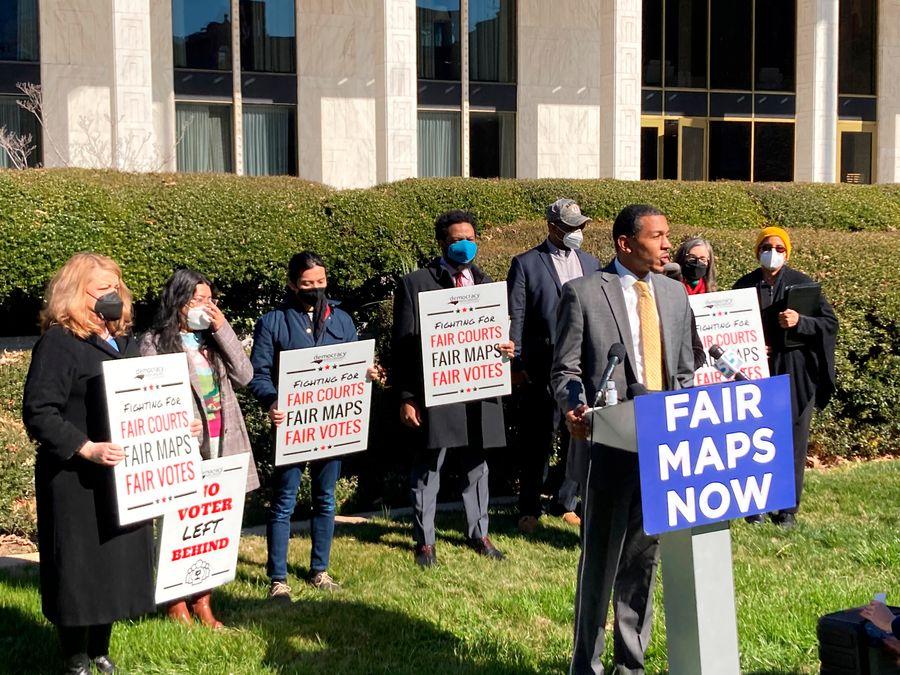
Uncompetitive congressional districts fuel partisan polarization and democratic dysfunction in two main ways. First, they make general elections forgone conclusions for one party. This essentially disenfranchises members in the minority part in most House districts in the country, while simultaneously removing accountability for officeholders who do not represent a balanced electorate. This is the well known gerrymandering problem. Second, they shift the election of consequence to the party primary and empower a small, unrepresentative group of voters to effectively decide the outcome; this is the much less well known, yet even more pernicious, “Primary Problem.”
Gerrymandering and the primary problem are caustic cousins that are disenfranchising voters, dividing our country, and driving our democracy into a ditch. In 2020, just 10% of voters nationally cast ballots in primaries that effectively decided 83% of congressional races, according to the Unite America Institute.
McCain to Code Pink Protestors: Get Out of Here You Low Life Scum
AG Nominee Lynch Deflects Cruz Missile
Senate to Begin Hearings on Obama Attorney General Nominee
Democrats, Republicans Spar Over Benghazi Investigation
In 2022, we can expect an even smaller number of voters to decide an even greater number of elections. FiveThirtyEight forecasts there will be at least seven fewer highly competitive seats. That’s eight more districts where elections will effectively be decided in the primary, and roughly five million more voters who might have voted in competitive contests, whose general election ballots will simply be a rubber stamp.
Partisan primaries push both parties to their extremes, especially when incumbents retire or are challenged from within their own party. On March 1, Texas will hold the first primary of 2022 and serves as a good example of this dynamic.
Texas’ new congressional maps were drawn by Republicans to reinforce their existing advantage and were graded an “F” by the Princeton Gerrymandering Project. Of 38 districts, just one will be highly competitive – down from six in 2020.
One Texas Democratic incumbent, Rep. Henry Cuellar, is facing a more progressive primary challenger backed by Rep. Alexandria Ocasio-Cortez, who herself won office in 2018 by defeating Rep. Joe Crowley in the primary with the support of just 5% of voters in her district. Ocasio-Cortez attacked Cuellar in a recent visit to Texas for his support of making changes to the Build Back Better plan in order to pass the bipartisan infrastructure package.
One Texas Republican incumbent, Rep. Kevin Brady, is retiring, and 11 candidates are vying to fill his seat. The two leading contenders for the race “both denied the reality that Biden actually won the election,” according to the Daily Beast’s Sam Brodey. “[W]hoever wins this seat is guaranteed to be far Trumpier than its current occupant … a wonky lawmaker who is better known for his views on tax policy than, say, the efficacy of the COVID vaccine,” Brodey writes.
The dynamics in Texas are not unique; competitive seats have also been gerrymandered out of existence in Democratic-controlled states, such New York and Illinois. Over the course of this year’s midterms, we will see contests to replace at least 42 retiring members of Congress and many more primary challenges – including three races in which former President Trump has endorsed against an incumbent Republican, and three races in which the Justice Democrats have endorsed against an incumbent Democrat. Each election is set to exert a centrifugal force on our body politic, pulling our country further and further apart.
The impact of gerrymandering and partisan primaries on our democracy is now as predictable as the outcome of most congressional contests: a rising tide of ideological purity on the left and, more dangerously, the anti-democratic extremism on the right, a self-reinforcing cycle of toxic and potentially violent polarization, and a diminished capacity for self-governance that hastens America’s decline.
It will be another decade before we can realistically address gerrymandering – either by pursuing independent commissions to take the process out of the hands of self-interested politicians, as four states have already done, or by going one step further by moving beyond the single-member district model that enables gerrymandering in the first place.
We can, however, solve the primary problem over the next several election cycles by abolishing party primaries and ensuring general elections are decided by a majority of voters – as another four states have already done. Alaska became the latest by passing a ballot initiative in 2020 for a “top-four” nonpartisan primary that will be implemented for the first time this year, giving every Alaskan a vote that counts and a voice that matters.
While most attention this midterm season will focus on the outcome of an albeit fewer number of competitive congressional races, we must not lose sight of the fact that our country’s future hinges not just on whom we elect – but how we elect. We must make the 2020s the final decade in which gerrymandering and party primaries remain a scourge on our democracy.

Jon Finer’s Old and Dangerous ‘New Approach’ to Israel
Peter Berkowitz • RealClearPolitics
The President Deserves Better
John Ullyot • RealClearPolitics
Congress Doesn’t Need Another Blame Game. It Needs To Find What’s Broken
Jarrod Bernstein • RealClearPolitics
Democrats Won the Midterms. Common Sense Won, Too
Jordanne Kemper • RealClearPolitics
The 120th Congress Shapes Up
Carolina Lumetta • RealClearPolitics
Flooding GOP Primaries With Democrats
Robert Natelson • RealClearPolitics
RCP Today
Top stories on RealClearPolitics
The Takeaway
Polling intelligence and analysis delivered to your inbox
World News
Featuring the latest world news
Policy
Featuring the latest policy news
Support Our Mission
As part of RealClearPolitics, authors aim to provide balanced, non-partisan analysis by presenting top reporting and commentary from all sides of the political spectrum.
Trusted by policymakers and citizens alike since 2000