
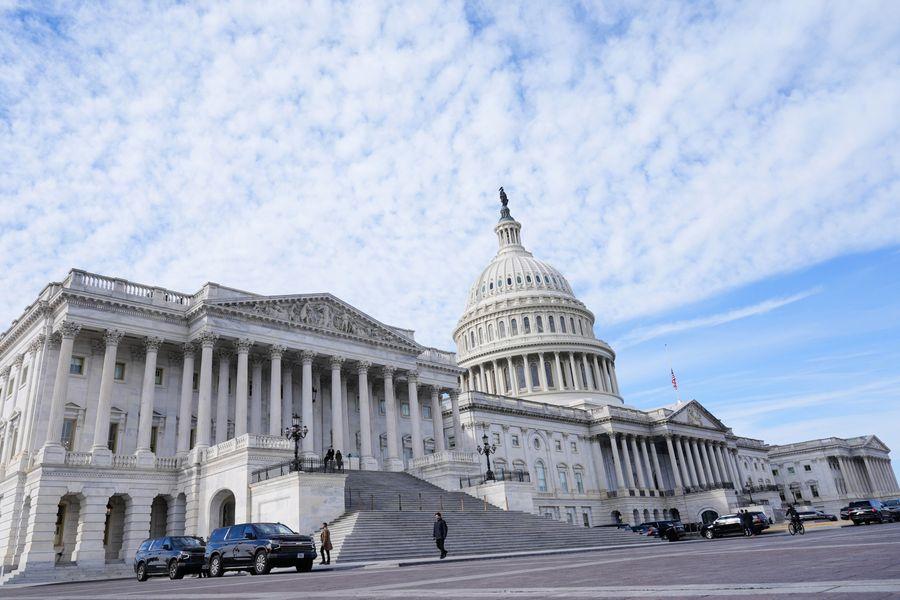
Capitol
Congress Tells the Retreat Caucus To Sit Down
COMMENTARY
Published March 6, 2026 • Read time: 5m
Over the last 48 hours, both chambers of Congress have held formal votes on War Powers resolutions to terminate US military operations in Iran – and both said no. The Senate voted down its measure 47-53, largely along partisan lines, with the House following suit 212-219 on Thursday.
Had these resolutions passed, they would have carried the force of law – a formal congressional directive under the War Powers Resolution’s termination mechanism requiring the president to withdraw American forces from hostilities.
Congress clearly made the correct decision here. Some of the votes may have been symbolic knowing that even if the motion had passed, it would have been vetoed by the president. But given how serious some of these members were to block all action, the implications of actually following through on withdrawal mid-operation deserve serious consideration.
The United States is one week into an operation that killed Iranian Supreme Leader Ali Khamenei, degraded Iran’s ballistic missile capacity by 86%, and functionally eliminated its navy – all while allied nations across the Gulf absorb retaliatory strikes in their cities precisely because of their longstanding ties to the United States. Walking away now would leave those partners exposed and wondering what all the damage inflicted on their cities was actually for.
Underlying these resolutions is the premise that the president lacked the authority to launch this operation – that he needed to go before Congress and request a formal declaration of war, and in failing to do so acted illegally. The president holds Article II authority as commander in chief, and the War Powers Resolution itself permits the introduction of forces into hostilities after notifying Congress within 48 hours – which Trump did – with operations allowed to continue up to 60 days without further authorization.
McCain to Code Pink Protestors: Get Out of Here You Low Life Scum
AG Nominee Lynch Deflects Cruz Missile
Senate to Begin Hearings on Obama Attorney General Nominee
Democrats, Republicans Spar Over Benghazi Investigation
We are one week in. The resolutions that just failed were attempts to invoke that framework’s termination mechanism, and both chambers rejected them.
What deserves far more scrutiny is the notion now gospel among the antiwar left and a segment of libertarian Republicans that diplomacy is a goal in and of itself and that if only the United States had been more patient, more willing to talk, none of this would have been necessary.
The facts of the situation make this argument impossible to sustain.
Donald Trump dedicated the entirety of his first term to pursuing a better deal with Iran. His strategy balanced a maximum pressure campaign aimed at cutting off the economic ties Tehran had developed under President Obama’s JCPOA – money Iran used to build up its missile program and fund proxy forces throughout the region.
His second term picked up exactly where the first left off. When Netanyahu flew to Washington in February 2025 with a slide deck showing Iran racing toward a nuclear breakout and urged military action, Trump overruled him in favor of diplomacy. A month later, he wrote directly to Khamenei offering him a new round of negotiations, warning that failure to accept would carry serious military consequences.
When Israel launched Operation Rising Lion that June anyway, the United States joined in a deliberately limited fashion: Operation Midnight Hammer targeted Iran’s three nuclear facilities and nothing else, with Secretary Pete Hegseth saying explicitly that the scope was “intentionally limited” to give Iran a chance to negotiate. And that’s exactly what Trump did: He forced a return to the diplomatic table over Israel’s continued push for broader action.
As late as last month, Trump told reporters he was “not happy” with the talks but signaled he would give negotiators more time. Iran had long refused to budge on Washington’s demands across the board, including on their ballistic missile program and their longtime support for terrorist proxy forces throughout the region.
Special envoy Steve Witkoff has since revealed that even Hamas proved more reasonable at the negotiating table than the Islamic Republic, and after three sessions, he and Kushner told the president plainly, “They are lying to us.”
None of this resembles the Iraq War parallel critics are so eager to draw. Iraq had no domestic mass uprising demanding regime change from within; Iran’s January 2026 protests, the largest since 1979, ended with Khamenei ordering live fire on his own people, killing as many as 36,500 in 48 hours alone.
But Americans need not base this operation on humanitarian grounds alone. The ballistic missiles that Iran has been firing at just about everyone in range this past week – the same weapons Tehran refused to even discuss in every round of negotiations – are precisely the capability that this operation is designed to destroy, and precisely the reason to see it through.
Diplomacy is a tool to achieve ends, not an end in itself. A tool that produces nothing after years is one that serious people should recognize is no longer of use. At some point, the refusal to act becomes its own form of policy failure.
Congress had an opportunity to bring this to a close, and both chambers have now gone on the record as declining to do so. Sen. Tim Kaine has already promised further attempts, and the isolationist wing will only grow louder as the operation stretches on and casualties mount. The majorities that held this week need to continue holding their ground; the worst possible outcome is action we abandon halfway through because our political class lacked the conviction to finish the job.
Support Our Mission
The Internet provides an endless stream of content. Not all of it is worth your time. That's why, every day, RealClearPolitics curates the most essential news and information—from all sides and across mediums. The links, videos, and podcasts curated here are the product of human judgment, not algorithms or AI. Please help power our mission of presenting a thoughtful, balanced public discourse through a tax-deductible donation.
Would you consider supporting us today?

Democrats Won the Midterms. Common Sense Won, Too
Jordanne Kemper • RealClearPolitics
The 120th Congress Shapes Up
Carolina Lumetta • RealClearPolitics
Flooding GOP Primaries With Democrats
Robert Natelson • RealClearPolitics
Washington Keeps Rewarding Oracle—Veterans Keep Paying the Price
Darin Gaub • RealClearPolitics
The Seeds of Unrestricted Warfare
John Teichert • RealClearPolitics
The Primary System Is Losing the Next Generation
Sean Trende • RealClearPolitics
RCP Today
Top stories on RealClearPolitics
The Takeaway
Polling intelligence and analysis delivered to your inbox
World News
Featuring the latest world news
Policy
Featuring the latest policy news
Support Our Mission
As part of RealClearPolitics, authors aim to provide balanced, non-partisan analysis by presenting top reporting and commentary from all sides of the political spectrum.
Trusted by policymakers and citizens alike since 2000