
Social Media Kids Ohio
2026 Election Will Be Decided by Creative Ads 'Everywhere'
COMMENTARY
Published April 15, 2025 • Read time: 4m
Ready for 2026? Political advertisers certainly are.
Not only did political ad spending top $12 billion last year (a new record), with total marketing estimates exceeding $18 billion (another record), but political ad buys are well underway for the 2025 and 2026 races. Two races of note: the New Jersey gubernatorial election and the Florida special election to fill the seat held by former Rep. Matt Gaetz. Millions upon millions will be pumped into both races, among others.
But it is up to candidates, campaigns, and other advertisers to spend their ad dollars wisely. Not only is financial mismanagement a serious disservice to donors, but it can only result in electoral losses, as political messages fall on blind eyes and deaf ears. To manage donor dollars wisely, advertisers need to think outside the box, employing an “everywhere” strategy that does not rely on preconceived notions or stale thinking.
According to AdImpact, broadcast is currently the largest recipient of ad dollars, accounting for more than 30% of the total 2026 spend thus far. Cable and digital are competing for second, with social media advertising projected to reach $273 billion globally by 2026.
And there is room for radio, cable, and broadcast. Millions of voters still consume such traditional media, so candidates and campaigns have an opportunity to engage with them where they happen to be active.
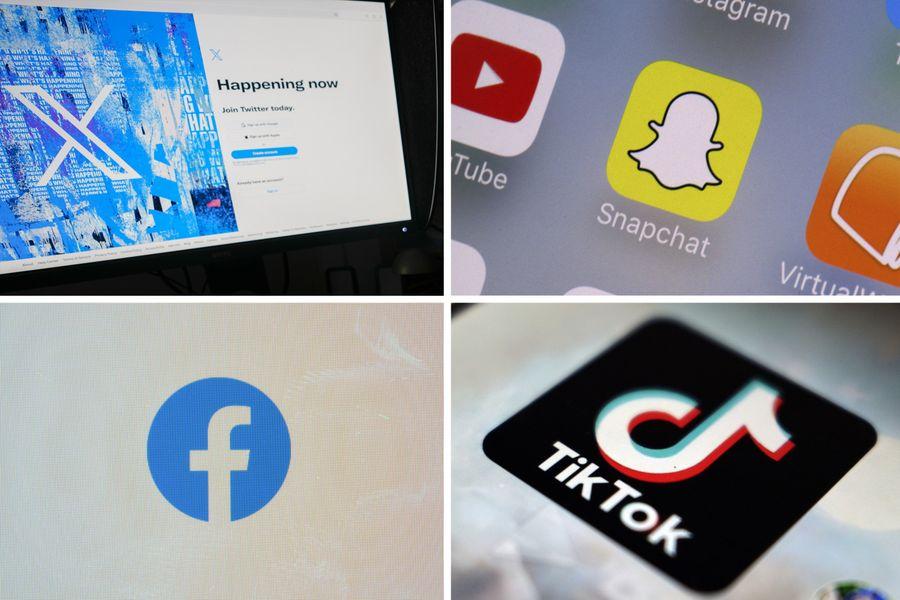
But there is much, much more to political advertising today than traditional content consumption. From YouTube clips to Spotify podcasts, radio stations and cable news networks no longer have monopolies on insightful, persuasive material, and political advertisers need to rewire their thinking to reflect new realities. For Democrats, advertising on MSNBC may be time-tested, but it may not be as impactful anymore as a short spot on “The Young Turks” and “Pod Save America” – not when MSNBC’s ratings have collapsed post-2024. On the flip side, Republicans can’t just rely on Fox News at the expense of YouTubers who register millions of views or direct social media engagement on Facebook or Twitter/X.
Spotify recently announced that its own programmatic ad offerings will scale by 2026, with its advertising business growing exponentially in the months ahead. Advertisers, including candidates and campaigns, need to pay attention. Not only does Spotify have 675 million monthly active users, but the company is also growing its video inventory to reach audiences new and old in various ways. As video grows, so too will advertising potential.
By turning down an “everywhere” strategy, candidates and campaigns will sell themselves short, failing to win hearts and minds because they aren’t engaging with voters on the right platforms. In far too many cases, a political candidate may have a winning platform and the charisma to communicate it, only for their communication to be so limited and shortsighted that voters don’t actually know about it. The Harris campaign’s 2024 failure to lean into YouTube content, while the Trump team reached millions of potential supporters through earned and paid media on YouTube, should be a warning sign to the campaigns of the future.
Republicans should learn lessons too. In 2024, advertising on Meta and Google was more than three times higher for Democrats than Republicans. While that didn’t come back to bite the GOP in a red-wave year, the same may not hold true in 2026.
Both Democrats and Republicans need to be wary of diminishing returns on advertising, particular on social media. Ad fatigue and audience saturation are real factors, forcing advertisers to retain creativity over the course of an entire ad campaign (and not just in the first month) while tinkering with creative if it is not resonating as expected. Over 80% of social media advertisers use multiple tactics to combat diminishing returns, with more than half expanding into additional digital channels beyond social media ads. If Instagram isn’t working, maybe the answer lies in Spotify or YouTube, but not experimenting is a failure.
Digitization makes experimentation easier than ever before, providing real-time feedback on ad performance. Yet the continued insistence on radio, cable, and broadcast suggests that valuable lessons are not being learned by both parties. How much longer will candidates and campaigns fail to recognize the changing media landscape?
Political advertising has been described as a “Wild West,” and it’s up to the experts to explore every corner of the new frontier. Without an “everywhere” strategy, candidates and campaigns will go nowhere.

RCP Today
Top stories on RealClearPolitics
The Takeaway
Polling intelligence and analysis delivered to your inbox
World News
Featuring the latest world news
Policy
Featuring the latest policy news
Support Our Mission
As part of RealClearPolitics, authors aim to provide balanced, non-partisan analysis by presenting top reporting and commentary from all sides of the political spectrum.
Trusted by policymakers and citizens alike since 2000