
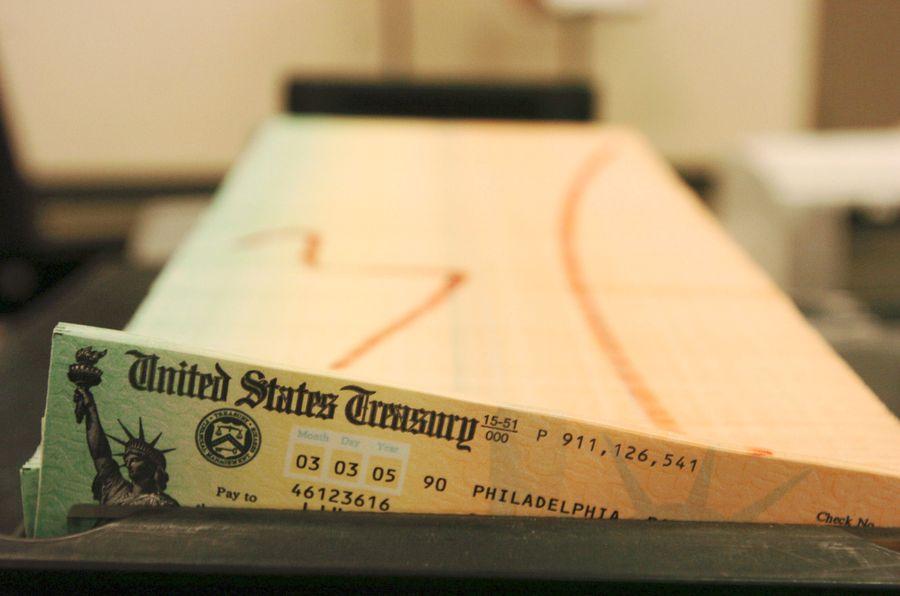
Social Security COLA
How Might We Reform Social Security, Part I
COMMENTARY
Published Dec. 12, 2023 • Read time: 4m
Join the Conversation
0For most of the history of Social Security, Americans have paid more into the system each year than the benefits paid out. However, the difference between taxes and benefits paid has been relatively small, again emphasizing that Social Security is a generational transfer of income, not a retirement savings system. Since 1970, the differences between inflows and outflows have varied widely, but on average we have paid in about 3% more than the benefits paid out.
However, since 2010 we have averaged paying out 7% more in benefits than the taxes collected. The last time Social Security ran deficits was from the early 1970s through the early 1980s as the U.S. population pyramid began to steepen. That led to the “Grand Bargain” between President Ronald Reagan and House Speaker Tip O’Neill in 1983. Their compromise, forged by an independent commission headed by Alan Greenspan, stabilized the system by increasing the payroll tax rate, taxing Social Security benefits, and gradually raising the retirement age. At the time, backers of the plan believed it would permanently shore up Social Security’s financial future.
However, by as early as the mid-1990s, actuaries begin to warn that the demographics were once again trending against the system as the birth rate continued to fall and life expectancies increased. Current estimates are that Social Security’s reserves will be exhausted in 2034. Thereafter, the system will only have enough income to pay about 80% of the currently scheduled benefits. This assumes a continuation of the current payroll tax rate and that the taxable income base to which the payroll tax applies will increase only by the inflation index for each year.
The FBI Gained Access; We'd Already Lost Our Privacy
Is Trump Right About NATO?
Arizona's Voting Rights Fire Bell
U.S. Officials Say 2 Americans Died in Brussels Attack
Many of the proposals to reform Social Security are focused on making sure it will be able to continue paying full benefits after 2034. Here is a great summary of many of the various alternatives by the American Academy of Actuaries.
The bad news, however, is that the condition continues to worsen after 2034. Based on the projections in this year’s Trustee Report the annual deficits will top out in the 2070s at around 27% if no changes are made.
RealClearPolitics
A slight silver lining is that the current projections assume the U.S. population flattens out in the later part of this century but does not suffer any significant decline. At that point our population pyramid will be a rectangle and Social Security should be in a steady state, needing a combination of about 25% more revenue or cost reductions from where we are now.
It is important to remember that these are projections. As Danish physicist Niels Bohr puckishly reminded us, “Prediction is very difficult, especially about the future.” The Trustees’ Report has alternative high and low projections that show a shortfall of nearly 100% on the high side and only 10% on the low side. The main drivers of the variation are future population growth and the health of the U.S. economy.
We are in uncharted territory with the current dramatic decline in the fertility rate. After centuries of high birth rates, it was only about five decades ago that women began having fewer children. Will that persist? It is hard to imagine now that American couples are going to want to start having large families again, but then no one really foresaw the collapse in the fertility rate we are currently experiencing. Even a small increase in the fertility rate could have a large effect on Social Security’s future.
There is also the issue of immigration. Currently much of the public is focused on the burden of the large number of migrants entering the country without papers. But having workers who are here legally and contributing payroll taxes would improve Social Security’s prospects. Ironically, the thousands of illegal immigrants who use fake Social Security cards pay taxes into the system but will never collect benefits. That currently adds about $12 billion to the system’s reserves annually.
Then there are potential unanticipated black swan events like, say, a pandemic. It’s unclear whether current projections have fully accounted for the effect COVID will have on the numbers, but there were about 1 million seniors who died prematurely in the pandemic – about 1.5% of all Social Security beneficiaries. We have also recently seen a decline in life expectancies, which few expected. But a reversal of that trend or a medical breakthrough, such as curing cancer, would put more pressure on the system.
Regardless, it is clear enough that Social Security will not be able to pay the current level of benefits within the next decade or so and, therefore, that Congress needs to act. The sooner it does the less drastic the corrections will need to be. But I am not holding my breath.
Next time we will look at some of the upsides and downsides to some of the popularly discussed alternatives.
Democrats Won the Midterms. Common Sense Won, Too
Jordanne Kemper • RealClearPolitics
The 120th Congress Shapes Up
Carolina Lumetta • RealClearPolitics
Flooding GOP Primaries With Democrats
Robert Natelson • RealClearPolitics
Washington Keeps Rewarding Oracle—Veterans Keep Paying the Price
Darin Gaub • RealClearPolitics
The Seeds of Unrestricted Warfare
John Teichert • RealClearPolitics
The Primary System Is Losing the Next Generation
Sean Trende • RealClearPolitics
RCP Today
Top stories on RealClearPolitics
The Takeaway
Polling intelligence and analysis delivered to your inbox
World News
Featuring the latest world news
Policy
Featuring the latest policy news
Support Our Mission
As part of RealClearPolitics, authors aim to provide balanced, non-partisan analysis by presenting top reporting and commentary from all sides of the political spectrum.
Trusted by policymakers and citizens alike since 2000