
Supreme Court Whats Left
Supreme Court Bingo, 2023 Edition
Published June 27, 2023 • Read time: 8m
Join the Conversation
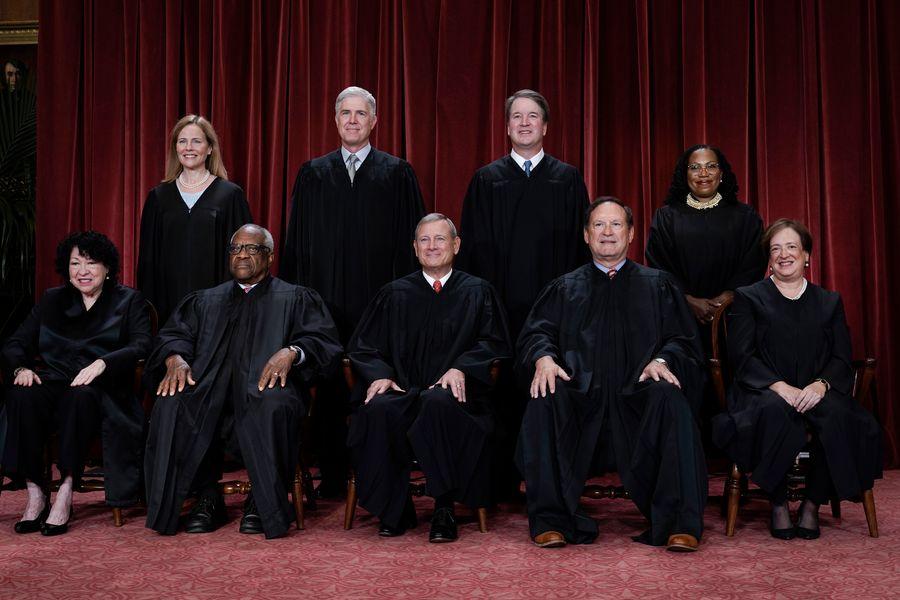
0As we approach the end of the Supreme Court’s 2022 term, major cases involving affirmative action, the constitutionality of President Biden’s student loan forgiveness program, and the ability of individuals to refuse to provide services for same sex weddings on the basis of their religious beliefs are still outstanding. This is consistent with the Supreme Court’s basic approach, where the most controversial cases aren’t released until the end of the term.
At the same time, this timetable allows us to gain insight into how those cases might turn out, through a process I’ve called “Supreme Court Bingo.” Because the high court’s rules for assigning cases operate in a predictable way, we can often gain insight into who is writing which opinion. From that, we can usually deduce how cases are likely to play out.
This year, however, there’s an unusual amount of uncertainty. It isn’t that we have no idea who is going to write the outstanding cases. It’s that given Chief Justice John Roberts’ and, to a lesser extent, Justice Brett Kavanaugh’s reluctance to move the law as far rightward as swiftly as, say, Samuel Alito, knowing the author of the case doesn’t necessarily let us know how the cases are probably going to turn out.
To understand why this is the case, we first need to understand how the Supreme Court’s opinion assignment process operates. After a case is heard, the justices meet in conference to vote on the outcome. Each justice will speak, with the chief justice speaking first and then proceeding in order of seniority, and then every justice will cast a vote, with the junior-most justice voting first. Afterward, the most senior justice in the majority will assign someone to write the opinion.
He's Mean, But Is He at Least Bright?
Supreme Hypocrisy
It's Time to End ALL Lame-Duck Sessions
The Court Fight Is About Democracy
A lot goes into this process. Justices generally prefer to take the most interesting cases for themselves. But not always. Clarence Thomas, for example, would have assigned the Dobbs decision overruling Roe v. Wade to Sam Alito. Why would Thomas not want this legacy for himself? Because Thomas is the only justice remaining from the 1991 term, when Justice Anthony Kennedy famously switched his vote from overruling Roe to saving it. Alito is famous for his ability to keep majorities intact, and would be most able to prevent Kavanaugh (or some other justice) from flipping their vote.
Likewise, justices may assign a case to prevent one of their colleagues from writing too expansive of an opinion. For example, if the vote in the affirmative action cases is to maintain affirmative action, it is unlikely that Roberts would assign, say, Justice Sonia Sotomayor to write the opinion, since she would probably write the opinion in a way that would be less palatable to him than, say, Kavanaugh would.
The real reason this works, though, is that the court divides its terms into monthly sittings. It tries to keep the number of cases heard in each month somewhere in the neighborhood of nine, and to ensure that each justice is usually assigned only one case from each sitting. This ensures that, by the end of the term, each justice writes a similar number of majority opinions.
So what do things look like now? Depending on how the opinions shake out, there are up to 10 cases remaining this term. From the November term there are two affirmative action cases and one about the scope of jurisdiction. From the December term there is Moore v. Harper, which concerns the scope of the independent state legislature theory (if any) and 303 Creative, which involves the ability of religious objectors to refuse to serve same-sex weddings (what the case is about will actually depend on how broadly written the opinion turns out to be).
In February, there are two student loan cases. In March there is Arbiton v. Hetronic International, which involves copyright protection and the scope of the Lanham Act. In April, Groff v. DeJoy involves the scope of religious accommodation required under the Civil Rights Act, while Counterman deals with the scope of the First Amendment.
So how might these opinions be assigned? It depends to some extent how these cases break down. If the student loan cases and affirmative action cases end up with one opinion each, then there are a total of 55 cases this term, meaning that each justice should write six, with one justice writing seven.
That one justice is Kavanaugh, who has already authored seven opinions this term and who is likely done writing majorities. Justices Thomas, Amy Coney Barrett, and Ketanji Brown Jackson have each authored six, suggesting they are mostly likely out of the running as well.
So who is left? Justices Sotomayor, Elena Kagan, and Neil Gorsuch have each authored five cases, so they likely each have one majority outstanding. Roberts and Alito have only authored three majority opinions each, leaving them with three more to write.
This is where things get interesting. One case was “dismissed as improvidently granted,” from the January term. This means that after hearing the case, the court decided that the grant of certiorari was not warranted. But this can happen after a case is assigned. As it turns out, Roberts, Alito, and Sotomayor all failed to author an opinion that month, meaning that they might have had a majority decision that ultimately did not get rendered.
So, let’s walk through the cases. In the March sitting, every justice except Sotomayor has written. That means she was likely assigned the Arbiton decision. That would give her six opinions, and finish her out for the term. In April, only Kagan and Alito failed to write an opinion. It seems likely that Alito has Groff while Kagan has the Counterman opinion, but if Kavanaugh or Roberts (and perhaps Gorsuch) would like to rule narrowly in Groff, it may be that Kagan has that opinion – with Alito writing Counterman. Regardless, Kagan likely has one of those opinions, and would be finished for the term.
That leaves the student loan cases from February, 303 Creative and Moore from December, and the affirmative action and Mallory opinions from November. Again, floating out there are the possibilities of a lost majority in the January term and that the affirmative action and student loan cases will result in two opinions. Gorsuch has to write an additional opinion, Alito will need two, and the chief would need three to round out his total.
Gorsuch could be writing a decision from either the February or December term, meaning he could have the student loan decisions, Moore, or 303 Creative. The question then becomes, which of these cases would Roberts assign, rather than keep for himself? It isn’t particularly obvious. The chief justice has significant interest in religious freedom issues, and may want a restrained opinion in 303 Creative. That, however, would leave Gorsuch with Moore v. Harper, which would almost certainly mean an expansive opinion there, which is difficult to imagine the chief justice signing on to (although he could be dissenting).
Ultimately, I would guess that Gorsuch is writing the 303 Creative opinion, leaving Roberts to author Moore. Whether that means the court is going to dismiss Moore as moot, or whether it suggests a restrained half-measure is anyone ’s guess. It does point toward a fairly broad opinion in the religious liberty/gay rights case, however.
That leaves the affirmative action and student loan cases, along with the jurisdictional cases. Two from November, one from February. Tantalizingly, neither Roberts nor Alito have authored opinions from either term. My hunch is that the chief has the affirmative action cases and Alito has Mallory, but that is just a best guess. Given Roberts’ caution this term, it would seem to point toward a restrained opinion, but the chief justice has tended to be more aggressive in cases involving the 14th Amendment than many of his colleagues.
I would also bet on Roberts keeping the student loan cases. Some think the release of a narrow standing opinion in Texas v. United States suggests that these cases will be tossed on standing grounds. It is possible, but it may also be that the Texas decision was released first to allow the later opinion to distinguish the reasoning. Again, given Roberts’ restraint this term, it is anyone’s guess how this decision will turn out. That would leave Justice Alito with just five cases this term, but it is possible he was slated to write the January case that was dismissed.
So there’s real suspense this term about how the final blockbuster cases will come down. We’ll start to find out Tuesday, when the court reconvenes to hand down some more opinions.

The GOP Majority Should Go Out in Glory
Daniel McCarthy • RealClearPolitics
Republican Majorities Could Return Sooner Than Expected
J.T. Young • RealClearPolitics
The Danger Before the Attack
Leslie J. Sullivan • RealClearPolitics
Jon Finer’s Old and Dangerous ‘New Approach’ to Israel
Peter Berkowitz • RealClearPolitics
The President Deserves Better
John Ullyot • RealClearPolitics
Congress Doesn’t Need Another Blame Game. It Needs To Find What’s Broken
Jarrod Bernstein • RealClearPolitics
RCP Today
Top stories on RealClearPolitics
The Takeaway
Polling intelligence and analysis delivered to your inbox
World News
Featuring the latest world news
Policy
Featuring the latest policy news
Support Our Mission
As part of RealClearPolitics, authors aim to provide balanced, non-partisan analysis by presenting top reporting and commentary from all sides of the political spectrum.
Trusted by policymakers and citizens alike since 2000