Colleges Ranking Pressure
Claremont McKenna Circumvents Due Process To Curtail Speech
COMMENTARY
Published Sept. 25, 2022 • Read time: 8m
Join the Conversation
0University administrators and professors who affirm the centrality of free speech to liberal education are vastly superior to those who stand silently by as censorship on campus proliferates, to say nothing of those who betray liberal education by condemning free speech and advocating stringent regulation of ideas and expression.
But when the chips are down, campus officials and faculty who say the right words publicly but maneuver behind the scenes to restrict utterances that ruffle feathers or offend sensibilities sap the spirit of liberal education. Fair-weather friends of free speech send the disheartening message that even its supporters do not take liberty of thought and discussion too seriously; that free speech ends where student or professor indignation begins; and that fashions and partisan preferences determine what facts may be considered, what opinions may be expressed, and what lines of inquiry may be pursued.
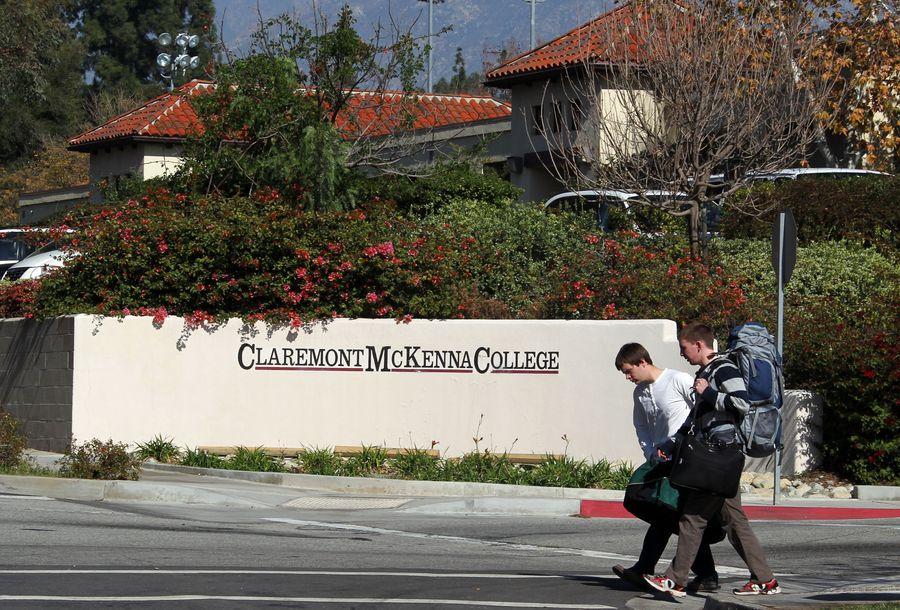
Claremont McKenna College takes pride in its ranking by the Foundation for Individual Rights in Education (FIRE) as “the nation’s No. 1 college for free expression.” However, the college’s protracted efforts to coerce Political Science Professor Christopher Nadon to use only institutionally approved words in discussions with students suggest that the school is a fair-weather friend of free speech.
In a Wall Street Journal op-ed last month, Nadon laid out Claremont McKenna’s end run around due process to stifle his teaching. In October 2021, in a class dealing with Socrates’ arguments in Plato’s “Republic” for subjecting poets to political supervision, Nadon addressed students’ questions about the costs and benefits of censorship and its practice in America. A student mentioned “The Adventures of Huckleberry Finn,” Mark Twain’s classic 19th-century novel of friendship between a young teenage white boy and a runaway black slave. The book, Nadon observed, had been removed not only from school reading lists but also from libraries and it had been reissued in expurgated versions. The offense? Huck, Nadon said, used the racial slur “n*gg*r.” A student complained to the administration that Nadon said what Huck said.
When Protesters Trample Trump's Rights
Donald Trump Should Read Up on Libel Laws
The Left May Well Get Trump Nominated
Trump Foes Should Stay Off His Stage
Instead of explaining to the aggrieved student the difference between targeting a person with an ugly epithet and examining its use by a fictional character in a literary work, the associate dean of faculty, Ellen Rentz, wrote to Nadon to arrange a telephone call about “some serious concerns.” The associate dean did not respond to Nadon’s request to put the college’s concerns in writing.
Then, Nadon received an email from Dean of Faculty Heather Antecol which stated the concerns. While emphasizing that no formal complaint had been filed, Dean Antecol, according to Nadon, “demanded to know the ‘pedagogic principles’ that I thought justified using ‘the n* word expressly.’”
Nadon responded to Antecol in writing: “I do think that when a student asks me a direct question that I am able to answer, good ‘pedagogy’ requires that I tell him the truth. Do you disagree? Similarly, when a student makes a false statement, I think my job requires me to confront that student with facts that contradict him. Do you think I am wrong to do so? I also hold the view that before criticizing or praising an author, one should first attempt to understand that author as he understood himself, something that requires reading and discussing exactly what he wrote. Do you think I am mistaken in this approach?” The dean did not reply.
The Claremont McKenna administration, however, communicated its displeasure. In the winter of 2022, the college removed Nadon from a required course scheduled for the fall of 2022 that he had taught 19 times in the past 11 years and replaced him with an adjunct instructor. His offense, he believes, was twofold: He pronounced the forbidden word, which was pertinent to class discussion, and, in his courses, he examined multiple sides of contentious moral and political questions. Nadon, though, can’t be sure of his offense. He has been compelled to rely on indirect information from colleagues because Dean Antecol, according to Nadon, “kept the process secret and played the role of investigator, prosecutor, judge and jury.”
In July, Nadon “filed an internal grievance for violations of the college’s published policies.” Two weeks later, the administration reinstated him in the course from which he had been removed.
The college, however, took off the gloves after Nadon wrote about his travails in his August Wall Street Journal op-ed. Instead of reaching out to Nadon to hear his understanding of events, CMC President Hiram Chodosh swiftly dispatched a letter to the Journal, which leveled a harsh accusation: “Playing the role of fragile victim, Mr. Nadon undermines the values he purports to uphold with false claims.” With his attack on Nadon’s character and claims, Chodosh irreversibly tainted the formal grievance procedure that Nadon initiated and which is still unfolding.
Since the college president is ultimately responsible for ensuring that formal grievances receive a fair hearing, Chodosh’s public denunciation of Nadon creates a conflict of interest for the faculty and administrators charged with adjudicating Nadon’s complaint. How can those who are accountable to CMC’s president – who hold their jobs at his pleasure and whose salary and benefits come under his purview – impartially consider a pending case in which President Chodosh has already pronounced the complaint frivolous and maligned the complainant as cowardly and duplicitous?
Even as he deprived Professor Nadon of due process, President Chodosh boasted in his Journal letter of CMC’s virtue: “In my nine years as president, Claremont McKenna has never held a disciplinary review, conducted an investigation or taken any adverse remedial action against any faculty member, including Mr. Nadon, for classroom speech.” It would be consistent with Chodosh’s lawyerly language – but a blot on his tenure as CMC president – if during his nine years at its helm the college had curtailed free speech without undertaking official disciplinary review or formal investigation and only had taken remedial actions that the administration, in its unreviewable wisdom, regarded as beneficial.
In fact, Nadon’s is not the only case that has arisen during Chodosh’s presidency that casts doubt on his boasts about the college’s commitment to free speech. In 2015, the administration stood idly by as students hurled scurrilous accusations of racism at Dean of Students Mary Spellman because of her attempt to reach out to a student who wrote in a college newspaper that coming from a “working-class immigrant Mexican family,” she “felt out of place” at CMC. Within a month, the dean resigned. In 2017, protesters at the college, some of them students, blocked students from attending Manhattan Institute Senior Fellow Heather Mac Donald’s campus lecture and then disrupted her presentation. Eventually, Mac Donald had to be whisked out of the back of the building and escorted off campus by the police. While condemning the protests and punishing seven student connected to them, CMC was unable or unwilling to ensure that the college community could listen to and exchange thoughts with a distinguished critic of progressive policy on inner-city crime and campus diversity.
Moreover, this past year CMC has instructed two faculty members in addition to Nadon that even if figures and texts studied in class use the degrading description of African Americans found throughout “Huckleberry Finn,” professors may not utter the term in the process of elucidating its significance. All three professors, according to FIRE, “say administrators violated their academic freedom rights by forbidding them from quoting renowned literary texts that contain a racial slur.”
In a letter to FIRE, Chodosh disputed at length that CMC has inappropriately curtailed Nadon’s speech and that of his two colleagues. While underscoring its determination to work with the CMC administration and expressing appreciation for the college’s explicit commitment to free speech, FIRE was unconvinced.
FIRE rejected Chodosh’s insistence that “a pattern of emailing faculty with ‘serious concerns’ about their in-class speech, summoning them for ‘informal’ meetings with senior university leadership, and non-renewing their employment after complaints about their protected in-class speech is totally within CMC’s purview and poses no danger to expressive rights.” Nadon and his two colleagues may not have suffered “adverse remedial action” stemming from official disciplinary reviews and formal investigations conducted by CMC. But sometimes the offense against due process is the failure to provide it.
CMC has taken punitive steps against Nadon and his two colleagues in the absence of official disciplinary review and formal investigation. “We remain concerned the professors were, either collectively or individually, subject to adverse employment actions arising solely from consternation over their controversial but protected, pedagogically-relevant expression,” wrote FIRE. “These actions include but are not limited to investigations, warnings, bans under the guise of ‘informal’ ‘advise[ment],’ and non-renewal.”
Not the least of the manifestations of the crisis of liberal education is the failure of college administrators and professors to see the essential connection between free speech and due process. Upholding both is essential to preserving communities devoted to the transmission of knowledge and the cultivation of independent thought.

A RealClear Thanksgiving: Investing in a Better Future
David DesRosiers • RealClearPolitics
Trump’s Newsom Problem: Antagonist-in-Chief
Carolina Lumetta • RealClearPolitics
America’s Free Spirit
John Maxwell Hamilton • RealClearPolitics
The GOP Majority Should Go Out in Glory
Daniel McCarthy • RealClearPolitics
Republican Majorities Could Return Sooner Than Expected
J.T. Young • RealClearPolitics
The Danger Before the Attack
Leslie J. Sullivan • RealClearPolitics
RCP Today
Top stories on RealClearPolitics
The Takeaway
Polling intelligence and analysis delivered to your inbox
World News
Featuring the latest world news
Policy
Featuring the latest policy news
Support Our Mission
As part of RealClearPolitics, authors aim to provide balanced, non-partisan analysis by presenting top reporting and commentary from all sides of the political spectrum.
Trusted by policymakers and citizens alike since 2000