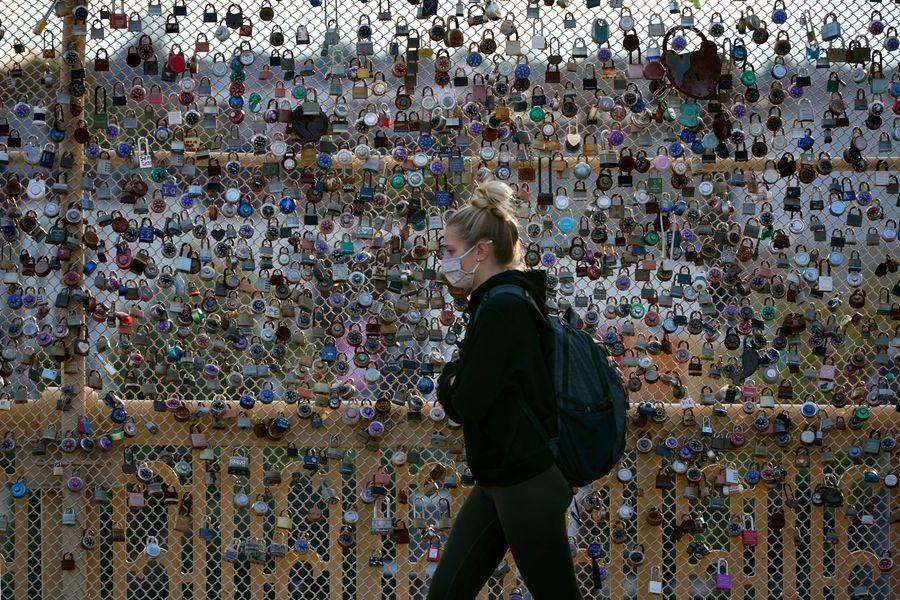
AP Poll Generation Z Pandemic
Coming of Age in an Era of Protest
Published March 20, 2022 • Read time: 12m
I talk with John Della Volpe about his latest book, “Fight: How Gen Z is Channeling Their Fear and Passion To Save America.”
CmC: First, a basic question: Where does the Millennial generation end and Gen Z begin?
JDV: Millennials are Americans born between 1980 and the mid-1990s. Gen Z (or Zoomers) are born in the mid-1990s through about 2010. Millennials are America’s largest generation. Gen Z is 70 million strong; they are the most educated and diverse.
In 2007, which was half a generation ago, I wrote a piece for National Journal on Millennials. Under your guidance – I was spending a semester at the Institute of Politics – it was headlined “Generation We.” You remember that piece?
Of course! It was a cover story and foreshadowed the 2008 Millennial Movement which was the Obama campaign.
“Generation We” was a play on words from the “Me Generation,” the less-than-flattering description of Baby Boomers. Obviously, when ascribing traits to cohorts numbering in the tens of millions of people, it’s painting with a broad brush. Still, let’s play a word-association game: I’ll say a generation, and in three words or less you describe it:
Gen X?
Overlooked and divided.
Millennials?
Hopeful, resilient suburbanites.
Gen Z?
Ready to fight.
Before we continue, John, let’s mention a couple of conflicts of interest: For starters, you run RealClearPolitics’ polling operation, RealClear Opinion Research. Also, you and I have been discussing generational differences based on your Harvard Institute of Politics surveys for nearly two decades. And we’re personal friends. So that’s out of the way.
Culture Wars, Old and New
The Better Option
Trust -- Society Depends On It
Family Fragmentation: Can Anything Be Done?
But as my friend, you know I was unconvinced about your optimism when it came to the Snowflake Generation, er, I mean Gen Z. But this book made me feel better about “Zoomers.” Do you remember the moment when you first thought the criticism of them was missing the point entirely?
I remember the day. It was November 6, 2018. That was the date of the last midterm election when young voters – powered by Gen Z – doubled the under-30 turnout from 2014 and broke modern participation records. Gen Z doubled the level of participation of Millennials, Gen X, and Baby Boomers when they were young. That’s when I knew that rather than melting like snowflakes, they were prepared to enter the arena and fight for their vision of a better America. Despite many skeptics, my Harvard IOP polling picked up a significant attitudinal shift related to participating in elections in 2017, and along with the attention that the Parkland students were commanding, I was optimistic that we might be entering a new chapter in generational politics.
You reference the tragic Parkland school shooting. One of the voices that emerged from that tragedy belonged to a Marjory Stoneman Douglas High School student named David Hogg. In a sign of the times, he became a polarizing figure: lionized by liberals, demonized by conservatives. But you’ve gotten to know him at Harvard – he wrote a foreword to this book – so I assume you’re a fan.
I had the chance to meet David, along with many other Parkland survivors and their families, less than two weeks after the shooting during a visit to Cambridge. I was struck that day, and in the years since, how committed he is to the cause of peace and justice. I cannot imagine the trauma he and thousands of other students have been faced with over the last few decades, seeing their friends and family members murdered in schools and streets across the country. David is highly intelligent, he’s finding more balance every day as a student of history, and with his sister Lauren, is as good an example as any of the strength and fortitude of Generation Z.
Speaking of polarization, Democrats and the media treated Parkland as a morality tale about guns. To them, the lesson was that Republicans beholden to the National Rifle Association make it too easy for Americans to acquire lethal weapons that have no place in our cities and suburbs. The GOP rejoinder was that the FBI was warned that the accused killer would commit a mass school shooting – and did nothing. Also, that the local school board policies encouraged the Department of Education in seeking to decriminalize bad student behavior because of racial disparities in arrest records. And that an incompetent and politicized local sheriff’s department enabled the whole thing. If the law had been followed, they say, the defendant never would have passed a background check.
These dueling narratives aren’t mutually exclusive. Is there anything that makes you think Zoomers are less partisan when it comes to “Ds” and “Rs” – and more into the kind of solution-based governance that draws from both major political parties and might break the logjam that characterizes our current politics?
One of the biggest myths about Gen Z is that they’re a bunch of socialists in search of ideological purity. They are a center-left, not a far-left generation, with as many interested in building consensus and compromise as in fighting for sweeping institutional changes that may not be possible in the current environment. They are certainly more progressive than their Gen X parents and Baby Boomer grandparents, but those attitudes are driven by the crises and chaos they’ve witnessed while growing up over the last two decades. They’re driven by values forged by seeing the tolls of economic and racial inequality, concerns about climate, and a faltering democracy. Their overwhelming turnout at the polls in 2018 and support of Joe Biden two years later are prime examples of their solution-based politics mindset.
You mention the “crisis and chaos” Zoomers have experienced. Along with their older Millennial siblings, they seem hyper-sensitive to the threats facing the world. But are these dangers starker than those faced by Gen Xers, or Baby Boomers?
Jean Twenge, a San Diego State psychology professor, says that beginning in 2012 young people began feeling more anxious and experiencing higher rates of despair. Even before the pandemic, one in four teenage girls showed symptoms of clinical depression. That year doesn’t correlate to anything particularly traumatic in U.S. politics or the economy. But it was the first year a majority of Americans owned a smart phone. Jean Twenge calls Gen Z “i-Gen,” not because they are self-absorbed, but because they’re chained to their iPhones.
What do you make of that? Drawing on your research – polling, focus groups, interviews you did for this book – and the hours you spend each week with undergraduates, what do you see as the animating forces defining young people?
It has never been easy to be a teenager. Social media has only made it more difficult. It is not uncommon for Zoomers to tell me how they wish they could turn back time to when they did not have a phone, or social media – and could live in the moment, enjoying the company of their friends without FOMO. It’s complicated, but when the oldest Gen Zers entered adolescence, we began seeing an increase in youth suicide after a relatively stable period. There was a 47% increase in suicide deaths among 10- to 24-year-olds in the 2016-2018 period compared to 2007-2009. Every single state, plus Washington, D.C., saw an increase.
From the time they were very young, Zoomers lacked the sense of security their parents and grandparents took for granted. Some 80% percent of families lost 20% of their wealth (and tens of millions of homes) in the Great Recession. By the time Zoomers were ready for school, red alert lockdown drills were routine – and soon they would see too many members of their community lose battles to opioids and depression. All of this without seeing our country unified, all of this before the coronavirus lockdowns.
It sounds like this phenomenon goes much deeper than social media bullying or normal high school angst.
What I discovered through my research is a growing correlation between mental health concerns and concerns about the state of our politics and the nation beginning in the 2016-2017 timeframe. Zoomers from coast to coast would tell me in town meetings that their biggest concerns about the nation centered around gun violence, school shootings, racism, white nationalism, inequality, among other things. Where I once heard stories of hope and opportunity, fear became the unifying force of younger Americans.
This is the environment Gen Z was born into. Social media and the lack of civility in politics have only exacerbated these issues. But rather than withdrawing due to their fear and anxiety, twice as many young Americans voted in the 2018 midterms than in the previous 30 years, and 2020 also saw record breaking turnout. These fears – and a profound sense of justice – have propelled Zoomers to action unlike any generation in eight decades.
Returning to something you said earlier, you mentioned Zoomer support for Joe Biden. The common perception is that these were Bernie Sanders fans. Although you cover this metamorphosis in the book, explain briefly how Biden came to connect with young voters.
Joe Biden always understood the power of the youth vote. He began serious outreach to form a political bond with them, though, on March 17, 2020, as COVID was ramping up and the Democratic nomination process was winding down. In a nationally televised address, he reached out to Bernie Sanders’ supporters with three simple words, “I hear you.” He recognized youth efforts for his opponent and promised to earn Gen Z and Millennial support over time; but to do that, Biden needed to not only build trust with a new generation of voters, but also to show how their engagement in the system can reap a tangible difference in pursuit of the issues they care deeply about. So, part one, he recognized them and earned their trust; part two, he empowered them by showing why politics matters; part three, he asked for their vote – and he asked for it early.
So, it wasn’t all about opposition to Donald Trump, then?
No, and neither was 2016.
You just completed an in-depth survey that breaks down registered U.S. voters into “Five Tribes.” The youngest group, which consists of progressive Democrats, are the least likely to see the U.S. flag in positive terms, and by far the most likely to say that America is not necessarily the best country in the world. Is our educational system failing these kids, or do they know something the rest of us don’t?
I do think the educational system could do a far better job teaching civics across the K-12 curriculum, that’s for sure. It’s important to realize that unlike Boomers, Xers, and Millennials, Gen Z has no recollection of a time when America was truly united. Every generation sees chaos and discord, but the Boomers also witnessed America celebrate Apollo 11; I remember the “Miracle on Ice” and the fall of the Berlin Wall; Millennials remember September 11, 2001. Gen Z has no memory of America being truly united in common purpose. Our nation’s fractured response to COVID-19 certainly didn’t meet the moment. I am hopeful that Putin’s atrocities in Ukraine might finally unite us all. Zoomers question America because they love America. I don’t know, but perhaps older generations should not be so sensitive to their criticism? If they didn’t care, they would not be working so hard to change the problems they see.
Speaking of Gen Z’s perception of America, and America’s place in the world, the generational differences you cover in this book have an international dimension, don’t they? Greta Thunberg, for one, is Swedish. You talked to other foreign students. Are they in the same head space as America’s Zoomers?
It depends, as every generation is formed by the collective experience in a particular country in a particular time. I have traveled extensively throughout Asia, and there are fewer parallels there than there are in Europe and South America. Overall, though, social media has influenced the collective experiences and shaped the spirit of a global cohort of young people. I write in the book how Greta Thunberg’s Climate Strike was directly influenced by the Parkland student-led school strike just a few months earlier. That likely doesn’t happen without social media and a shared set of values and desire to fight.
Like Millennials, Gen Z seems more progressive on a host of public policy issues than their elders. Is a majority – or a decisive plurality – of Zoomers destined to be Democrats?
Definitely a plurality and it could be a majority depending on who the Republicans nominate in 2024.
I know you’re a Democrat, John, but how would you advise Republican candidates to try and connect better with young voters?
For two decades, I’ve sat with candidates from both parties to brief them on the youth vote and how to build a rapport with the emerging generation. For everyone, but especially Republicans right now, it must start with listening and respect. They need to stop defending the January 6 mob; they need to stop asking “Why are you a snowflake?” and start asking other questions instead: “What keeps you up at night?” “What are your dreams and aspirations?” “What are the barriers to fulfilling them?” When they do that, they will hear issues like access to quality health care and education, income inequality, systemic racism, cost of housing, rising crime, and concerns about climate. Then Republicans need to develop public policy to address these concerns.
Republicans, and most elections analysts, believe the GOP is poised to recapture Congress in the 2022 midterms. Is it possible Zoomers could upset that expectation?
Record turnout and a 30-point margin for Democrats turned about 10 seats from red to blue in 2018. There’s little doubt a similar dynamic can be in play in 2022. There’s a long way between now and November and in the last wave of post-SOTU polling, the generic ballot has the race about even – or with a slight Democratic Party edge in large part due to stronger support from Zoomers and Millennials. According to Nielsen, viewership among Gen Z and Millennials was up 12% for Biden’s State of the Union compared to Trump’s in 2020. I take this as another sign that younger voters are paying close attention and we underestimate them at our own peril.

A RealClear Thanksgiving: Investing in a Better Future
David DesRosiers • RealClearPolitics
Trump’s Newsom Problem: Antagonist-in-Chief
Carolina Lumetta • RealClearPolitics
America’s Free Spirit
John Maxwell Hamilton • RealClearPolitics
The GOP Majority Should Go Out in Glory
Daniel McCarthy • RealClearPolitics
Republican Majorities Could Return Sooner Than Expected
J.T. Young • RealClearPolitics
The Danger Before the Attack
Leslie J. Sullivan • RealClearPolitics
RCP Today
Top stories on RealClearPolitics
The Takeaway
Polling intelligence and analysis delivered to your inbox
World News
Featuring the latest world news
Policy
Featuring the latest policy news
Support Our Mission
As part of RealClearPolitics, authors aim to provide balanced, non-partisan analysis by presenting top reporting and commentary from all sides of the political spectrum.
Trusted by policymakers and citizens alike since 2000