
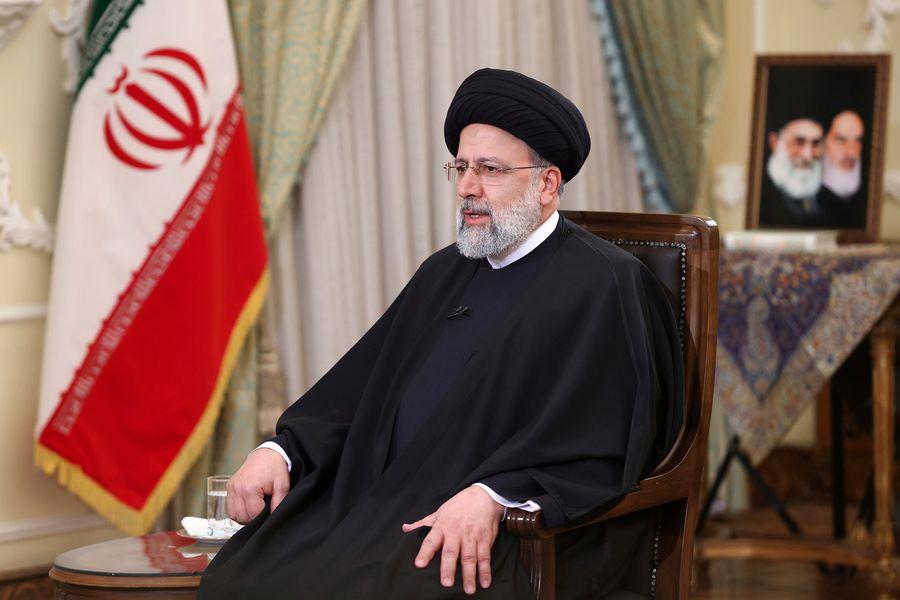
Iran
Cotton Letter Lessons for the Biden Administration
COMMENTARY
Published Feb. 6, 2022 • Read time: 7m
Join the Conversation
0To salvage the 2015 Joint Comprehensive Plan of Action – commonly referred to as the Iran deal – the Biden administration eased U.S. sanctions on Tehran, withdrew the Trump administration’s terrorist designation of the Iranian-backed Houthi insurgents in Yemen, and urged the Islamic Republic of Iran to resume talks over its nuclear program.
In return, Tehran offered a slap in the face. It ramped up its enrichment of uranium, drawing close to becoming the 10th nation to acquire nuclear weapons: “Iran can have enough weapon-grade uranium for a nuclear weapon in as little as three weeks,” according to a recent Institute for Science and International Security report. That would enable Tehran to “detonate a nuclear explosive underground in as little as six months.”
Concerns are growing that with time running out, the Biden administration – despite its stated aspirations for an agreement that is “longer and stronger” – will out of desperation for a deal press for one that is shorter and feebler. Deputy Special Envoy for Iran Richard Nephew's departure from his position a few weeks ago along with the decision by two other members of the administration’s negotiating team to step back from their jobs, reportedly because of the United States’ weak negotiating stance, only heightened such concerns.
These sobering developments make all-the-more relevant the March 2015 open letter that Tom Cotton and 46 fellow Republican senators posted online to the leaders of the Islamic Republic of Iran about the ongoing nuclear negotiations. The letter’s purpose was to educate Iranian officials – and remind the Obama administration and inform the American public – about features of the U.S. Constitution relating to the kind of pact President Obama agreed to in the summer of 2015. The letter remains pertinent because President Biden seeks a similar sort of agreement. Iran’s defiant posture suggests that the ayatollahs have internalized the Cotton letter’s implications – legal, political, and security – more thoroughly than have the American president and his advisers.
Nuclear Jihad: The Threats Are Inside Our Tent
Israel's "Sorrow of the Left"
Signs of Progress Against Extremists in Syria
The World Is Getting Worse, But This Time America Won't Save It
In 2011, Republican Sen. Mark Kirk and Democratic Sen. Robert Menendez set in motion serious sanctions on Iran’s nuclear program by sponsoring a bipartisan amendment to the annual defense appropriations bill. Targeting the Central Bank of Iran, the amendment aimed to curtail Iran’s oil exports and block Tehran’s access to the international financial system. “The Obama administration fiercely opposed the amendment, fearing it could cause gas prices to spike in an election year and alienate U.S. allies that purchase Iranian crude,” Richard Goldberg recently wrote. “But Kirk and Menendez secured a unanimous vote in favor of the amendment.”
Despite the administration’s objections, Goldberg added, “President Obama would credit these sanctions with bringing Iran to the table to negotiate what would become the 2015 Iran nuclear deal.” But Obama did not make the most of the opportunity presented by the bipartisan congressional opposition to an Iranian nuclear weapon. By autumn of 2013, U.S. sanctions were squeezing the Iranian economy. At the crucial moment – and to the consternation of critics in Congress, Israel, and Gulf Arab countries – instead of tightening the pressure, Obama relaxed the sanctions to entice the Iranians to negotiate. This turned the United States and its partners into supplicants and Iran’s leaders into power brokers.
Obama’s approach lacked the constitutionally mandated two-thirds support in the Senate for approval of a resolution to ratify a treaty. Cotton’s letter to Iran’s leaders explained the ramifications of the Obama administration’s workaround.
Whereas a treaty under the U.S. Constitution has the full force of federal legislation, an executive agreement not approved by Congress is binding only on the president who signs it. And while Barack Obama would leave the White House in January 2017, Cotton and many of his fellow senators who joined him on the letter would likely remain in office well beyond Obama’s departure. The upshot: “The next president could revoke such an executive agreement with the stroke of a pen and future Congresses could modify the terms of the agreement at any time.”
According to a November 2015 State Department letter to then-Congressman Mike Pompeo, the JCPOA was stitched together of even weaker obligations than Cotton and his Senate colleagues envisaged: “The Joint Comprehensive Plan of Action (JCPOA) is not a treaty or an executive agreement, and is not a signed document,” wrote Assistant Secretary for Legislative Affairs Julia Frifield. “The JCPOA reflects political commitments between Iran, the P5+1 (the United States, the United Kingdom, France, Germany, Russia, China), and the European Union.”
Even if honored, these “legally non-binding” political commitments played into the ayatollahs’ hands. In exchange for sanctions relief, the JCPOA restricted the level to which Iran could enrich uranium and subjected aspects of Tehran’s nuclear program to regular inspection by International Atomic Energy Agency officials. But verification protocols were fatally flawed: Inspectors couldn’t access undeclared sites at will, while military bases were off limits. And the deal was silent about Iran’s ballistic missiles program; its funding of terrorism and proxy fighters in Iraq, Syria, Lebanon, and Yemen; and its supplying of rockets and missiles to Hezbollah in southern Lebanon and Hamas in the Gaza Strip for terrorist attacks on Israeli civilians and civilian infrastructure.
Moreover, far from ending Iran’s quest for nuclear weapons, the deal’s sunset provisions provided Iran a glide path to them by the end of this decade. And it injected into the hobbled Iranian economy tens of billions of dollars, empowering Tehran to intensify its pursuit of regional hegemony.
For these reasons, the Trump administration withdrew in the spring of 2018 from the JCPOA. Secretary of State Pompeo promptly initiated a “maximum pressure campaign” of punishing sanctions in the hopes of compelling Iran to return to negotiations under conditions favorable to the United States.
In lockstep with the failed Obama strategy, however, the Biden administration has resumed a supplicant’s posture. In addition to offering sanctions relief to Tehran, the White House implored China and Russia to assist in persuading Iran to cooperate despite those authoritarian powers’ manifest interest in undermining the U.S.-led order in the Middle East and around the world.
U.S. diplomatic entreaties today are even less availing not only owing to Iran’s progress in producing weapon-grade uranium, but also because Iran is less vulnerable to U.S.-led sanctions. In March 2021, authoritarian Iran and authoritarian China signed a major agreement: In exchange for providing Beijing a steady supply of oil, Tehran will receive from China over the next 25 years $400 billion in investment in infrastructure, technology, and more.
In considering its options, the United States must also pay attention to the consensus in Israel. The Israeli military and the people largely concur that the country would face an intolerable threat from a nuclear-armed Iran that has not renounced its proclaimed dedication to destroying the Jewish state. Formidable as is the Israeli military, the United States is better equipped and better positioned to deter Iran.
If it is serious about preventing the emergence of a nuclear Iran, the Biden administration should scrap the JCPOA, reimpose tough sanctions on Tehran, and prepare – and let it be known that it is preparing – to use force if necessary to prevent Iran from acquiring a nuclear weapon.
Not all diplomacy must be backed by a credible threat of force. The United States conducts business with allies, friends, and partners without relying on the possibility of imposing its will militarily. But diplomacy with an adversary such as Tehran is another matter. Iran is a dictatorial regime and the world’s leading state sponsor of terror. It is also a nation closing in on the capacity to produce nuclear weapons that remains committed to wiping out nearby regimes – and not only Israel, as Gulf Arab leaders know only too well.
The Biden administration has a short time left to learn the larger lesson of Tom Cotton’s letter: Toothless, legally nonbinding agreements with Iran invite aggression, endanger friends and partners, and undermine international order.

Jon Finer’s Old and Dangerous ‘New Approach’ to Israel
Peter Berkowitz • RealClearPolitics
The President Deserves Better
John Ullyot • RealClearPolitics
Congress Doesn’t Need Another Blame Game. It Needs To Find What’s Broken
Jarrod Bernstein • RealClearPolitics
Democrats Won the Midterms. Common Sense Won, Too
Jordanne Kemper • RealClearPolitics
The 120th Congress Shapes Up
Carolina Lumetta • RealClearPolitics
Flooding GOP Primaries With Democrats
Robert Natelson • RealClearPolitics
RCP Today
Top stories on RealClearPolitics
The Takeaway
Polling intelligence and analysis delivered to your inbox
World News
Featuring the latest world news
Policy
Featuring the latest policy news
Support Our Mission
As part of RealClearPolitics, authors aim to provide balanced, non-partisan analysis by presenting top reporting and commentary from all sides of the political spectrum.
Trusted by policymakers and citizens alike since 2000