Puerto Rico US Domestic Abuse
Regulation Without Representation
COMMENTARY
Published Jan. 4, 2022 • Read time: 4m
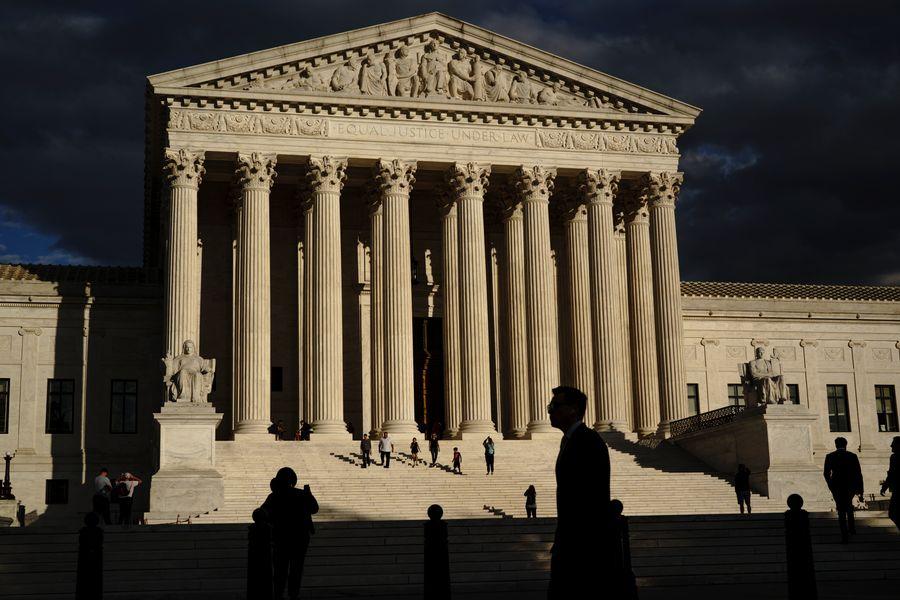
On Friday, the Supreme Court will consider cases to hear in the coming term, among them National Pork Producers Council v. Ross. Arising out of the Ninth Circuit, Ross asks a question central to our constitutional system: Leveraging its immense market power, may a single state (California) usurp Congress’s authority over interstate commerce by enacting a regulation that forces the restructuring of an entire U.S. industry, in this case the national pork products industry?
The U.S. Constitution grants Congress the power to “regulate commerce … among the several states.” Under a doctrine known as the “dormant Commerce Clause,” the Supreme Court has recognized that “[t]his affirmative grant of authority to Congress also encompasses an implicit or ‘dormant’ limitation” on the states’ authority to enact legislation affecting interstate commerce. Although some justices disagree with this doctrine as “unmoored” to the constitutional text, the doctrine protects against the very evil that the Commerce Clause was adopted to stop – commercial aggression among the states, as was experienced under the Articles of Confederation.
In 2018, California voters enacted Proposition 12. Effective on Jan. 1, this law bans the sale of pork in California coming from pigs born to sows housed in individual pens with less than 24 square feet of usable space. Ostensibly, the law was designed to ensure humane treatment of farm animals consumed in California. However, since 99.87% of pork that Californians consume comes from hogs born on farms outside the state, Proposition 12 applies virtually exclusively to out-of-state farms. California even intends to enforce its law through sending state inspectors to certify out-of-state sow housing.
Charge Against Trump Campaign Manager Eclipses Wisconsin Race
Arizona's Voting Rights Fire Bell
Judge Garland and the Left's Disdain for Truth
Military Has Wide Discretion on Bergdahl Charges
Nor can out-of-state farms decline California’s “invitation” to comply. Californians consume 13% of the pork eaten in the U.S., much too large for the nation’s pork producers to ignore. Moreover, the U.S. pork industry is structured so that sow farms are separated from the farms where their offspring are raised (to protect the herds from disease), making it all but impossible to trace any hog to its mother, much less its meat after the hogs are transported to slaughter and packing houses for interstate shipment. Thus, Proposition 12 will force pig farms across the nation to adopt California’s standard, raising costs by an estimated 9.2% per pig.
In upholding Proposition 12, the Ninth Circuit acknowledged that “[a]s a practical matter, given the interconnected nature of the nationwide pork industry, all or most [sow] farmers will be forced to comply with California requirements” and the “cost of compliance … would mostly fall on non-California transactions.” It nonetheless affirmed the dismissal of the challenge to Proposition 12, because the imposition of such additional costs on out-of-state producers did not qualify as a “substantial burden” on interstate commerce and because prior court rulings that had invalidated state laws with extraterritorial effects applied only to “price control or price affirmation statutes.”
Since states are entitled to adopt measures that impact interstate commerce for legitimate public health or other “local necessities,” the Supreme Court has endorsed two tests for determining whether a state regulation violates the dormant Commerce Clause”: First, a state regulation may not discriminate against interstate commerce. Second, a state may not impose an excessive regulatory burden on interstate commerce in relation to its supposed local benefits.
The time has come for the court to revive a key but, in recent years, overlooked test for the dormant Commerce Clause. As renowned U.S. Supreme Court Justice Benjamin Cardozo put it in his landmark 1935 opinion, Baldwin v. G.A.F. Seelig, Inc., “‘a state may not, in any form or under any guise, directly burden the prosecution of interstate business.’” This is certainly the case with California’s Proposition 12, which imposes substantial and lasting nationwide burdens on the interstate production of a product that the state barely produces. Without such a doctrine, one state with market power could impose its value judgments on the rest of the country, whose residents had no say. That’s regulation without representation. And if Proposition 12 stands, what comes next? Could California impose other value judgments on the nation by, for example, banning out-of-state products from employees not paid California’s higher minimum wage – a proposition that Benjamin Cardozo also rejected in Baldwin?
On Friday, the Supreme Court should vote to hear the challenge to Proposition 12. The nation should not have to reap what California sows.

A RealClear Thanksgiving: Investing in a Better Future
David DesRosiers • RealClearPolitics
Trump’s Newsom Problem: Antagonist-in-Chief
Carolina Lumetta • RealClearPolitics
America’s Free Spirit
John Maxwell Hamilton • RealClearPolitics
The GOP Majority Should Go Out in Glory
Daniel McCarthy • RealClearPolitics
Republican Majorities Could Return Sooner Than Expected
J.T. Young • RealClearPolitics
The Danger Before the Attack
Leslie J. Sullivan • RealClearPolitics
RCP Today
Top stories on RealClearPolitics
The Takeaway
Polling intelligence and analysis delivered to your inbox
World News
Featuring the latest world news
Policy
Featuring the latest policy news
Support Our Mission
As part of RealClearPolitics, authors aim to provide balanced, non-partisan analysis by presenting top reporting and commentary from all sides of the political spectrum.
Trusted by policymakers and citizens alike since 2000