Pompeo Lankford
Responsibly Championing Human Rights
COMMENTARY
Published Nov. 21, 2021 • Read time: 7m
Join the Conversation
0Considering the last 20 years of U.S. foreign policy and recent domestic turmoil, voters across the political spectrum are tempted to conclude that the last thing American diplomats should worry about is advancing human rights abroad. But a responsible foreign policy can never lose sight of the nation’s founding conviction that the primary purpose of government is to secure for citizens the rights shared equally by all human beings.
The U.S. Constitution established governmental institutions that by their structure and operation protect individual rights. For decades, American educators have stressed the many ways in which the country has fallen short of its solemn obligations to protect equality in freedom. Still, the nation has taken great strides. Freedom and equality reverberate throughout American law and society: Typically, the nation’s most bitterly disputed issues involve a clash of rights.
It does not follow from America’s dedication to securing basic rights and fundamental freedoms for its own citizens that the United States has a duty to achieve freedom and equality for all individuals everywhere. But that dedication does create a special kinship with other liberal democracies and it fosters a sympathy for, and an interest in assisting, those living under authoritarian regimes who seek freedom. Determining the implications of the nation’s founding conviction for a foreign policy that in the first place secures freedom for Americans is a perennial task.
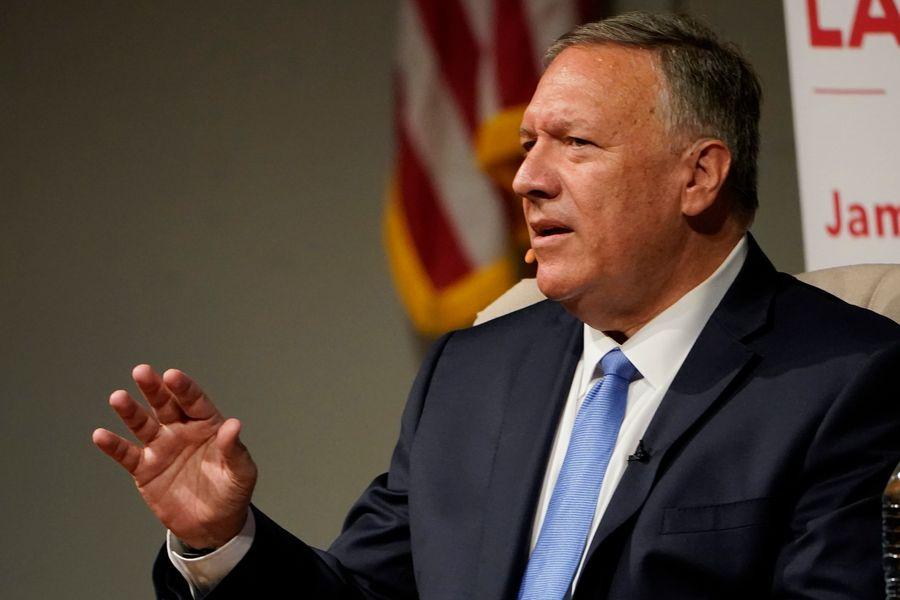
That task is at the heart of the 2020 report of the Commission on Unalienable Rights (I served as executive secretary). Former Secretary of State Mike Pompeo established the commission in 2019 with the mandate to provide advice on human rights grounded in the nation’s founding principles and constitutional traditions as well as in the 1948 Universal Declaration of Human Rights (UDHR).
Over Here: Competence Amid Repulsive Politics
We're Not a Poor Country, Donald
What America Should Learn from the Attack in Brussels
Anti-Muslim Rhetoric Profits the Enemy
Last week, the Kellogg Institute for International Studies at the University of Notre Dame, under the direction of commission member and Notre Dame Law School professor Paolo Carozza, hosted an international conference aimed at carrying forward the commission’s work. The conference featured keynote addresses by distinguished scholars — Mary Ann Glendon (the commission’s chair), and fellow university professors Robert George, Sherman Jackson, Martha Minow, and Joseph Weiler — along with responses from commission members. Eminent judges and scholars from Africa, Europe, and South America appeared on a variety of panels and brought an indispensable comparative dimension to the discussions. Presenters examined the nature of inalienable rights — the rights inherent in all human beings; the significance of America’s struggle to live up to its principles; the practical implications of the obligations that the United States embraced by voting in the U.N. General Assembly to approve the UDHR; new challenges to human rights and the persistence of old ones; the role of the family and schools in cultivating appreciation for human dignity; and other peoples’ and nations’ perspectives on the sources and reach of human rights.
Of special interest was University of Southern California professor Sherman Jackson’s fascinating analysis of human rights thinking within Islam. Jackson differed with the commission about the influence of the distinctive American rights tradition and the origins and significance of the UDHR. Yet by illuminating Islamic teachings that nourish respect for human dignity, he confirmed the commission’s view that many paths can lead to the affirmation of a small set of universal principles of right conduct for individuals and states.
Notwithstanding the hopes shared by most attendees, an undercurrent of anxiety about the future of human rights and America’s role in championing them flowed through the proceedings. As among ordinary citizens, doubts abounded about whether the United States has the wherewithal, political cohesiveness, and moral standing to advance human rights abroad.
The summer’s botched U.S. exit from Afghanistan is the tip of the iceberg. The two grand undertakings of American foreign policy since the disappearance of the Soviet Union 30 years ago have produced, on the most generous assessment, mixed results.
U.S. engagement with the People’s Republic of China, including paving the way for the PRC’s integration into the world economy, helped the Chinese Communist Party achieve enormous economic growth. Contrary to U.S. expectations, however, affluence and the development of commercial relations around the world did not spur political liberalization in China. Instead, as the CCP acquired wealth and power, Beijing clamped down on dissent at home; reaffirmed its determination to bring Hong Kong, Taiwan, and vast reaches of the South China Sea under its sovereign control; and embarked on predatory schemes of construction and investment particularly in the Indo-Pacific but around the globe.
Meanwhile, the Bush and Obama administrations’ missteps in the Middle East and Afghanistan have sapped Americans’ confidence in the ability of the United States to ensure peace and stability halfway around the world, let alone promote democracy and freedom in distant regions. Notwithstanding Iraq’s Oct. 10 elections, another step in Baghdad’s preservation of a functioning if fragile democracy for almost two decades, America’s misadventures in the Middle East have persuaded many citizens that for want of knowledge, competence, and resources the United States should reduce its footprint around the world and restrain its proclivity to intervene in other country’s affairs.
In addition to the costly foreign-policy setbacks, a surge of rancor and distrust at home impedes America from speaking with a clear and resonant voice about human rights. With The 1619 Project, for instance, The New York Times went so far as to assert that the establishment of the institution of slavery, rather than the Declaration of Independence and its affirmation of inalienable rights, represented America's true founding. Meanwhile, some highly educated conservatives maintain that, owing to their hostility to America’s founding principles and constitutional traditions, “most people living in the United States today — certainly more than half — are not Americans in any meaningful sense of the term.”
The embrace of such extreme positions has unfolded against the backdrop of direct intellectual and political attacks on human rights. An informal alliance of postmodernism, identity politics, and multiculturalism — echoed these days by CCP propaganda — charges that human rights reflect the imperialism, racism, and sexism intrinsic to the West. Meanwhile, instead of protecting the good name of human rights (which, under the title inalienable rights, stand at the center of the American constitutional tradition) from the transnational bureaucracies intent on hijacking them to promote progressive political causes, many on the right go overboard themselves by rejecting human rights altogether.
The United States can ill afford to abandon the reasonable claims of human rights, which are tightly bound up with America’s constitutional government and the nation’s interest in maintaining a free and open international order. As the commission’s report states, “[T]he American example of freedom, equality, and democratic self-government has long inspired, and continues to inspire, champions of human rights around the world, and American human rights advocacy has provided encouragement to tens of millions of women and men suffering under authoritarian regimes that routinely trample on the rights of their citizens.”
The UDHR will celebrate its 75th anniversary in 2023. So too will “Human Rights: Comments and Interpretations,” a far less well-known, but companion, undertaking. Sponsored and edited by UNESCO, the 1948 work gathers short writings of thinkers from around the world, including the United States, South America, Europe, India, Australia, and China. The essays explore the feasibility of obtaining agreement among the peoples and nations of the world about human rights.
In the introduction and with an eye to the many and varied contributions to the symposium, French Catholic philosopher Jacques Maritain argued that reaching agreement on certain concrete principles concerning government and what is owed individuals is both possible and desirable. But convergence on shared justifications is neither. The hope underlying a universal declaration of human rights, he explained, is that different peoples and nations would draw on their own traditions and understandings of humanity to affirm a common set of core convictions about those rights and responsibilities that form the most basic and universal political requirements of human dignity.
To mark the human rights achievements of 1948 on their 75th anniversary, it would be fitting to convene another symposium, inviting thinkers representing peoples and nations from around the world to explore the roots of human dignity — both the basic requirements owed all human beings and the diversity of views about human flourishing — in their own traditions.
Such an intellectual undertaking has political benefits that go beyond promoting mutual understanding among scholars. To responsibly champion human rights, one must grasp their universal reach and their practical limits.

A RealClear Thanksgiving: Investing in a Better Future
David DesRosiers • RealClearPolitics
Trump’s Newsom Problem: Antagonist-in-Chief
Carolina Lumetta • RealClearPolitics
America’s Free Spirit
John Maxwell Hamilton • RealClearPolitics
The GOP Majority Should Go Out in Glory
Daniel McCarthy • RealClearPolitics
Republican Majorities Could Return Sooner Than Expected
J.T. Young • RealClearPolitics
The Danger Before the Attack
Leslie J. Sullivan • RealClearPolitics
RCP Today
Top stories on RealClearPolitics
The Takeaway
Polling intelligence and analysis delivered to your inbox
World News
Featuring the latest world news
Policy
Featuring the latest policy news
Support Our Mission
As part of RealClearPolitics, authors aim to provide balanced, non-partisan analysis by presenting top reporting and commentary from all sides of the political spectrum.
Trusted by policymakers and citizens alike since 2000