Amid Pandemic, Washington Needs to Break the 5G Logjam
COMMENTARY
Published April 16, 2020 • Read time: 5m
For a Rip Van Winkle who went to sleep in January and just awakened, the top of the news would be incomprehensible. Conservative Republicans sent $1,200 checks to almost everyone. Liberal Democrats from New York State to California are telling people to forget their civil liberties – they must stay indoors or else.
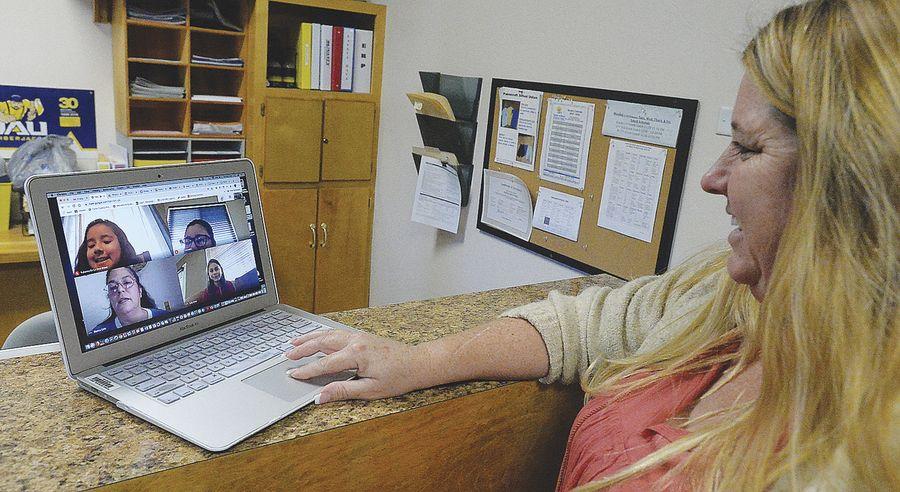
In this environment, the emphasis is on pragmatic action over ideology, on whatever works. What is working now? The online connections that allow our children and grandchildren to do their homework from home, parents who are lucky enough to be able to telecommute to their jobs, and the stricken to be able to communicate with their physicians without endangering other people.
As we necessarily require families to stay at home, we are dependent as never before on our connections. There is a sense that a transformation is afoot, that once this crisis is over, we will be conditioned to distributing work and learning more broadly, and be better prepared for the next pandemic.
Our connections, however, are not as strong as they need to be. The critical resource necessary to rapidly scale these connections, spectrum, is in short supply. In Europe, YouTube, Amazon Prime and Netflix have deliberately downgraded their service to keep the Internet from collapsing. With everyone working and learning from home, communications networks in the United States will be under strain.
Fifth-generation wireless connectivity would help relieve the strain, connecting every device to a wider pipeline of data. 5G also promises to bring about almost-instantaneous communications that will spawn a host of new industries, jobs, educational offerings and entertainment options that would be well suited to distributed work and learning. Yet we are still dependent on 4G service for wireless devices that puts us behind the global standard, and may not be the safe, reliable network we will need to weather future crises.
BART Is Not a Homeless Shelter
Thank Gridlock for Economic Turnaround
Infrastructure Is Not the Problem
Take the Public-Private Road to Efficiency
China gets this. As China recovers at home from the virus, it is skillfully executing a plan to be the dominant world player in 5G. China has constructed a national network of 350,000 base stations. It is leveraging the wealth of its internal market, an estimated 100 million 5G subscribers by year’s end, to subsidize its offerings around the world. Above all, China has made a huge allocation of mid-band spectrum for 5G. The United States has 5G coverage only in dense, urban areas, leaving out rural communities and the underserved. In short, we are nowhere close to national 5G coverage.
When it comes to the coronavirus, the Trump administration has shown a recent willingness to take a blow torch to regulations that hold back testing possible cures and bottlenecks to medical devices. The administration has identified legacy rules and restrictions to be swept aside to put a priority on public protection.
We need to apply that same kind of thinking to 5G.
One critical step must be taken. Like China, we need to allocate enough spectrum to get the job done, and we need to do it now. Under the current trajectory, we would need to construct 320,000 new cell sites, which with permitting and construction would take 10 years to implement. In the past, we could afford to spend a decade besting the Soviet Union in the space race, but I fear that the consequences will be far more severe if we take a decade to catch up with China in 5G and preparing for the next virus.
Fortunately, there is something we can do now that can help deliver 5G to all Americans and ensure that the United States is more prepared in the future during times of crisis. A communications company known as Ligado Networks is ready to invest hundreds of millions of dollars in 40 MHz of spectrum to build next-generation networks for critical industries across this country. Today, Ligado operates a satellite network that provides service to the government – like FEMA – and partners in aviation, rail, and maritime sectors.
In a previous corporate incarnation, this company was known as LightSquared. A decade ago, LightSquared presented a spectrum plan that I opposed as likely to interfere with critical GPS systems for the military and law enforcement. Now under new management, with a different technical proposal, business plan, and name, Ligado presents a near-term opportunity to quickly close the U.S.-China 5G gap. As for concerns about GPS, 5,000 hours of testing at a high-tech government facility co-sponsored by the Department of Defense shows no harmful interference with GPS from Ligado’s plan. In the last decade, technology has enabled compatibility between the GPS system and a neighboring wireless service. This is one of the reasons Ligado and leading GPS manufacturers reached agreement on this issue over four years ago.
For these reasons, the Federal Communications Commission is poised to approve a draft order to reallocate L-band for 5G. The bad taste left over from LightSquared’s dealings with the federal government, however, is spurring reflexive opposition to L-band for 5G from parts of the Washington bureaucracy. So far, these unelected bureaucrats have ignored the science and data to instead spread fear and stymie progress. In doing so, they are keeping rapid 5G from happening at a time when our country needs it most.
The administration and FCC must break through the Washington logjam to provide the spectrum so industry can rapidly provide 5G capacity. Our national resilience in times of crisis may well depend upon it.

A RealClear Thanksgiving: Investing in a Better Future
David DesRosiers • RealClearPolitics
Trump’s Newsom Problem: Antagonist-in-Chief
Carolina Lumetta • RealClearPolitics
America’s Free Spirit
John Maxwell Hamilton • RealClearPolitics
The GOP Majority Should Go Out in Glory
Daniel McCarthy • RealClearPolitics
Republican Majorities Could Return Sooner Than Expected
J.T. Young • RealClearPolitics
The Danger Before the Attack
Leslie J. Sullivan • RealClearPolitics
RCP Today
Top stories on RealClearPolitics
The Takeaway
Polling intelligence and analysis delivered to your inbox
World News
Featuring the latest world news
Policy
Featuring the latest policy news
Support Our Mission
As part of RealClearPolitics, authors aim to provide balanced, non-partisan analysis by presenting top reporting and commentary from all sides of the political spectrum.
Trusted by policymakers and citizens alike since 2000