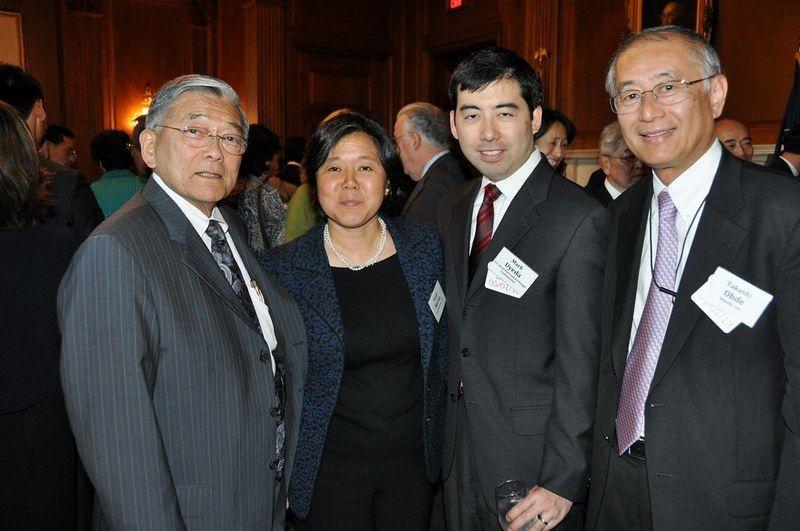
Norm Mineta and the Art of Representation
COMMENTARY
Published May 11, 2019 • Read time: 5m
Nearly a quarter-century has elapsed since Norman Y. Mineta retired from Congress after two decades representing his hometown of San Jose, Calif. Yet he remains one of the area’s most well-known and highly respected public figures -- ever. Of course, having an airport and major highway bearing his name doesn’t hurt, but Norm Mineta’s popularity goes deeper than that; it is much more than what we in politics call “favorable name ID.”
Norm Mineta’s legacy is, as an upcoming PBS documentary will attest, an inspiring and classic American life story: born in San Jose to immigrant parents from Japan during the Great Depression; shipped off to an internment camp during World War II simply and only because of his Japanese heritage; successful student; Army intelligence officer; civic leader and first Asian American elected mayor of a major mainland U.S. city; member of Congress and Cabinet secretary to two successive presidents -- one a Democrat the other a Republican; and still an active, engaged and contributing public citizen.
The Mineta biography is well-known by folks in his hometown, by Americans of Asian ancestry across the country, by transportation officials in all 50 states and countless localities, and by serious students of Congress. While I know all of that, to be sure, I also have had the great honor of having had Norm Mineta as a boss and as a friend for five decades.
Norm is known to be a careful politician, but one who was never reluctant to reach across partisan or ideological divides. His childhood wartime experience did not make him bitter, but instead imbued in him a fierce sense of determination that government and the people’s representatives should be accessible and accountable to the citizenry. A few examples illustrate the point.
McCain to Code Pink Protestors: Get Out of Here You Low Life Scum
AG Nominee Lynch Deflects Cruz Missile
Senate to Begin Hearings on Obama Attorney General Nominee
Democrats, Republicans Spar Over Benghazi Investigation
Like most Americans (and, actually, most Democrats) during the 1960s, Norm was generally supportive of America’s military involvement in Vietnam. He was a U.S. Army veteran, and his political views were mainstream, if slightly left of center. But because of how things were going in Southeast Asia by 1968, and because of how events abroad were affecting life here at home, Norm -- and many others -- began to doubt the wisdom and the righteousness of that war.
During the 1969-70 academic year I served on the faculty of San Jose State as a foreign student adviser. Student activism on campus, the growth of the antiwar movement, and mass demonstrations led to tensions in the city and within the university community. In the wake of the Kent State killings on May 4, 1970, tensions reached the boiling point at our school, which became the meeting place for something called the National Student Congress Against the War. There was a joint faculty-student staff strike, and the San Jose Police Department tactical squad was a daily presence on campus. It was an ugly, tense and dangerous place.
At the time, Norm was vice mayor, and a force to contend with at City Hall. He had clout. During the height of the crisis, I invited him join me late one night and visit students from around the country who were using the San Jose State student union building as their base of operations.
Norm sat with the students talking, listening, sharing thoughts and emotions. He emerged from the experience with a new, more informed and more sympathetic perspective. He began to voice his own opposition to the war, and to defend the rights of protesters.
A year or two later, after he had been elected mayor, Norm was presiding at a City Council meeting where a large contingent of voters argued for the removal of an antiwar photograph from San Jose’s art museum. The photograph contained an obscenity to which some conservative groups took offense. Some members of the council were wavering, and Norm sensed that they might buckle under the pressure. Still, he allowed the critics all the time they needed to make their case, and he let the council deliberate fully. But then he brought the discussion to an end by saying, as I recall, “It was people like you and thinking like this, that put me and my family in a camp in 1942!” The audience sat in seething silence, Norm called for a vote, and the motion to ban the photograph was defeated. It was a true “Profile in Courage” moment.
While in Congress, seldom a day passed when Norm didn’t have lunch with visiting constituents from his congressional district. It wasn’t about courting votes, because after his first win in 1974 (by 10 percentage points), Norm’s political future was pretty secure. Instead, he just wanted to visit with people, to hear their stories, learn something from or about them.
They would eat in the Members’ Dining Room and if there were children involved, he’d take them onto the floor of the House. John Flaherty, one of my successors as a Mineta chief of staff, tells the story of Norm walking down the hall of the Capitol on his way to one such constituent lunch when John chased him down and said, “Bob Woodward is on the phone and wants to talk to you about Nicaragua.”
Norm replied, “Tell him I will call him back later.”
As exasperated as any staffer would be, Flaherty pushed back, “But Norm, it’s Bob Woodward!”
Norm looked over, not smiling, and said evenly, “John, these are constituents.” End of discussion.
The House of Representatives is known as “the People’s House,” and Norman Y. Mineta never, ever lost sight of that principle. We can hope -- no, we should demand -- that every representative feel the same way.
“Norman Mineta and His Legacy: An American Story” will be broadcast on most PBS affiliates on May 20 at 9 p.m. Eastern (check your PBS listings for exact date and time).

A RealClear Thanksgiving: Investing in a Better Future
David DesRosiers • RealClearPolitics
Trump’s Newsom Problem: Antagonist-in-Chief
Carolina Lumetta • RealClearPolitics
America’s Free Spirit
John Maxwell Hamilton • RealClearPolitics
The GOP Majority Should Go Out in Glory
Daniel McCarthy • RealClearPolitics
Republican Majorities Could Return Sooner Than Expected
J.T. Young • RealClearPolitics
The Danger Before the Attack
Leslie J. Sullivan • RealClearPolitics
RCP Today
Top stories on RealClearPolitics
The Takeaway
Polling intelligence and analysis delivered to your inbox
World News
Featuring the latest world news
Policy
Featuring the latest policy news
Support Our Mission
As part of RealClearPolitics, authors aim to provide balanced, non-partisan analysis by presenting top reporting and commentary from all sides of the political spectrum.
Trusted by policymakers and citizens alike since 2000