A Guide to Keeping Holiday Conversations Civil
Published Dec. 22, 2018 • Read time: 4m
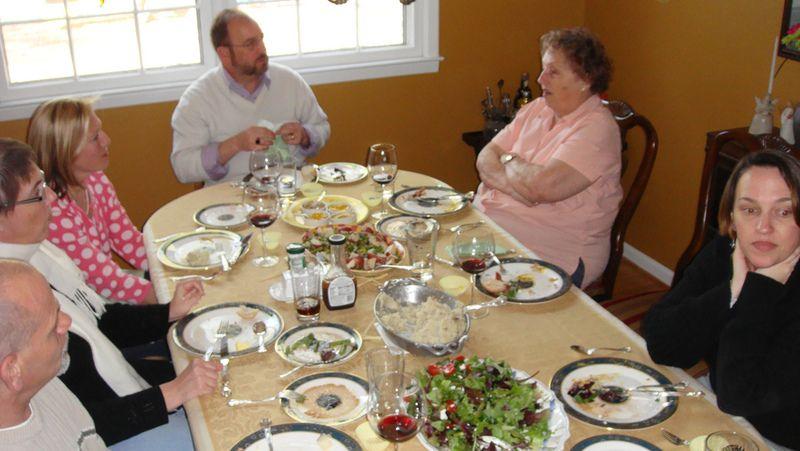
The holidays are known for good cheer and counting one’s blessings. In our current political environment, however, holiday gatherings have become ripe for difficult and volatile conversations among loved ones. Excluding selected family members is usually a no-go, but enduring the vitriol of political, religious, or social debates can suck the yuletide joy out of the occasion.
We can try to avoid certain topics altogether, but these plans often go awry, especially if the eggnog was spiked by a heavy hand. Luckily, rhetoric offers tools for effective civil communication. Here are three steps to help us navigate the conversational minefields standing between ourselves and a positive holiday experience.
Kairos
Kairos is a concept in rhetorical theory that loosely translates to “window of opportunity,” but is also understood as situational awareness -- knowing the time, place, audience, topic, and self in a given situation. This consideration is an imperative first step in preventing or managing conflict. For example, if one wants to express liberal political ideas, but a staunchly conservative uncle is present, different terminology, different examples, and even different metaphors can be used. In other words, one need not pull punches but merely translate the concepts to consider others who may feel differently.
Kairos incorporates the main aspects of emotional intelligence, which focuses on the effective handling of emotions, including self-awareness, “reading the room,” mindfulness, empathy and motivation. Taking Kairos into consideration enables successful, positive dialogue.
Culture Wars, Old and New
The Better Option
Trust -- Society Depends On It
Family Fragmentation: Can Anything Be Done?
Acknowledging the Need for Validation
Validation -- the feeling of being recognized and appreciated -- seems a powerful motivator for argumentation, and often turns conversations toxic. Being told one is wrong feels invalidating and infantilizing, and we have a strong desire to stand our ground when challenged — to the point of denying facts. Studies even suggest that our political opinions are more fluid than we realize and it’s the facing of opposition that leads us to become entrenched on one side or another.
I would never suggest feigning a changed mind in order to validate a familial interlocutor. I would, however, suggest active listening. This takes place when someone wants to find what rhetorician Wayne Booth calls “the truth behind our differences.” It is markedly different from trying to “win” a debate. Active listening is a genuine effort to discover the motivations of another. When employed, arguments are less likely to get toxic.
Also, those seeking validation can be addressed through empathy. For example, whether one is fearful that illegal immigration leads to jobs being taken from loved ones, or one is concerned about the harm done by anti-immigrant sentiments, each can say to the other, “I respect your concern for people’s well-being. That is commendable.” This expression of empathy promotes validation, which promotes civility.
Cognitive Distancing
Of course, exercising civility does not guarantee that others will follow along. Sometimes, the need for validation grows into full-blown rage, which is used as a stave of sorts. Some people literally feel attacked when opposing viewpoints are argued strongly and neglect facts that deem their opinions flawed. Their need for validation outweighs all else.
Thus, we must distinguish between a person’s statements and our feelings about those statements. This cognitive distancing helps us look at the world objectively; emotions are acknowledged but not given executive power.
The philosopher G.H. Mead saw the benefit of being an “objective judge” in contentious situations. In “Mind, Self, and Society,” he wrote, “The objective character of the judge is that of a person who is neutral, who can simply stand outside of a situation and assess it. If we can get that judicial attitude in regard to the offenses of a person against ourselves, we reach the point where we do not resent them but understand them, we get the situation where to understand is to forgive.” This cognitive distancing neutralizes volatile situations. We will not only preserve our own emotional well-being but understand others well enough to forgive their trespasses.
These steps are easier said than done, of course, but attempting to abide by Kairos, motivations of validation, and cognitive distancing may alleviate potentially uncomfortable holiday gatherings. Moreover, being able to transcend the quagmire of politics, religion, and social change can allow us to remember the true meaning of the holidays.

A RealClear Thanksgiving: Investing in a Better Future
David DesRosiers • RealClearPolitics
Trump’s Newsom Problem: Antagonist-in-Chief
Carolina Lumetta • RealClearPolitics
America’s Free Spirit
John Maxwell Hamilton • RealClearPolitics
The GOP Majority Should Go Out in Glory
Daniel McCarthy • RealClearPolitics
Republican Majorities Could Return Sooner Than Expected
J.T. Young • RealClearPolitics
The Danger Before the Attack
Leslie J. Sullivan • RealClearPolitics
RCP Today
Top stories on RealClearPolitics
The Takeaway
Polling intelligence and analysis delivered to your inbox
World News
Featuring the latest world news
Policy
Featuring the latest policy news
Support Our Mission
As part of RealClearPolitics, authors aim to provide balanced, non-partisan analysis by presenting top reporting and commentary from all sides of the political spectrum.
Trusted by policymakers and citizens alike since 2000