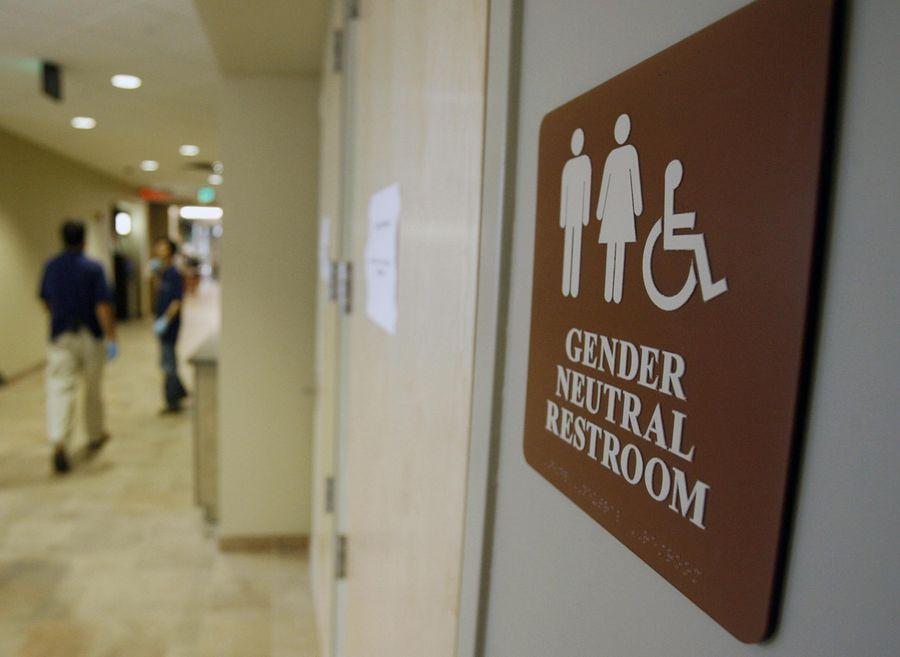
Science Shows Sex Is Binary, Not a Spectrum
COMMENTARY
Published Oct. 31, 2018 • Read time: 4m
Last week, The New York Times ran an op-ed by Anne Fausto-Sterling, a professor of biology and gender studies at Brown University, arguing that biological sex is not binary. The piece joined a long succession of media coverage criticizing the Department of Health and Human Services’ recently leaked memo, which proposed legally defining sex as either male or female.
From a scientific perspective, there was nothing wrong with HHS’s definition. Biological sex refers to whether we are female or male, based on our anatomy and reproductive functions. The concept of sex is, by definition, binary.
Fausto-Sterling’s piece points to the existence of intersex people as evidence that this isn’t the case. Certainly, research has shown that as many as 1 percent of the population is intersex, a medical condition denoting that an individual possesses anatomy characteristic of both sexes, such as a combination of vulvar and testicular tissue. Statistically speaking, however, this means that the vast majority of us fall into one category of sex or the other.
It therefore becomes a question of whether a statistically rare occurrence in the general population should be considered typical. An analogy that is commonly used to illustrate this is the fact that most of us have 10 fingers. There exist individuals who possess fewer or more than 10 digits on their hands, but this hasn’t called for a re-conceptualization of how many fingers a human being has.
Fausto-Sterling mentions how, earlier this month, Hungary’s prime minister, Viktor Orbán, banned gender studies programs. He has been called “far-right” by some outlets for stating that the government “[does] not consider it acceptable ... to talk about socially constructed genders rather than biological sexes.” Deputy Prime Minister Zsolt Semjen additionally pointed out that gender studies “has no business in universities” due to being “an ideology, not a science.”
Defending Boys in a "Girl Power" Age
Dress Codes and Female Dignity
The Monsterization of Men
Genderfication of Adolescence
Indeed, gender—whether we subjectively feel male or female—is biological, not a social construct. An extremely large and consistent body of scientific research has shown that gender is the result of prenatal hormone exposure, even in the case of intersex individuals, as opposed to adults and society imposing gendered norms on unsuspecting children from the moment they leave the womb.
After describing “the process of gender socialization,” the piece goes on to say that “[f]etal hormones also affect brain development.” How would it be possible for hormones to affect the developing brain in utero, but not the expression of this brain development, which manifests as sex-typed differences in interests, personality, and behavior when the child is born?
The piece also references the work of psychologist John Money, which contradicts Fausto-Sterling’s very thesis. Not only have Money’s ideas pertaining to gender identity been widely discredited, but they also demonstrate how gender is biological. Many have surely heard of the unfortunate case of David Reimer, a Canadian man whom Money surgically reassigned as female after Reimer lost his penis in a botched circumcision as a child. Money believed that Reimer could be successfully socialized to live life as a girl.
Upon reaching adolescence, however, Reimer chose to return to living as a male, and tragically took his own life at the age of 38 after facing these hardships. Reimer’s case speaks to the innateness of gender—that one’s sense of being male or female is not learned.
It isn’t necessary to redefine “sex” in order to facilitate the acceptance of people who are different. Pushing for social change for the sake of change, as many of those on the left seem wont to do, only leads to misguided policies and unnecessary confusion for the public.
Going beyond Fausto-Sterling’s op-ed, this argument has been extended to include the transgender community, with its proponents contending that transgender people defy male and female categorization, and offer proof that sex and gender are a spectrum. But in reality, the term “transgender” means that a person identifies more as the opposite sex than their birth sex—which still operates within a framework of sex being binary.
For the intersex community, there has been a long history of physicians failing to respect their bodily autonomy, or incorrectly assuming that they were not the sex they grew up to identify as in adulthood. In these cases, individuals should be allowed to change the sex marked on their birth certificate if, later in life, an intersex condition becomes known.
We can, and should, advocate for the rights of intersex people and those who do not fit typical gender norms, while at the same time acknowledging these scientific truths.

A RealClear Thanksgiving: Investing in a Better Future
David DesRosiers • RealClearPolitics
Trump’s Newsom Problem: Antagonist-in-Chief
Carolina Lumetta • RealClearPolitics
America’s Free Spirit
John Maxwell Hamilton • RealClearPolitics
The GOP Majority Should Go Out in Glory
Daniel McCarthy • RealClearPolitics
Republican Majorities Could Return Sooner Than Expected
J.T. Young • RealClearPolitics
The Danger Before the Attack
Leslie J. Sullivan • RealClearPolitics
RCP Today
Top stories on RealClearPolitics
The Takeaway
Polling intelligence and analysis delivered to your inbox
World News
Featuring the latest world news
Policy
Featuring the latest policy news
Support Our Mission
As part of RealClearPolitics, authors aim to provide balanced, non-partisan analysis by presenting top reporting and commentary from all sides of the political spectrum.
Trusted by policymakers and citizens alike since 2000