How the World Series Mirrored Politics
COMMENTARY
Published Nov. 7, 2017 • Read time: 6m
For those of us who measure the fall and winter not by weeks or months but the number of days until spring training, these are the times that try men’s souls. The baseball season is over. Pitchers and catchers won’t report, appropriately enough, until sometime close to Valentine’s Day.
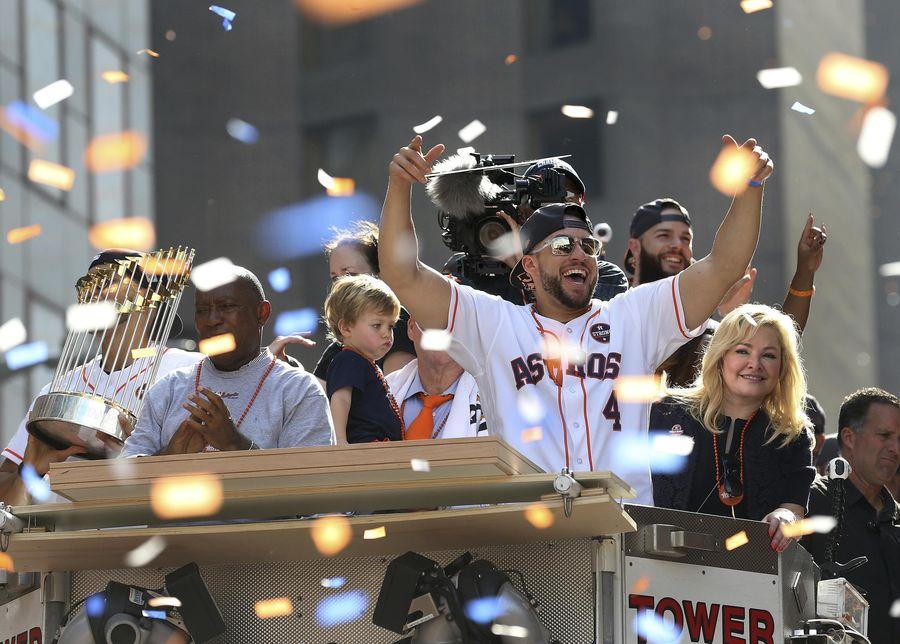
In the aftermath of a remarkable seven-game World Series, it’s worth noting a few of the parallels between the annual Fall Classic and the quadrennial spectacle that is presidential politics.
Spare Us the Hype. The 2017 World Series provided some terrific moments – Game 2’s late fireworks (an unprecedented five home runs in extra innings); Game 5’s improbability (before then, Dodgers ace Clayton Kershaw’s record when given a four-run lead: 100 wins, 1 loss).
But the talk of Game 5 as “the greatest game ever”? No. It wasn’t an elimination game and it lacked the historical tie-in of Bill Buckner’s flub in Game 6 of the 1986 World Series. Nor was the ending as iconic as Carlton Fisk willing his long fly ball fair in Game 6 of the 1975 classic.
The political parallel? The 2000 presidential contest was hailed as a “once in a lifetime” affair, as was Barack Obama’s ascent eight years later. But 16 years after Bush v. Gore, there we were back at “selected, not elected” in 2016, with Russian hacking taking the place of “dangling chads.”
As for the 2008 election: One day, a woman and/or another minority nominee claiming victory will be deservedly lauded as a landmark moment. It should happen in our lifetimes.
Aaron Rodgers Drops a Bomb on Tony Fauci, the 'Absolute Coward'
Knocking Smokeless Tobacco Out of the Park
GOP Crossroads; Party Fractures Help Trump; Rise of the Groupies; Candlestick Memories
For the Patriots, Without Apology
But until then, everyone please take a deep breath.
Beware of the Metrics. For the entire regular season, Dodgers Manager Dave Roberts ran his pitching staff by the book – starters were pulled early in favor of a resplendent bullpen. It’s what baseball metrics dictated, and Roberts was rewarded with a league-best 104 regular-season wins.
And then the metrics backfired. L.A.’s relievers couldn’t record outs; an overworked staff factored heavily into the team’s failure to hold two leads in Game 5.
Something similar happened to Hillary Clinton in 2016. Her campaign’s insistence upon data analysis, rather than gut instinct and what the folks on the ground were telling the brain trust back in Brooklyn, cost Mrs. Clinton dearly in states like Michigan. Bill Clinton and his former teammates knew otherwise, but he wasn’t running the front office.
Sometimes the numbers don’t reflect what you see – on the pitcher’s mound or on the campaign trail.
It Pays to Have a Deep Bench. Both World Series teams were a testament to homegrown talent. Eleven of the 18 starters in Game 7 came up through their clubs’ respective farm systems.
That’s a comforting thought for Republicans in troubled times of a president whose job approval rarely climbs north of 40 percent and a GOP-controlled Congress that has trouble walking and chewing gum at the same time (or maybe you were thinking of LBJ’s earthier version).
For Republicans, the farm system begins with 34 governors. That matches the party’s all-time high in 1922, though it may change after Tuesday’s votes in New Jersey and Virginia. Further down in the political minors: over 4,150 state legislators (about 56 percent of the nation’s total). In baseball terms, it’s being loaded at the Class A and AAA levels.
By contrast, the present Democratic existence is congressional-centric. It doesn’t mean the party will lack for presidential hopefuls in 2020, but it does complicate anti-Washington messaging and finding a nominee with an outside-the-Beltway brand (before Barack Obama, the last congressional incumbent to go straight to the Oval Office was John F. Kennedy).
It’s Not a Competition Without a Conspiracy. Russian meddling surely, somehow, altered the outcome of the 2016 election. Right? Just as slicker baseballs turned this year’s World Series into slow-pitch softball (or, in Yu Darvish’s case, beach balls).

It’s not the first time conspiracy talk crept into baseball this season. Just do an Internet search for “Red Sox Apple watch.” Arguably the most infamous of all Fall Classics entailed eight players from the 1919 “Black Sox” conspiring to take a dive.
Neither sports nor politics benefits from “Enquiring” minds. A lot of factors fed into this Series’ unpredictability – unseasonably hot weather in Los Angeles for the first two games, which gave the ball added flight; in Houston, Kershaw’s inconsistency and a bandbox of a ballpark. Even if Russian interests did mess with last year’s election, it doesn’t account for the Clinton campaign’s inability to fathom that a one-dimensional assault on Donald Trump’s divisiveness maybe wasn’t the smartest way to approach an electorate hungry for political and economic change.
Cool It With the Dynasty Talk. And now we begin with issue No. 1 on the hot-stove circuit: “Is this the beginning of an Astros dynasty?”
Houston, we have a problem.
Baseball hasn’t had a repeat World Series winner since the season before the 2000 presidential election. Though the San Francisco Giants have appeared in three Series this decade, 21st century baseball is a sport that thrives on turnover.
The same may be true of presidential politics if the 2016 election turns out to be the last we see of a Bush or a Clinton on a national ticket anytime soon. In fact, last November was “Game 7” of the Bush-Clinton series in that it marked the seventh time that one of the two families claimed a presidential nominee.
But wait a minute.
Warming up in the Austin bullpen: George P. Bush, son of Jeb, nephew of George W. and grandson of George H.W. He’s running for re-election next year as Texas land commissioner, where his toughest opponent may not be a Democrat or a fellow Republican but his decision to wrest control of the fabled Alamo from the Daughters of the Republic of Texas.
Should he win a second term and then vie for governor of Texas in 2022, the younger Bush would be a few months shy of his 47th birthday when he takes office – assuming he would win. His uncle was 48 when he became Texas’ 46thgovernor in 1995.
OK, I know that I’m making Dave Roberts’ mistake and relying too much on metrics. Besides, trying to forecast a Bush return in the 2024 or 2028 presidential race makes as much sense as trying to figure what the next decade holds for the Astros and Dodgers.
But it does help pass the time until pitchers and catchers report.

A RealClear Thanksgiving: Investing in a Better Future
David DesRosiers • RealClearPolitics
Trump’s Newsom Problem: Antagonist-in-Chief
Carolina Lumetta • RealClearPolitics
America’s Free Spirit
John Maxwell Hamilton • RealClearPolitics
The GOP Majority Should Go Out in Glory
Daniel McCarthy • RealClearPolitics
Republican Majorities Could Return Sooner Than Expected
J.T. Young • RealClearPolitics
The Danger Before the Attack
Leslie J. Sullivan • RealClearPolitics
RCP Today
Top stories on RealClearPolitics
The Takeaway
Polling intelligence and analysis delivered to your inbox
World News
Featuring the latest world news
Policy
Featuring the latest policy news
Support Our Mission
As part of RealClearPolitics, authors aim to provide balanced, non-partisan analysis by presenting top reporting and commentary from all sides of the political spectrum.
Trusted by policymakers and citizens alike since 2000