
Lincoln and Garfield: Their Words Resonate
Published Nov. 19, 2015 • Read time: 4m
Join the Conversation
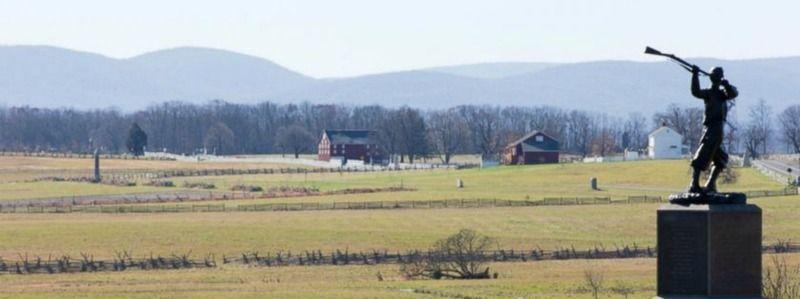
0Today is the anniversary of Abraham Lincoln’s famous speech delivered on the killing fields of Pennsylvania at the consecrating ceremony honoring those who’d fought to end slavery and re-unite the nation that Lincoln had previously called “the last best hope of earth.”
As even casual followers of the Civil War know, the 16th U.S. president was not the featured speaker on November 19, 1863. That distinction belonged to Edward Everett, America’s most famed orator of the time. He spoke for two hours, uttering an estimated 13,000 words, not one of which is remembered today.
Lincoln, who’s Gettysburg Address consisted of a mere 272 words, inadvertently put Everett in his place -- his historical place, that is -- in the eighth sentence of his 10-sentence homily: “The world will little note, nor long remember, what we say here,” Lincoln said, “but it can never forget what they did here.”
Today’s date is also the birthday of James A. Garfield, America’s 20th president and a patriot who fought in “Mr. Lincoln’s Army.” And so it’s an appropriate time to note why both men’s words are relevant in our own troubled era.
* * *
Born in rural Ohio on November 19, 1831, James A. Garfield’s childhood was every bit as impoverished as Abe Lincoln’s. As a boy, he took a job as a janitor in a local school as a way of putting himself in proximity of an education. In a twist that sounds like something out of the movie “Good Will Hunting,” young Garfield was so intelligent and well-read that he was pressed into service as a teacher. He later became the school’s headmaster. He had a similar trajectory in the Union Army. An abolitionist who enlisted at the start of the Civil War, Garfield rose through the ranks rapidly, getting one battlefield promotion after another until he was a major general.
Rethinking the Pledge; Trump and Women; One Last Egg Roll; Eulogizing Ike
2016: A Repeat of the 1960s
An Apology, Fashioned for Nancy Reagan
Nancy Reagan, Guardian of a Legacy
As much as Lincoln needed good generalship, he needed loyal Republicans in Congress even more, and Garfield was persuaded to resign his commission and run for Congress in 1862. He was a Republican star on Capitol Hill for the next 18 years and became the surprise choice at a runaway GOP convention in 1880.
Garfield didn’t want the presidential nomination: He’d gone there to support fellow Ohioan John Sherman. But a delegate stampede gave the nomination to Garfield. I have little doubt he’d have been a great president -- this man succeeded at everything he ever tried and was blessed with a winning personality, a great work ethic, and high principles -- but he was cut down by an assassin’s bullet several months after his inauguration.
He lingered for a long summer before passing away in September 1881, and it is a little-known historical fact that the second martyred U.S. president -- unlike the first -- was mourned in the South was well as in the North.
James Garfield’s first instinct in life was always compromise, not war. But as Americans today contemplate the appropriate reaction of a U.S. commander-in-chief to barbaric terrorist attacks around the world, I recall something Garfield once wrote. “Of course I deprecate war,” he said, “but if it is brought to my door, the bringer will find me at home.”
As for Abraham Lincoln, his succinct sentiments in the Gettysburg Address provided the intellectual framework for renewing America’s founding spirit. But his words have universal application as well. In Paris, death came last weekend to people listening to music, watching soccer, strolling on the avenue after dinner – citizens of the free world simply pursuing liberty’s pastimes. It takes only a little imagination to apply Lincoln’s words to their sacrifice.
It is for us, the living, Lincoln said, to resolve that these dead shall not have died in vain and that the idea of a government that exists to serve the people shall not perish from the earth.

Democrats Won the Midterms. Common Sense Won, Too
Jordanne Kemper • RealClearPolitics
The 120th Congress Shapes Up
Carolina Lumetta • RealClearPolitics
Flooding GOP Primaries With Democrats
Robert Natelson • RealClearPolitics
Washington Keeps Rewarding Oracle—Veterans Keep Paying the Price
Darin Gaub • RealClearPolitics
The Seeds of Unrestricted Warfare
John Teichert • RealClearPolitics
The Primary System Is Losing the Next Generation
Sean Trende • RealClearPolitics
RCP Today
Top stories on RealClearPolitics
The Takeaway
Polling intelligence and analysis delivered to your inbox
World News
Featuring the latest world news
Policy
Featuring the latest policy news
Support Our Mission
As part of RealClearPolitics, authors aim to provide balanced, non-partisan analysis by presenting top reporting and commentary from all sides of the political spectrum.
Trusted by policymakers and citizens alike since 2000