
Election 2026 Govenor
The Primary Electorate Is Its Own Harshest Critic
ANALYSIS
Published Oct. 16, 2026 • Read time: 4m
Join the Conversation
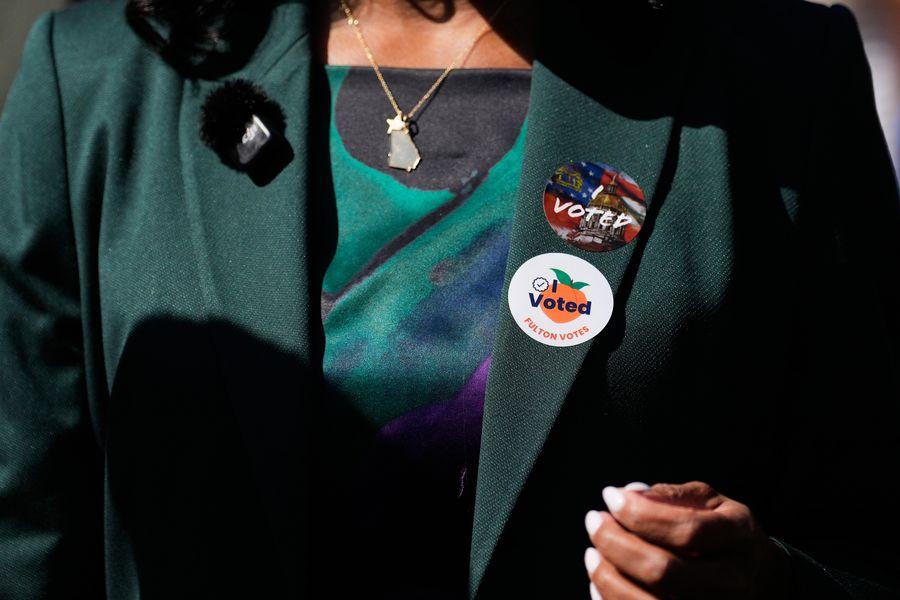
0Since the introduction of party primaries at the beginning of the 20th century, they have formed the foundation of our election system. If a candidate can’t make it through a primary electorate, there is only the slightest of chances that she will end up holding elected office. The latest RCINI poll, in conjunction with Emerson Polling and sponsored by Unite America, explores this primary electorate. It finds that despite the critical importance of this electorate, only one in four registered voters says that they cast a ballot in this year’s primaries. Importantly, that group is hardly representative of America. Nearly six in 10 primary voters (59%) are 60 or older, compared with 30% of those who stayed home. Sixty-nine percent hold a college degree, roughly double the share among nonvoters. Thirty-nine percent describe themselves as very liberal or very conservative; among nonvoters, it is 21%. Moderates make up 48% of those who skipped the primaries and 28% of those who voted. Yet this small electorate is also the likeliest to say the wrong people hold too much sway over it.
We gave respondents a variety of groups and asked, “In this year’s primary elections, do you think each of the following had too much influence, about the right amount of influence, or too little influence over which candidates were nominated from either political party?” People who voted in the election overwhelmingly believed that the most partisan and ideological voters in each party had too much influence, with almost three in five responding “yes.” This compared with 33% of nonvoters. Almost 80% of primary voters thought that “wealthy donors, special interests, and SuperPACs” had too much influence; nonvoters once again lagged behind here: only 56% agreed. A bare majority of voters believed that “the national parties and party leadership” had too much influence, compared with 40% of nonvoters.
There were bipartisan concerns as well. We asked who the primary system was geared the most toward. Among primary voters, 54% answered “the most partisan and ideological voters in their own party,” compared with 39% of nonvoters. But among those voters, 52% of Democrats gave that answer. For Republicans, the number was 56%, a statistically indistinguishable difference.
Given this, we were a bit surprised that primary voters did seem satisfied with their choices. We asked, “In this year’s primary elections for Congress in your district, how satisfied were you with the choices of candidates on your ballot?” For primary voters, 61% said they were satisfied, with just 35% saying that they were dissatisfied. Nonvoters see things differently: 36% said that they were satisfied with their choices, 38% said dissatisfied, while 25% were unsure. When asked “How well do you think the primary election system is working to give voters meaningful choices and produce nominees who represent their communities,” primary voters were split, with 49% saying “very or somewhat well” and 47% responding “not very or not at all well.” Among nonvoters, the split was 37% to 43%, with 20% unsure.
Despite all this, voters remain open to the prospects for reform. We asked about a Washington-style primary system, where the top vote-getters advance to the general election, regardless of party. A solid 56% of respondents supported this, including 54% of primary voters and 57% of nonvoters. It was supported by Democrats most heavily (60%-32%), while Republicans opposed it, albeit modestly (42%-53%). Requiring open primaries produces similar results, with respondents somewhat more likely to embrace them. Support increased to 60%-24% overall, with 65% of Democratic primary voters supporting the move, alongside 52% of Republicans.
Overall, participants offered a split view of our primary system, but seem to overestimate how much say they have. Unite America’s own data suggest that 87% of House seats were determined in the 2024 primaries. Here, 34% believed that we have a meaningful choice between two candidates who could realistically win in the general, 36% believed that the election was largely determined because one party’s nominee was heavily favored, and 29% were unsure. But one thing seems clear. The people with the most say agree the wrong people have too much say, and the people with the least say are the likelier to answer “unsure.” As one respondent put it, given an option for open-ended response: “Only the most engaged and rabid partisan voters participate, so the candidates that win reflect that extreme partisanship.”
Support Our Mission
The Internet provides an endless stream of content. Not all of it is worth your time. That's why, every day, RealClearPolitics curates the most essential news and information—from all sides and across mediums. The links, videos, and podcasts curated here are the product of human judgment, not algorithms or AI. Please help power our mission of presenting a thoughtful, balanced public discourse through a tax-deductible donation.
Would you consider supporting us today?
Contributing to RealClear Politics through the RealClear Media Foundation supports essential initiatives that drive meaningful change.






RCP Today
Top stories on RealClearPolitics
The Takeaway
Polling intelligence and analysis delivered to your inbox
World News
Featuring the latest world news
Policy
Featuring the latest policy news
Support Our Mission
As part of RealClearPolitics, authors aim to provide balanced, non-partisan analysis by presenting top reporting and commentary from all sides of the political spectrum.
Trusted by policymakers and citizens alike since 2000