
Biden Debt Limit
Biden Scores New Wins – Will They Matter?
COMMENTARY
Published June 6, 2023 • Read time: 5m
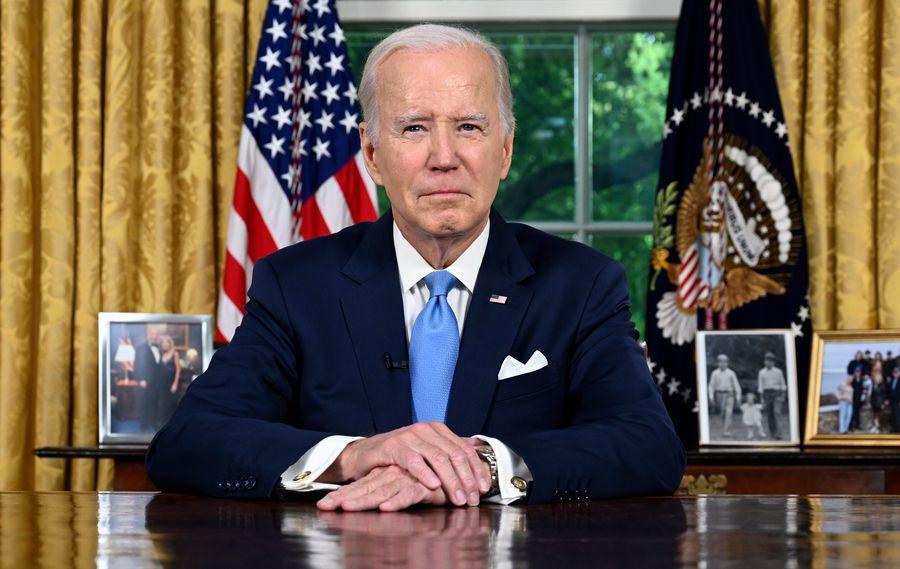
It’s doubtful many Americans know that, for the first time, President Biden addressed them from the Oval Office last Friday night – let alone watched him. Yet he saw the setting fit for a victory lap. Biden told the country a crisis had been averted after he hammered out a compromise with Republicans on spending cuts in the face of the threat of default.
After months of speculation that Republicans could blow up the economy as a result of their political dysfunction, resolution came rather quietly. Praise poured in for Dark Brandon from effusive Democrats celebrating that, once again, the president had been underestimated. David Rothkopf, columnist at The Daily Beast, tweeted that Biden “is not just having a good presidency, he’s having one that is historic in its concrete achievements and successes.”
And in the same week that a divided government staved off disaster, the White House had even more to cheer – a surprisingly positive jobs report, momentum in Ukraine, and good news from the border.
The catastrophe predicted after the end of Title 42 has not materialized at the border – and the Department of Homeland Security estimates crossings are down 70%. Legal challenges remain, but the administration's mitigation efforts have thus far proved competent.
Meanwhile, Secretary of State Antony Blinken traveled to the new NATO state of Finland and declared that “Russia is significantly worse off today than it was before its full-scale invasion of Ukraine – militarily, economically, and geopolitically.” Noting Finland’s membership in NATO, Blinken described a “sea change that would have been unthinkable a little more than a year earlier.”
Biden had cut short his trip to Asia to reach a deal with House Speaker Kevin McCarthy, but while the matter was urgent Biden remained deliberately silent throughout the negotiations. Panicked Democrats wanted him to use the bully pulpit to regain the upper hand as Republicans owned the spotlight and criticized the president for delaying the talks. While it appeared he was ceding ground to the GOP, he was in fact attempting to solidify Republican support for the bill. White House staff advised allies not to crow.
In the end, McCarthy could claim a victory too, but there was plenty of opposition and outrage on the right that Biden had ultimately prevailed. Steve Bannon said on his podcast that House Minority Leader Hakeem Jeffries is “the man,” and called McCarthy “his b*tch.” Sen. Mike Lee was also blunt. Noting that more Democrats voted for the bill than Republicans in a GOP majority, Lee speculated that more Democrats likely supported the deal but voted against it “so as not to signal too much to their Republican colleagues that they’ve been played.”
In the end, Republicans did succeed in taking the debt ceiling, and the global economy, hostage – something Biden said he would not negotiate on. But the deal foreclosed the opportunity for Republicans to do so again before next year’s election. And the spending cuts aren’t deep.
Democrats managed to preserve most of their policy gains from the Inflation Reduction Act and student loan forgiveness that Republicans had sought to repeal, and only one quarter of the new funding for the IRS was eliminated. If Republicans truly prioritize deficit reduction, targeting IRS auditing is a strange policy – preliminary estimates from the Congressional Budget Office show that the $40 billion in lost revenue resulting from the $21 billion cut to the IRS will actually end up increasing the deficit by $19 billion.
Progressives did not pick too much of a public fight with the president over the work requirements for social safety net programs that they opposed. Rep. Ro Khanna said on Twitter he had encouraged his colleagues to be “unified in praising the president's leadership,” despite the fact that many progressives voted against the final bill.
Democrats are spending six figures on an ad campaign about the debt ceiling deal that will highlight Biden’s success in beating back the “extreme demands” of “MAGA Republicans.” But voters, a majority of whom preferred spending cuts be paired with a debt ceiling increase, aren’t likely to surge with excitement for Biden’s deal-making skills. In next year’s campaign, Biden will continue to run against the GOP as protectors of the ultra-wealthy, who want to reduce the capacity of the IRS to collect their taxes. How many swing voters will notice?
While his abysmal job approval may have suffered even more with coverage of additional mayhem at the border, voters won’t credit DHS for managing the flow in what remains an untenable, broken system.
Job creation is a critical marker for every president – except Biden. In less than three years of his first term, more than 13 million new jobs have been created, nearly seven times the amount of the last three GOP administrations combined. But inflation is the focus of voters living through the steepest price increases of their lifetime, not robust hiring.
In the reverse, Biden would take the blame, or at least share some of it, for default. Escalating chaos at the border would be his fault. Poor hiring would hurt him, and he would own a quagmire in Ukraine.
According to a new CNN poll, 66% of voters agree a Biden victory would represent a “disaster” or a “setback” for America, and his approval has now reached a Trumpian low of 35%. It’s hard to believe his recent, substantive successes will register with this electorate. Americans likely know far more about him tripping over a sandbag.




RCP Today
Top stories on RealClearPolitics
The Takeaway
Polling intelligence and analysis delivered to your inbox
World News
Featuring the latest world news
Policy
Featuring the latest policy news
Support Our Mission
As part of RealClearPolitics, authors aim to provide balanced, non-partisan analysis by presenting top reporting and commentary from all sides of the political spectrum.
Trusted by policymakers and citizens alike since 2000