
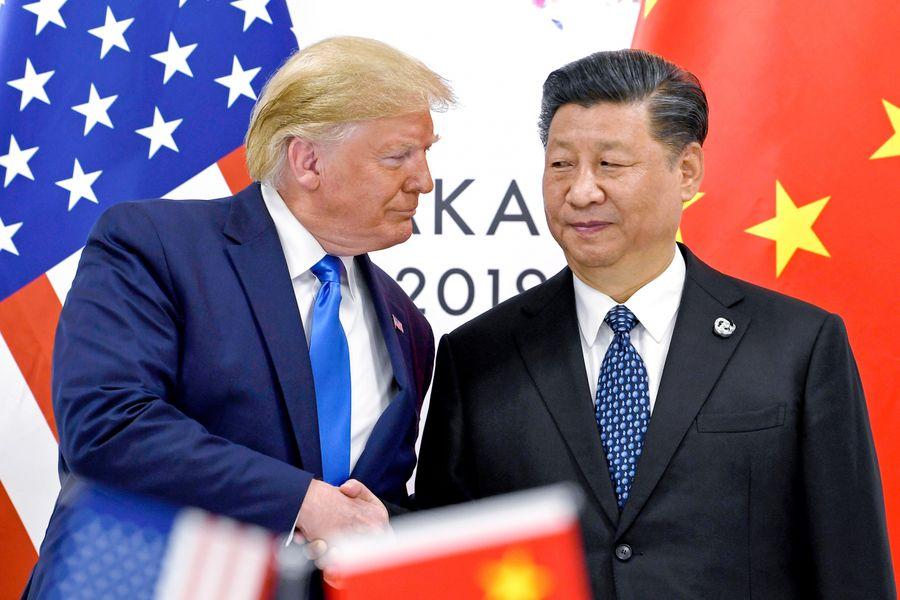
China US Trade
What Business Leaders Should Know About President Trump's Trip to Asia
COMMENTARY
Published Oct. 25, 2025 • Read time: 4m
President Trump’s upcoming trip to Asia is a reminder that his trade philosophy has not changed: America’s economic strength is the foundation of its global influence. His mission is to turn high-stakes negotiations into opportunities for American workers and investors. But as trade tensions with China ignite again, business leaders should prepare for volatility and opportunity to rise in tandem.
The White House hopes to announce a series of trade agreements during his trip to Malaysia, Korea, and Japan. U.S. Trade Representative Jamieson Greer has indicated that the administration expects to sign multiple deals during the Asia swing. The agreements would build on the broad frameworks previously negotiated with the European Union, Japan, and South Korea.
At the same time, trade tensions between Washington and Beijing are escalating. Treasury Secretary Scott Bessent called on Beijing to withdraw its threat to restrict rare-earth exports or risk global decoupling. Beijing fired back, labeling Trump’s proposed 100% tariffs a “typical example of U.S. double standards.”
The rhetoric is sharp, but both sides are also preparing for dialogue. Bessent is set to meet Chinese officials this week, and President Trump has said, “It will all be fine” between the U.S. and “highly respected” President Xi Jinping.
The Trump-Xi détente is in flux again after months of relative calm. Earlier this year, sky-high tariffs brought trade between the two countries nearly to a halt before both sides reached a fragile truce that lowered the levies. Trump has expressed optimism that he and President Xi can meet and resolve matters on the sidelines of the Asia-Pacific Economic Cooperation summit in November.
The president’s approach to trade policy remains consistent: Use tariffs and export controls as leverage to secure fair trade, protect national security, and rebuild American industry.
Below are four guideposts for business leaders as they assess the weeks ahead.
First, volatility is the new normal. Tariff threats, Chinese export restrictions, and shifting summit diplomacy will continue to move markets. Business leaders should prepare for fluctuations in equities, commodities, and currencies as both nations recalibrate their strategies.
Second, diversification is essential. Companies with supply chains heavily dependent on China are seeking regional diversification to mitigate risk. Malaysia, Vietnam, and Indonesia are positioned to benefit from U.S. trade realignment. The administration has emphasized that new trade agreements in Southeast Asia are designed to expand market access for U.S. companies and deepen economic ties with regional partners.
Third, technology and resource security define trade competition. The next phase of U.S.–China competition will focus on semiconductors, life sciences, and critical minerals. Export controls and licensing rules will continue to evolve as Washington seeks to protect key technologies and China uses its resource dominance for leverage.
Fourth, an aggressive tariff posture remains a key part of the Trump economic strategy to reindustrialize America. President Trump views tariffs and trade negotiations as tools to reinforce his domestic economic policies. Regardless of the outcomes of litigation regarding Trump’s use of the International Emergency Economic Powers Act (IEEPA), Trump will pivot to other mechanisms to bolster domestic manufacturing. Business leaders who seek trade policy refinements must engage policymakers early and align their planning with the administration’s agenda.
President Trump’s trip to Asia is more than a diplomatic mission. It is a test of whether geopolitical competition can coexist with economic pragmatism. Success would reaffirm America’s leadership in the Indo-Pacific and demonstrate that firm negotiation can accompany deal-making between the powers. If Trump and Xi fail to find common ground, global market uncertainty and the divide between the world’s two largest economies will deepen.
Business leaders should plan for both possible outcomes. The past eight years have shown that trade and industrial policy are once again central to U.S. economic strategy. Tariffs, export controls, and supply-chain incentives are enduring tools of statecraft. For global companies, success will depend on understanding how these levers are used to protect national interests.




RCP Today
Top stories on RealClearPolitics
The Takeaway
Polling intelligence and analysis delivered to your inbox
World News
Featuring the latest world news
Policy
Featuring the latest policy news
Support Our Mission
As part of RealClearPolitics, authors aim to provide balanced, non-partisan analysis by presenting top reporting and commentary from all sides of the political spectrum.
Trusted by policymakers and citizens alike since 2000