
Musk Third Parties
Can Musk's Third-Party Gambit Make an Impact?
Published July 12, 2025 • Read time: 8m
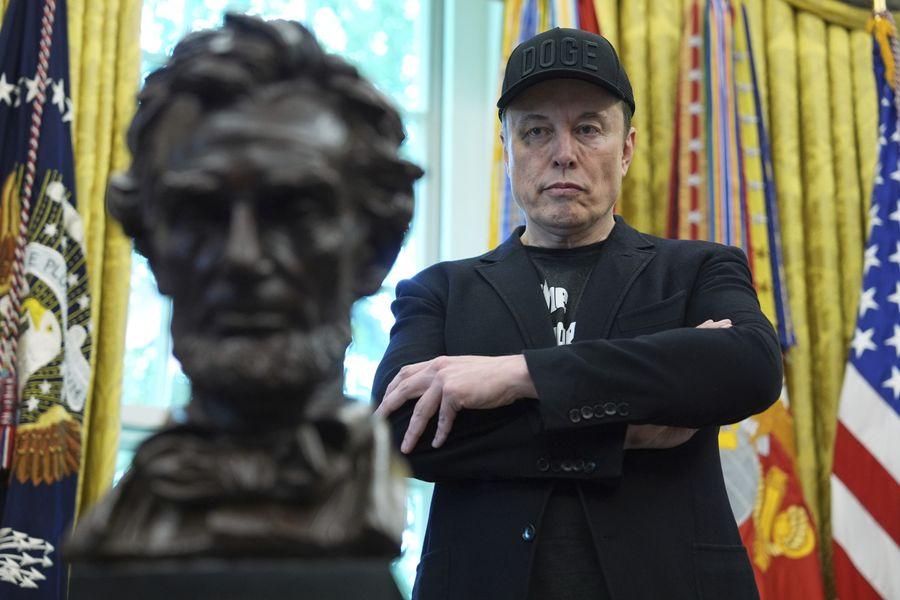
It’s easy for astute political observers to dismiss Musk’s proposed “America Party” as doomed to fail. For decades, political professionals and political scientists alike have scoffed at the notion of a nationally viable third party. The reason is obvious. It hasn’t happened since the Republican Party burst on the scene in the 1850s. Even then, Americans didn’t get a third party so much as a replacement for the Whigs.
The political structure of the United States simply makes creating a successful third party nearly impossible. As Lee Drutman, political scientist and senior fellow at New America, wrote in an open letter to Musk: “Sorry to say this, but a single third party is just a spoiler, dude.” President Trump’s pollster Jim McLaughlin dismissed the idea outright, calling Musk’s third-party idea “the ketamine talking.”
It’s true that the winner-take-all structure of American politics makes winning federal representation as a third party incredibly difficult. It’s also true that most Americans view supporting a third-party candidate at the ballot box as wasting their vote.
Still, nothing remains the same forever. That raises a question – really, three – about how seriously we should take Musk’s threats.
- As America prepares to celebrate its 250th birthday, the words of founder John Adams have resonance in today’s politics. “There is nothing which I dread so much as a division of the republic into two great parties, each arranged under its leader, and concerting measures in opposition to each other,” Adams said. “This, in my humble apprehension, is to be dreaded as the greatest political evil under our Constitution.” With the public viewing U.S. politics as being at a once-in-a-century level of polarization, gridlock, and dysfunction, is a critical mass of Americans willing to take a chance on a political party representing the great political middle?
- The two major political parties use a host of strategies designed to prevent independent candidates or third parties from competing. These ploys range from closed primaries and ballot access barriers to gerrymanders and rigged campaign financing laws – not to mention outright character assassination (see Robert F. Kennedy Jr., circa 2024). But Elon Musk has proven himself an unparalleled great disruptor of the status quo whether he was buying Twitter, upending Detroit’s automakers, or launching his own rockets. To borrow a phrase from the Barack Obama era, is Musk the change we’ve been waiting for?
- Even if Musk can’t successfully launch a third party, can he fundamentally alter the terms of political discourse in this country – particularly when it comes to the Republicans and Democrats’ addiction to deficit spending, a vice that has produced an unsustainable $36 trillion federal debt?
Recent history shows that even short-lived or losing third-party efforts can have a measurable impact. Leverage doesn’t always require ballot box victories.
In May of 2024, President Trump spoke at the Libertarian Party convention. His goal was to either make a bid for the Libertarian nomination or siphon some votes away from the Libertarian Party in exchange for delivering on some of their goals. As part of this, Trump promised to “commute the sentence of Ross Ulbricht,” a cause célèbre within libertarian circles who was sentenced in 2015 to double life imprisonment plus 40 years for charges related to founding the dark web marketplace known as the Silk Road. Freeing Ulbricht was a Libertarian Party priority for years before the convention, and neither major party had taken action on the issue. Trump pardoned Ross Ulbricht after his victory, fulfilling the promise.
In a similar example, Robert F. Kennedy’s 2024 longshot presidential campaign can ultimately be adjudged a political success. RFK Jr. leveraged the support of his campaign to make his endorsement and withdrawal from the race valuable enough to become Secretary of Health and Human Services. By using a third-party run to gain influence and strike a deal with Trump, Kennedy went from marginally relevant to holding one of the highest cabinet positions in the executive branch.
In both instances, third parties used their leverage to extract concessions from President Trump in exchange for their support. Trump, in both cases, expressed an openness to this type of deal making and held up his end of the bargain.
Is this Musk’s current plan when he discusses funding a new entity called the America Party? If so, he may not even have to enlist a slate of candidates or bankroll their campaigns to have influence. Rather, merely the threat could be enough to alter the current balance of power.
Adding to his potential leverage, Musk has proven to be relatively popular among Republicans. If the America Party was formed, it would draw its support away from the GOP to the benefit of Democrats. In a situation where a new America Party ran candidates in the 2026 midterms, it could upend incumbents in swing districts and significantly damage Republican candidates in November.
For now, at least, the America Party will only be able to influence the GOP as Musk is widely loathed among Democrats and would be hard-pressed to draw significant political backing from supporters of the DNC. (According to a Rasmussen poll, 71% of Democrats want America’s richest man to be imprisoned for his role at DOGE.)
Undeterred, Musk has indicated that the goal of his proposed party would be to represent the 80% of Americans in the “middle.” This estimate for the size of the political middle is far too high, but his larger point is certainly true. According to Gallup, 43% of Americans consider themselves political independents, compared to just 28% for each major party.
Both the Libertarian Party and Andrew Yang’s Forward Party have expressed interest in working with Musk on the creation of a third party. Musk endorsed Yang’s 2020 presidential bid, creating a path for potential cooperation. Both Musk and Yang are entrepreneurs by trade and share some tech-focused supporters. The libertarians, however, might make for a better partner. Musk’s central split with the GOP stems from national debt issues, a topic that the Libertarian Party has made a top priority for decades. Additionally, the GOP and the Libertarian Party have substantial overlapping appeal. A partnership between Musk and the Libertarian Party would further increase the pressure on the GOP to adopt Musk’s proposals regarding the budget.
History offers a clear precedent: Third-party pressure has shaped U.S. deficit policy before. Ross Perot’s 1992 presidential campaign didn’t win a single electoral vote, yet it impacted the national political scene at scale. Jim Squires, former campaign spokesperson for Perot, said in 2007 that “Perot jammed a balanced federal budget down Washington’s throat” by drawing mainstream attention to the issue in his campaign.
A 1993 article in The Harvard Crimson argued the same point: “The presence of Perot made the deficit the central issue of all the presidential debates and much of the campaign. Before his arrival on the scene, the deficit was something neither major party candidate really wanted to attack; neither had a plan.”
Perot’s attempt to impact budget policy was successful despite his failure to win the presidency. President Clinton, who defeated Perot, oversaw budget surpluses during his tenure and signed the 1997 Balanced Budget Act into law. Clinton famously declared that “the era of big government is over” in his 1996 State of the Union Address. The only issue is that it wasn’t.
After Perot’s temporary influence waned, deficit spending once again became the norm. Today, our national balance sheet looks far worse than the now-envied level of debt that Perot objected to in the 90s. While Perot’s third-party gamble did impact policy, it was a temporary victory at best.
Pundits have theorized that this may be the life cycle of all third parties. In a system where it is nearly impossible for third parties to achieve and maintain any significant power, the best they can seem to do is extract temporary concessions from one of the major parties in exchange for support. In a best-case scenario for Musk, he is able to exert enough influence on the GOP to make his definition of true fiscal restraint a lasting part of their core platform.
On the other hand, the plan could backfire against Musk. By forming the America Party, he burns bridges that he spent much of the last year creating within the GOP. If they refuse to shift their platform to accommodate him, he will lose the political allies that he has and be seen as a rival by both major parties.
If Musk had expressed deficit concerns politely to the GOP, he would likely have been ignored, and his support would have been taken for granted. In a way, he tried and largely failed to do this with his Department of Government Efficiency project. By threatening to create a significant headache of a spoiler party, he is maximizing his leverage to achieve his policy goals.
Musk’s America Party doesn’t need to exist to matter. In a system resistant to third parties, sometimes the greatest influence comes not from seizing power, but from threatening to disrupt it. Only time will tell if Musk’s gamble can deliver the enduring influence that Perot ultimately failed to secure.



RCP Today
Top stories on RealClearPolitics
The Takeaway
Polling intelligence and analysis delivered to your inbox
World News
Featuring the latest world news
Policy
Featuring the latest policy news
Support Our Mission
As part of RealClearPolitics, authors aim to provide balanced, non-partisan analysis by presenting top reporting and commentary from all sides of the political spectrum.
Trusted by policymakers and citizens alike since 2000