
Trump 'Lynching' Mentions Outpace Those of Smollett Case
Published Oct. 24, 2019 • Read time: 3m
President Trump provoked a firestorm of debate this week when he likened the impeachment hearings against him to a “lynching.” Joe Biden’s initial condemnation of the president’s remarks evolved into an apology of his own as it emerged that Biden used identical language in 1998 to describe the Clinton impeachment hearings. How have the media covered the story?
The term “lynching” has frequently been invoked by public figures to describe legal proceedings they consider unfair. In his 1991 confirmation hearing, Supreme Court Justice Clarence Thomas angrily described the accusations against him as a “high-tech lynching,” a phrase that reemerged in November 2011 to parry sexual harassment accusations against presidential candidate Herman Cain.
The timeline below shows the percentage of worldwide online news coverage monitored by the GDELT Project that mentioned the word “lynching” since January 2017. (Click on the chart for a larger view.)
Mentions of the term on Tuesday and through noon Wednesday were almost double that during the Jussie Smollett story earlier this year and more even than the April 26, 2018 opening of the memorial in Montgomery, Ala., to actual victims of lynching.
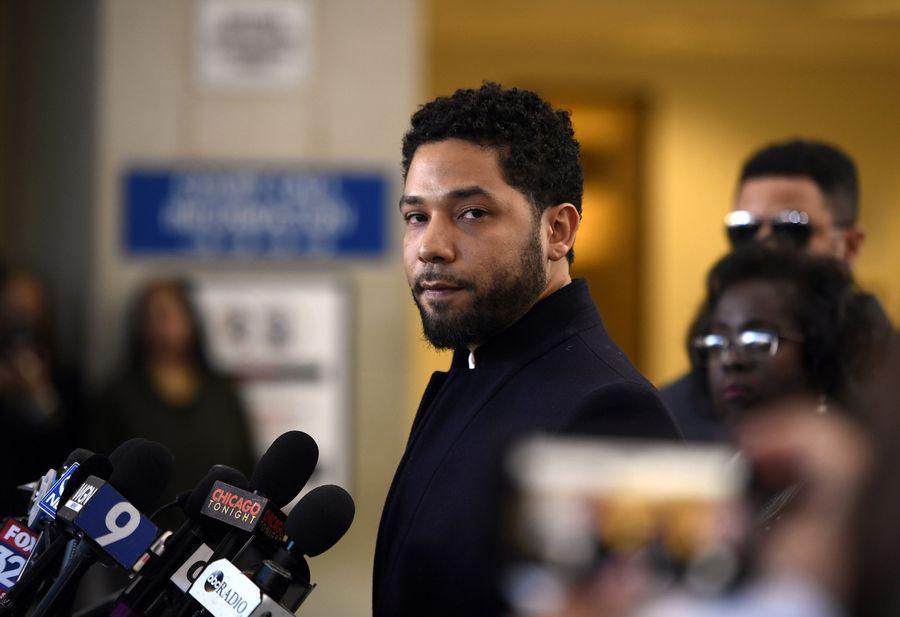
Combining mentions of “lynching” with mentions of “noose,” the timeline below shows that the Smollett story was largely framed by the media as a “noose” rather than as a “lynching.” That is understandable, given that Smollett’s initial account – eventually revealed to be a hoax – entailed an encounter more akin to a mugging than a lynching. Yet, the actor’s claim that a noose was placed around his neck by his assailants was meant, at the very least, to mimic a lynching, and some of the public commentary decrying the incident employed that language.
Yet even when considering both terms, Trump’s use of the word “lynching” still remains the second-most-covered utterance of the two terms during the past three years.
The Media Did Not Create the Trump Phenomenon
Media Malpractice 2016
Oscar Night: Hypocrisy Dressed to the Nines
Media Cowards and the Cartoon Jihad
The hourly timeline below (all times in UTC) shows how rapidly the media picked up on Trump’s tweet and how swiftly Biden’s initial condemnation and subsequent apology became an integral part of the story.
Trump’s tweet was posted at 7:52 a.m. EST (11:52AM UTC in the graph above) and swiftly took off; within hours the tweet had brought forward a broader discussion of lynching in American history. Biden’s 1998 use of the term rapidly became an integral part of the story with mentions of that invocation running at around 60% and 100% of the number of mentions of Trump’s use.
In the end, the fact that the president’s use of the term “lynching” in a tweet attracted more media attention than the coverage of the Jussie Smollett incident earlier this year, as well as the opening of a national memorial to lynching victims in 2018, reminds us just how large Trump looms over the media landscape. Joe Biden’s sudden insertion into the story adds an additional reminder of how quickly other public figures can find themselves in the media spotlight when their stories intertwine with his.
The GOP Majority Should Go Out in Glory
Daniel McCarthy • RealClearPolitics
Republican Majorities Could Return Sooner Than Expected
J.T. Young • RealClearPolitics
The Danger Before the Attack
Leslie J. Sullivan • RealClearPolitics
Jon Finer’s Old and Dangerous ‘New Approach’ to Israel
Peter Berkowitz • RealClearPolitics
The President Deserves Better
John Ullyot • RealClearPolitics
Congress Doesn’t Need Another Blame Game. It Needs To Find What’s Broken
Jarrod Bernstein • RealClearPolitics
RCP Today
Top stories on RealClearPolitics
The Takeaway
Polling intelligence and analysis delivered to your inbox
World News
Featuring the latest world news
Policy
Featuring the latest policy news
Support Our Mission
As part of RealClearPolitics, authors aim to provide balanced, non-partisan analysis by presenting top reporting and commentary from all sides of the political spectrum.
Trusted by policymakers and citizens alike since 2000