
Trump Hush Money
Jason Miller and the Modern Purveyors of Fake News
COMMENTARY
Published Oct. 19, 2026 • Read time: 10m
Join the Conversation
0Three days after hiring Katie Zacharia as White House press secretary, President Trump lashed out at the “fake news” media for its critical coverage of the beleaguered California mother of four – even while signaling that her brief stint in the administration was already coming to an end.
In remarks to the press Friday, the president made two quick points: First, he said Zacharia had been “brutalized” by the media and was treated “very, very unfairly.” Then he indicated that although she would be leaving the White House, he didn’t blame her for what had transpired. Trump said he wanted Zacharia “to have a good life,” adding, “I don’t want her to have a life like she’s had for the last three days.”
The president displayed empathy, not his most frequently expressed emotion, and he wasn’t alone. Many people in Washington, even some partisan Democrats, cringed at how quickly Zacharia’s initial euphoria at being hired had turned into such a painful public ordeal.
But Trump couldn’t help himself. He also employed his default insult in describing media coverage that didn’t reflect well on his administration – coverage that was factual, not fake. The only “fake news,” as Trump knew, was Zacharia presenting herself as an attorney even though she’d flunked the California bar and had never received a license to practice law.
RealClearPolitics covered this episode, as did nearly every national news outlet. Our story on its denouement, which led our website Saturday morning, was written and reported by Southern California-based Susan Crabtree, a veteran and award-winning national political correspondent who knows Katie Zacharia, and Carolina Lumetta, our full-time White House correspondent. Their story was rich in detail and sympathetic in tone to the departing press secretary. It quoted sources who believed she was inadequately prepped for the job along with a college friend who praised her warmly. If she read the piece, I believe she would have appreciated our reporters’ humanizing portrayal.
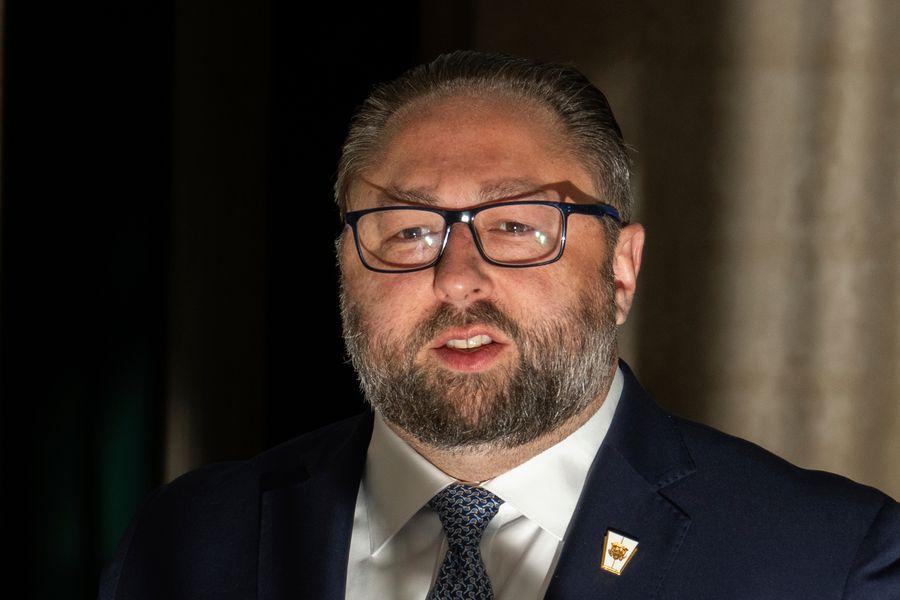
One person who didn’t appreciate it – or at least pretended not to – was Trump operative Jason Miller. On his X account, Miller posted Carolina’s photograph accompanied by insulting text. He claimed (without ever contesting any of the facts in the RCP story) that neither he nor anyone in the White House had ever heard of Carolina Lumetta and that the story was – you guessed it – “fake news.” Then, as is common in this White House, he signed off on his post with a vulgarity.
It was an odd outburst, and untrue. For starters, many people in the White House have “heard” of Carolina, including JD Vance: The vice president recognized her at a recent event as RCP’s correspondent and said so aloud. Yes, Carolina is relatively new – she started with us in the spring – but she’s in the regular in-town White House pool rotation and is present in the compound nearly every day. So it was Miller who was peddling fake news. And not for the first time.
Journalists first became aware of Miller’s penchant for dissembling 10 years ago, on Christmas Eve, when he issued a prepared statement revealing that he wouldn’t be taking the job as White House communications director, as had been previously announced.
“After spending this past week with my family, the most amount of time I have been able to spend with them since March 2015, it is clear they need to be my top priority right now,” he said. “I need to put them in front of my career.”
This wasn’t fake news per se, but it certainly was an obfuscation. What was happening contemporaneously that Yuletide season was that Miller was caught up in a sex scandal. He’d been sleeping with subordinates on the Trump campaign (one of whom he impregnated) and had lied about it to his superiors, a mess that would keep getting worse and worse and worse and would tie him up in litigation for the next decade.
Miller hasn’t exactly been publicly contrite. In 2021, when CNN’s Jake Tapper chided Miller by tweeting “pay your child support,” Miller responded. “You’re a fake news pussy, Jake. I’d like to see you say that to my face.”
Such belligerence is not atypical for those in the White House communications shop, or the president himself. Donald Trump is infamous for his name-calling of Democrats, members of the press corps, and even some Republicans. Several times during the 2024 presidential campaign Trump called Kamala Harris “a bitch.” His public-facing aides long ago gave up trying to excuse such behavior. When they aren’t simply denying it, many emulate it. Jason Miller has tried each approach.
As soon as he secured the GOP presidential nomination in March 2024, Trump began attacking President Biden relentlessly, even to the point of mimicking Biden’s stutter. When The Washington Post called him on it, Jason Miller told the Post flatly that Trump “has never mocked Joe Biden’s speech impediment.”
This was an example of fake news, easily debunked, as Trump had mocked Biden’s stutter during televised public speeches. Jake Tapper promptly called Miller a liar on television, although the CNN anchor wasn’t the only one nonplussed by Miller’s chutzpah. Republican media consultant Alice Stewart wondered aloud why he would say something so “stupid.”
“News flash: Whenever you say something in front of cameras, people can use that video against you if you try to deny saying something,” Stewart noted.
‘Fake News’ – a malady as old as mankind
In October 2017 Donald Trump patted himself on the back during a Fox News interview. “I’ve really started this whole ‘fake news’ thing,” he said. “It’s one of the greatest of all the terms I’ve come up with.”
That was a stretch on several counts. Trump certainly popularized the phrase, but Hillary Clinton used it before he did. On Dec. 8, 2016, a month after she lost the presidency to Trump, Clinton called out “fake news” as a danger that must be addressed by both political parties.
“We must stand up for our democracy,” Clinton said during a tribute to retiring Senate Democratic Leader Harry Reid. In that speech, which received extensive media coverage, Clinton cited “the epidemic of malicious fake news and false propaganda that flooded social media over the past year.”
She was referring to several unhinged Internet blitzes that emerged that year. One of them claimed, among other things, that a neighborhood pizza restaurant in Washington was a front for a child sex abuse ring run by the Clintons. Initially thought to be some sort of Russian psyop, this bizarre fabrication – along with many other fake stories – was soon traced to a small town in Macedonia where teenage hackers had figured out how to monetize the Internet by churning out clickable and malicious fables about U.S. politicians.
This was a textbook example of “fake news,” a phrase and concept that had been around for centuries, as LSU journalism professor John Maxwell Hamilton has documented. Hamilton is currently writing a book about journalism hoaxes, focusing specifically on the late 19th-century exploits of William Francis Mannix, one of the most audacious fabulists in American history. People like Mannix exist in every age – and thrive for the same reason: human nature.
“Modern technology is a force multiplier for falsehood,” Hamilton wrote. “But technology is not the root cause. The launching pad is and always has been people: people who for a variety of reasons want to mislead, and people who for a variety of reasons find falsehood more satisfying than fact. Fake news goes back much further than the computer, the television, the radio, the typewriter, or the printing press.”
It goes back, in fact, to ancient Greece – and probably earlier. One of the Ten Commandments (“Thou shalt not bear false witness against thy neighbor”) was conveyed directly from God to Moses, the implication being that slander is an age-old human instinct. It’s also a pernicious one. In modern U.S. history, “fake news” not only drove newspaper sales, but also helped start wars, prompt lynchings, and influence elections.
It also has entertained the masses, even as it drove journalistic purists (like me) crazy. A Feb. 22, 1903, Washington Post story headlined “Bogus Foreign News” noted that “the pope in Rome has died 22 times in five years.”
So that’s the classical definition of fake news. Ten years ago, Donald Trump had a different notion. He used the phrase for the first time on Dec. 10, 2016, just two days after Hillary Clinton had done so, but in an alternate context. “Reports by @CNN that I will be working on The Apprentice during my Presidency, even part time, are ridiculous & untrue – FAKE NEWS!” Trump tweeted.
The following month, days before his inauguration, Trump refused to take a question in a New York press conference from CNN reporter Jim Acosta. “You are fake news,” Trump told him. Acosta would soon become openly hostile to Trump, but at the time, the president-elect’s grievance was not personal – it was that Acosta’s network had published an unverified intelligence dossier essentially accusing Trump of being in collusion with the Kremlin.
Here’s the rub: The Russian dossier was a hoax, which should have been apparent to any seasoned journalist who desired to be fair-minded. It was the kind of fake news that would have made William Mannix proud. Worse, it was funded by the Hillary Clinton campaign and fomented by the Obama administration’s intelligence agencies. And it was all amplified by the very people who should have blown the whistle on it. Instead of exposing the hoax, however, the legacy media went along for the ride, reported on it uncritically, while bestowing book deals and Pulitzer Prizes to the most gullible reporters and newspaper outlets in the country.
This sorry chapter in U.S. journalism finally came to light – sort of, and then only in dribs and drabs. Even now, no one has ever really apologized and no one got fired, let alone went to prison. Most of the legacy media still haven’t reported on it honestly. In other words, the antipathy of the MAGA movement toward the press was well-deserved.
Feeling emboldened, and justified, Trump took to using the phrase “fake news” promiscuously. He’d cite it to refute any news coverage – no matter how factual – that reflected poorly on him and his administration. “Fake news” in Trump’s orbit came to encompass everything from low presidential job approval ratings and lousy employment statistics to any unflattering characterizations of his stewardship by anyone, including fellow Republicans.
That’s why Jason Miller and his comrades feel emboldened to gratuitously slime honest and diligent reporters like Susan Crabtree and Carolina Lumetta. They are not alone: Scapegoating the press is a bipartisan tactic. But it won’t make us quiver. At RealClearPolitics, reporters who work for me are instructed to cover the news, in the old phrase, “impartially, without fear or favor, regardless of party, sect, or interest involved.”
For our troubles, we’ve been on the receiving end of snotty slurs from Gavin Newsom’s press secretary and nasty cheap shots from The New York Times – notwithstanding the fact that the “without fear or favor” credo was formulated at the end of the 19th century by the Times’ owner.
At RCP, we’re old school, though. We won’t be cowed by bullies no matter who they work for.
Editor’s note: This essay is part of the author’s “1735 Project,” in which he writes:
On a summer day 288 years ago, John Peter Zenger was acquitted of criminal libel by a New York jury of his peers. His sensational trial helped give rise to the idea of freedom of the press on this continent, and around the world. Its lessons are relevant once again.
Read the introduction to the series here.
Support Our Mission
The Internet provides an endless stream of content. Not all of it is worth your time. That's why, every day, RealClearPolitics curates the most essential news and information—from all sides and across mediums. The links, videos, and podcasts curated here are the product of human judgment, not algorithms or AI. Please help power our mission of presenting a thoughtful, balanced public discourse through a tax-deductible donation.
Would you consider supporting us today?
Contributing to RealClear Politics through the RealClear Media Foundation supports essential initiatives that drive meaningful change.






RCP Today
Top stories on RealClearPolitics
The Takeaway
Polling intelligence and analysis delivered to your inbox
World News
Featuring the latest world news
Policy
Featuring the latest policy news
Support Our Mission
As part of RealClearPolitics, authors aim to provide balanced, non-partisan analysis by presenting top reporting and commentary from all sides of the political spectrum.
Trusted by policymakers and citizens alike since 2000