
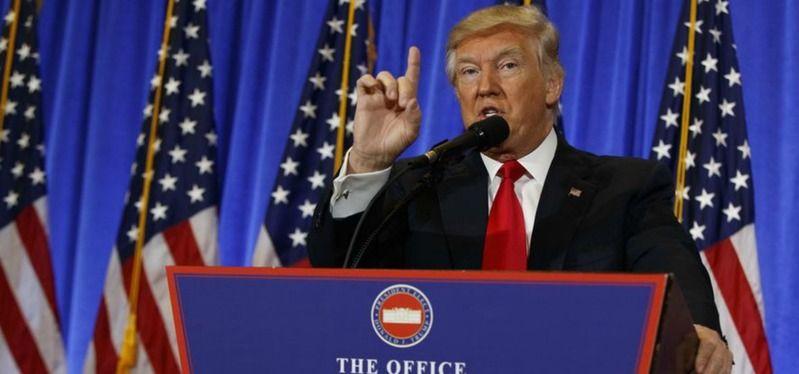
Fleischer: Press Must Be Neutral, Accurate in Trump Coverage
Published Jan. 26, 2017 • Read time: 5m
Join the Conversation
0The media needs to focus on being fair, neutral and accurate in its reporting on the Trump administration, former White House press secretary Ari Fleischer told RealClearPolitics in an interview for its new podcast, “The First 100 Days.”
Fleischer, who was spokesman for President George W. Bush from 2001-2003, stressed this role for the press in the often-fraught relationship with the White House. Marked by co-dependence, the two sides have engaged in a combative – though at times mutually flattering -- pas de deux ever since George Washington took the oath of office. Each needs the other. And neither one likes it.
The Trump team has tangled with the media from the day the business mogul announced his candidacy to become leader of the free world. He had no problem calling out the press in his campaign rallies. And his spokesman started off his time in the White House by acting in a similar manner.
On Saturday, Press Secretary Sean Spicer called reporters to the White House to lecture them on their characterization of the inauguration crowds, insisting it was “the largest audience to ever witness an inauguration, period, both in-person and around the globe.” Photos from Friday showed a smaller crowd on the National Mall compared to President Obama’s first inauguration in 2009.
And reporters had to figure out how to cover Spicer’s assertion given what the pictures clearly showed.
“Here’s my advice to the press. Number one, be neutral, be fair, be accurate. If you do that, things will fall into place. Two, just cover it and let the implications be decided by the American people. Go on to your next story,” Fleischer said.
Fleischer pointed to a 2016 Gallup poll that found the trust in the media "to report the news fully, accurately and fairly" had dropped to its lowest level in Gallup history, with only 32 percent of respondents saying they have a great deal or fair amount of confidence in the media to do its job appropriately.
The White House has also vowed to hold the press accountable for its mistakes, and vigorously criticized the erroneous report that a bust of Martin Luther King Jr. had been removed from the Oval Office. It had not.
“This is exposes one of the fundamental flaws of journalism these days,” Fleischer said. “Why didn’t the reporter, a good reporter, Zeke Miller of Time magazine, stop and ask a White House official if indeed the bust had been removed before he hit Twitter. Why did he tweet first and ask later? And this is a fundamental flaw in journalism. Reporters are under pressure from Twitter and social media to be fast and to be first,” which can result in being inaccurate.
Miller apologized for the error and Time editor Nancy Gibbs released a statement: “No news organization ever wants to make an error, but we all have procedures for handling them when we do. Zeke moved quickly to correct the record, and we stand behind him for taking responsibility for the mistake.”
Spicer worked to reset his relationship with the press corps in his first official briefing on Monday, joking with reporters and calling on many different news outlets during the question-and-answer session.
The spokesman was asked about his intentions going forward regarding his relationship with the media. And while Spicer vowed to be truthful, he also pointed to a fundamental complaint he has about coverage of the president: "The default narrative is always negative, and it's demoralizing.”
A Shorenstein Center study of press coverage for the 2016 presidential election found Spicer’s assertion to be correct.
The report noted that Democratic nominee Hillary Clinton’s “bad press” outweighed her “good press,” 64 percent to 36 percent, but Trump’s coverage was even more negative, 77 percent to 23 percent.
The study also found that: “Negative coverage was the order of the day in the general election. Not a week passed where the nominees’ coverage reached into positive territory. It peaked at 81 percent negative in mid-October, but there was not a single week where it dropped below 64 percent negative.”
Fleischer said Trump recognizes that battling with the press can be good politics, particularly in appealing to the voters who sent him to Washington.
“He’s increasingly recognized [that] if the press criticizes him, it really doesn’t matter to Republicans and it increasingly doesn’t matter to the 70 percent of Independents in this country because they just don’t trust the press. The press -- and this is tragic because we need a press people can trust -- has made itself an imperfect vehicle,” he told RCP’s podcast.
Also in the premiere episode of “The First 100 Days,” RealClearWorld Managing Editor Joel Weickgenant talks to Vaira Vike Freiberga, the former president of Latvia, about how the vulnerable NATO ally is reacting to Trump’s expected foreign policy. The interview is also part of RealClearWorld’s series on “America’s Role in the World” under the new administration.


RCP Today
Top stories on RealClearPolitics
The Takeaway
Polling intelligence and analysis delivered to your inbox
World News
Featuring the latest world news
Policy
Featuring the latest policy news
Support Our Mission
As part of RealClearPolitics, authors aim to provide balanced, non-partisan analysis by presenting top reporting and commentary from all sides of the political spectrum.
Trusted by policymakers and citizens alike since 2000