
Sen. Elizabeth Warren to Fed Chair: Step Up And Use Your "Tools" To Address Racial Disparities
Published Sept. 25, 2020
Senator Elizabeth Warren (D-MA) urged Federal Reserve Chairman Jerome Powell to step up and use the Fed's tools to address racial economic disparities at a September 24, 2020 Senate Banking Committee hearing.
Senator Elizabeth Warren: Thank you, Mr. Chairman. The pandemic and the recession it created have hit communities of color the hardest, and I've said before that I believe that we need a policy response that acknowledges that.
But it is equally important to recognize that racial inequality was amplified by the pandemic. It was not created by it. And even during periods of strong economic growth, measures of economic wellbeing for Black and Brown Americans have lagged far behind those for White Americans.
Now, Chairman Powell, the last time that you were before this committee, you told me that the persistent economic gap between Black and white Americans was an unhealthy feature of our economy. Is that still your view?
Chairman Jerome Powell: Yes. Yes, it is, Senator.
Senator Warren: Good, and I agree with you on this.
Since it was created in 1913, Congress has spelled out in law the mission of the Federal Reserve: to keep unemployment as low as possible and to make sure that we have a stable financial system. The twin goals of the Fed.
Now, you have policy tools at your disposal to accomplish those goals. For example, your decisions affect how much a family pays on a mortgage or on a car loan. Your decisions determine how quickly someone gets credit in their bank account after a paycheck is deposited.
But, as you and I have discussed before, Black and white families face very different economic realities in this country, and that means decisions from the Fed affect those families differently.
So, the Fed recently took a step in the right direction by making it clear that fulfilling its mandate means keeping interest rates low long enough to allow growth to reach all households - not just those who are doing well already. And this is especially important because historically, in a time of crisis, Black unemployment jumps faster and then takes longer to go down, and the Fed shouldn't slow economic stimulus before Black workers see real economic gains.
This updated statement interpreting your mandate is a good first step, but I believe the Fed could be doing more. And that's why I've introduced a bill with Chair Waters and Senator Gillibrand to require the Fed to use all of its tools to close racial economic gaps.
So, Mr. Chairman, when you were here three months ago, you said that the Fed would be looking for ways to use your economic tools to do more to address racial disparities. So, I want to follow up. Have you identified a comprehensive list of policies the Fed can pursue in order to make good on these commitments? What-- What is on your list, Mr. Chairman?
Chairman Powell: So, I think you see on the part-- on our part a heightened focus on economic disparities, including racial economic disparities. And you see that if you look on our website. On the front page of our website, we have all of the things we're working on in that area, and it's really become quite a broad set of efforts from data collection to research and things like that. And the reason we do that is that, you know, you give us maximum employment as the goal. And maximum employment we now view in our framework as a broad and inclusive goal which really means we're not just looking at the aggregates. We're going to look at different demographic groups and different measures.
So, I think-- I think we are doing the things that we can do with our tools to address these issues of disparate economic outcomes. I actually think that the far stronger and more important tools are not those of the Fed. Nonetheless, I think that we-- we are-- we are and should be using our tools to the extent we can. And actually, I would just close by saying that all of that is taking place under our current legislative mandate. I would-- I don't really think that you need to change the law to get us to do this. We're doing it already.
Senator Warren: I appreciate that, Mr. Chairman, that you are trying to do this. But I asked you two things. The first one is just name a couple of the specific things you're doing. What did you put on your list in the last three months.
Chairman Powell: Okay.
Senator Warren: I've heard you say that you've given focused attention.
Chairman Powell: Okay.
Senator Warren: Or attention on this. What changes did you make?
Chairman Powell: The first and most important one is the one-- sorry, the one that I mentioned which was to define our maximum employment goal as a broad and inclusive--
Senator Warren: But I mentioned that one.
Chairman Powell: Yeah.
Senator Warren: What other things?
Chairman Powell: What other things? You know, I would point to the fact that we've been outspoken at the Fed on our commitment to diversity, and to, you know, racial justice.
Senator Warren: I appreciate that, Mr. Chairman, but you now, words aren't good enough on this issue. Every economic policymaker - including the Fed - should be taking steps to confront racial economic disparities head on. And frankly, this can't just be a one-time exercise. I appreciate that you say it's important to you, but the Fed needs to focus on this issue - during your tenure and during the tenure of all future Federal Reserve Chairs. And that's why I have legislation that would require the Fed to talk about these gaps as part of its regular reporting to Congress. And my legislation would also ensure that the Fed uses everything in its toolkit to eliminate those racial disparities.
You know, there is so much more the Fed could be doing: Consider access to credit for Black borrowers when evaluating merger applications; Make sure that payments hit bank accounts faster; Use the Fed lending facilities to prevent layoffs in state and local government.
I get it. The Fed can't solve every economic problem on its own, but the Fed is not a helpless bystander. Its decisions matter, and they matter most in our vulnerable communities. And it's time for the Fed to step up on this responsibility.
Thank you, Mr. Chairman.
Latest Videos




In The News
Hassett: We Should Investigate "Partisan Patterns" In Economic Data Revisions Around Elections
Face the Nation
Victor Davis Hanson: JD Vance's Association With Tucker Carlson Will Hurt His 2028 Presidential Bid
The Daily Signal
Shapiro: Trump Is Disconnected From The American People, He Thinks He's Done Everything Beautifully
Ben Shapiro
Gallego Warns Nvidia: "Trump Is Gone In Two Years," Cooperate Or Be "Poor and Broke"
MSNBC
Raskin Questions Trump, Lutnick, Cantor Fitzgerald, Nvidia Ties: "Megacorporate State"
CNBC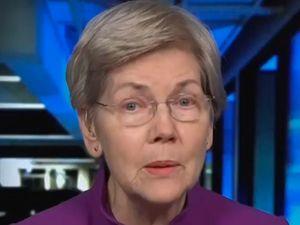
Sen. Elizabeth Warren: Jensen Huang’s Return Makes Investigating Him Even More Urgent
CNN
Most Watched
Hemingway: Dems Are Being Transparent About Plans For "Political Payback" Against Trump Allies
FOX News Channel
Obama to Jeffries: "You've Got To Figure Out How To Actually Get Sh*t Done With Your Colleagues"
White House
Kushner: Putin Wanted A Relationship With US, Then Bush Started The NATO Expansion Eastward
White House
Rubio: The Idea That The U.S., Russia, & China Should Not Engage Is Absurd
White House
Victor Davis Hanson: Mysteriously, Gas Prices See Largest Drop In 18 Years Right After Midterms
Podcasts
David Brooks: China-U.S. Power Shift Mirrors Germany-Britain Dynamic Before World War I
PBS NewsHour