Capitol Riot Investigation
November 3, January 6, and Mounting Threats to Democracy
COMMENTARY
Published June 21, 2022 • Read time: 7m
The central point of the January 6 Committee hearings was already well known, but it deserves to be underscored because it is so fundamental to the integrity of self-government. Donald Trump never accepted his defeat at the polls and actively sought to prevent Joe Biden’s certification as his successor. To put it bluntly, Trump tried to overturn our nation’s established procedures for the peaceful transfer of power.
Even though this attempt failed, it did lasting damage. Trump kept telling his supporters the election was stolen, that his putative successor had no right to the office, and that his followers should demonstrate their righteous anger by coming to Washington on the day Congress was set to certify the Electoral College results. Trump occasionally mentioned they should be peaceful, but he did so in small print. Lots of folks don’t read the small print.
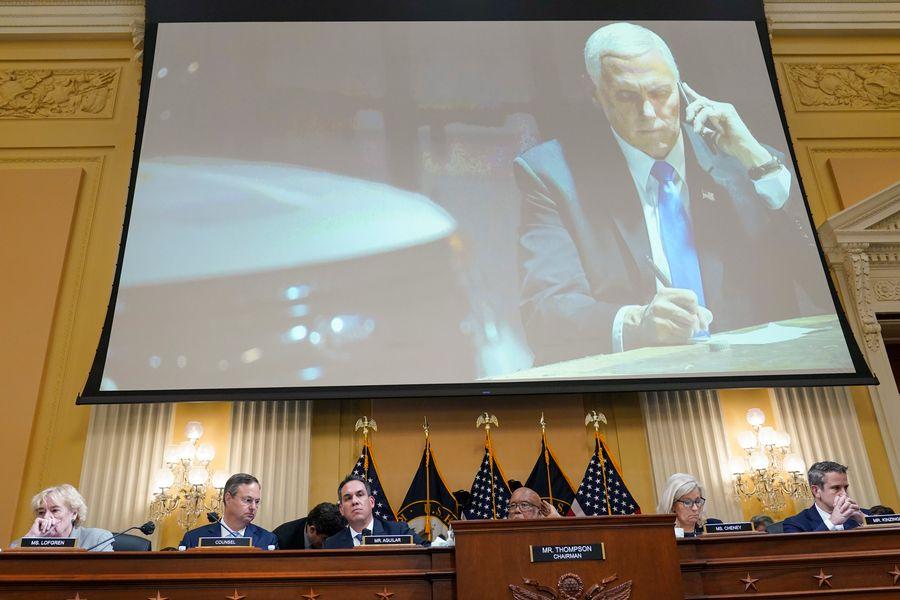
Trump repeatedly demanded that Vice President Mike Pence, who presided over the Senate that day, block that body from counting the votes. When Pence refused, Trump cursed him in private and sat mute in public as the rioting mob invaded the Capitol. The obvious danger forced the hurried evacuation of the vice president, House Speaker Nancy Pelosi, and other elected officials for their safety, and came within 40 feet of Pence’s supposedly secure location. Trump sat watching this chaos on television but never called Pence or Pelosi to check on their safety. Nor did he instruct the rioting mob to leave immediately. He took hours to give that simple, obvious direction. Trump’s inexcusable behavior threatened the orderly transition from one administration to another, the very heart of our constitutional democracy.
Culture Wars, Old and New
The Better Option
Trust -- Society Depends On It
Family Fragmentation: Can Anything Be Done?
Whether Trump or his legal adviser, John Eastman, committed crimes is an open question. Whether they knew their actions were illegal is another. Nearly all conservative jurists, led by former appellate judge Michael Luttig, have said Eastman’s arguments were legal nonsense. Eastman himself seems to have thought they would fail before a (conservative) Supreme Court. Even more important is Luttig’s conclusion that Trump’s effort to block Biden’s certification and certify himself instead would amount to a revolution. Doing so, he said, would push the country into dangerous, uncharted territory.
Fortunately, Trump’s efforts failed. Unfortunately, a large majority of Republican voters still believe his repeated assertion that the election was stolen. He is still making that assertion without providing credible evidence, much less evidence that would convince a neutral court. The former president looks back in anger and refuses to endorse any Republican candidates who don’t publicly endorse his position. Those fulminations and their acceptance by many voters threaten the legitimacy of future elections and the stability of our constitutional order.
So far, the House committee investigating Jan. 6 has presented no evidence that Trump was directly connected to the mob’s invasion of the Capitol Building. That failure is important. But what they have shown is also important. Their witnesses have made it clear that the angry crowd, assembled on the National Mall at Trump’s invitation, was incited by the president’s rousing speech and proceeded to march to the Capitol, as he implored them to do. Many stayed outside, peacefully; others surged into the building, some milling around, others determined to disrupt the constitutionally-mandated congressional vote count. The committee simply ignored the uncomfortable fact that Nancy Pelosi had been warned of the impending threats but refused to bring in the National Guard to protect the building, its people, and the vote count.
Although Trump and his apologists have repeatedly stated that the then-president did not instruct his followers to break the law, explicit instructions in such cases are not always required. Perhaps the best way to understand Trump’s culpability here is to liken it to King Henry II’s role in Thomas Becket’s murder in 1170. Becket had been Henry’s closest friend and aide before the king facilitated his appointment as Archbishop of Canterbury, England’s most important religious position. Becket infuriated the king in his new position, challenging royal policies and prerogatives. Henry saw that as a betrayal and muttered his fateful phrase, “Who will rid me of this meddlesome priest?” The king’s aides heard that as a command (or, at least, royal permission), not as a rhetorical question. They rode to Canterbury and murdered England’s highest prelate.
The analogy to Jan. 6 is this: President Trump was asking his followers, “Who will rid me of this meddlesome election certification?” To pose that question to a mob assembled by the president himself and gathered close to the U.S. Capitol and to incite them after Trump had exhausted his judicial challenges was a dangerous assault on our nation’s constitutional norms. That should trouble all Americans, whatever their party.
Grave as Trump’s violations were (and still are), he is not the only one breaking the crockery. Democratic leaders have repeatedly floated the idea of packing the Supreme Court to overwhelm the conservative majority. Most Democrats have urged the complete elimination of the Senate filibuster, which would destroy a crucial protection for the minority party and fundamentally change the Senate’s operation. Only the opposition by two steadfast Democrats, Joe Manchin and Kyrsten Sinema, has blocked that effort. Speaker Pelosi’s decisions in appointing the January 6 Committee discarded more than two centuries of precedent by precluding the minority party from selecting its own members. After Pelosi vetoed two members, the other Republicans on the committee resigned in protest, allowing Pelosi, not House Minority Leader Kevin McCarthy, to choose the minority members. The two who accepted Pelosi’s invitation, Liz Cheney and Adam Kinzinger, are virulent opponents of Trump, in step with the committee’s Democrats.
The common theme of these bipartisan violations is this: “We care much more about achieving specific outcomes than about constitutional probity. We care much more about achieving our immediate goals than about preserving long-lasting norms.” Every violation of these important norms and procedures makes the next one easier, always justified as retribution for the other side’s actions. Does anyone doubt Republicans will follow Pelosi’s precedent when they retake the House? Goodbye Adam Schiff on the House Intelligence Committee.
Pelosi’s unprecedented decision undermined another, even more fundamental norm: the defense’s right to present its best case. That right has been the crux of Anglo-Saxon jurisprudence since the Middle Ages. Its justification goes beyond basic fairness. It presumes the best way to determine the truth is a vigorous adversarial process. That process forces the prosecution (or the plaintiff in civil cases) to confront the defense’s best arguments and evidence. That logic is also the rationale for free speech in democratic societies and the tragedy of its suppression. It is a foundational principle of American law.
The House and Senate are not bound by judicial rules and procedures. Nor should they be. But neither should they ignore the deeper principle of adversarial confrontation, which gives the accused the right to present his best case, present his best evidence, and pose his hardest questions to the other side. This kind of open confrontation is the best way for voters to judge the strengths and weaknesses of both sides.
Pelosi trampled that norm when she denied Trump’s defenders the right to sit on the January 6 Committee. She didn’t just deny it to Republicans. She denied it to all Americans, who ultimately sit in judgment. Nor was it Pelosi’s first such abuse. She and her acolytes blocked Republicans from presenting their rebuttal during House impeachment hearings. Same tactics, same problem.
The Democrats’ attack on these fundamental democratic norms is no excuse for Donald Trump’s behavior, which is deeply troubling. But plotting to pack the Supreme Court and break the Senate filibuster do situate Trump’s illicit behavior in a wider context. Both parties and their leaders seem intent on crashing through our constitutional traditions to achieve their preferred outcomes. Their activist voters readily endorse these efforts and urge them to do even more. This frenzied thrust and response imperils the most important outcome of all: a stable, constitutional democracy.

Newsom Defies Voters, Juries and Lawmakers To Spare Murderers While Defending Abortion
Curtis Hill • RealClearPolitics
The Algorithmic Tilt
Frank Filingeri • RealClearPolitics
A RealClear Thanksgiving: Investing in a Better Future
David DesRosiers • RealClearPolitics
Trump’s Newsom Problem: Antagonist-in-Chief
Carolina Lumetta • RealClearPolitics
America’s Free Spirit
John Maxwell Hamilton • RealClearPolitics
The GOP Majority Should Go Out in Glory
Daniel McCarthy • RealClearPolitics
RCP Today
Top stories on RealClearPolitics
The Takeaway
Polling intelligence and analysis delivered to your inbox
World News
Featuring the latest world news
Policy
Featuring the latest policy news
Support Our Mission
As part of RealClearPolitics, authors aim to provide balanced, non-partisan analysis by presenting top reporting and commentary from all sides of the political spectrum.
Trusted by policymakers and citizens alike since 2000