
2025 Election
A Bad Night for Republicans, With No Bright Spots
Published Nov. 6, 2025 • Read time: 4m
Join the Conversation
0When assessing election results, the analyses that hold up over time are the ones that avoid the hair-on-fire takes that dominate the news cycle in the immediate aftermath. That’s because elections are pretty complex and rarely lend themselves to black-and-white interpretations. Tuesday, however, was not one of those days. Here are a few key takeaways:
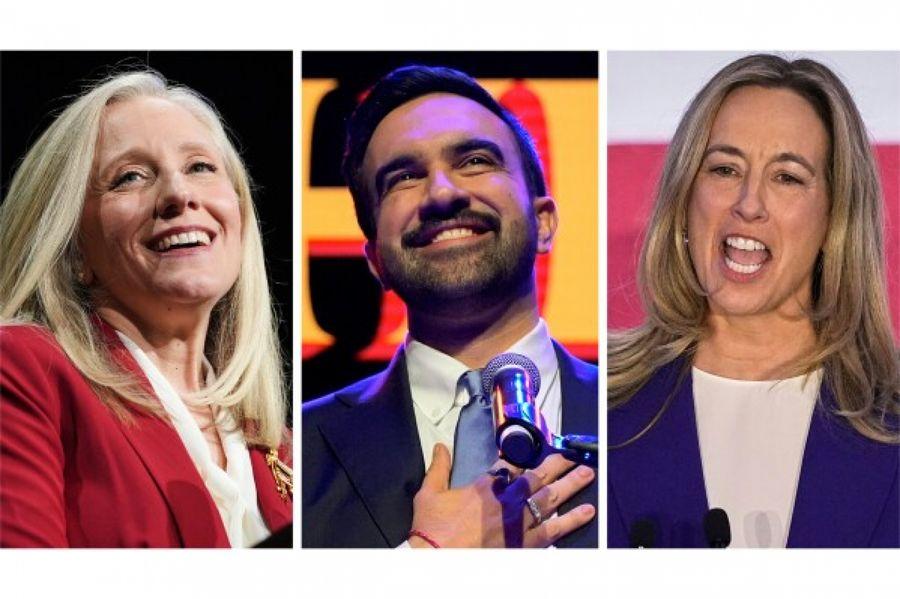
- It was a debacle for Republicans. The GOP went into the night with reasonably upbeat expectations. Polls showed a close race in New Jersey, and it looked as though Republicans might keep the attorney general’s office in Virginia. Neither outcome happened. Mikie Sherrill absolutely trounced Jack Ciattarelli. Final tallies aren’t yet in, but the margin easily exceeded double digits. In Virginia, the Democratic ticket swept. Democrats also won a statewide office in Georgia and held Supreme Court seats in Pennsylvania easily. Zohran Mamdani was elected mayor of New York City, exceeding 50% of the vote and becoming the first NYC mayor to amass 1 million votes since John Lindsay ran in 1969 – 22 years before Mamdani was born.
It’s hard to see what good news there could possibly be for Republicans here. Incoming Virginia governor Abigail Spanberger won by 15 points, while even Jay Jones, the problematic attorney general candidate (see below) won by around 6 points, similar to the Democrats’ margins in 2017. In New Jersey Sherrill nearly equaled Gov. Phil Murphy’s 2017 margin. Counties like Bergen and Passaic, where Donald Trump made big gains among minorities last year, swung back toward Democrats.
- It’s an open question in our current polarized environment how much candidate quality or candidate radicalism matters, if at all. Virginia is a pretty good test case. Abigail Spanberger is basically a generic Democrat, while her opponent, Lt. Gov. Winsome Earle-Sears is a social conservative out of touch with the state’s pro-choice leanings and simultaneously not a MAGA darling. In the attorney general race, incumbent Jason Miyares is a pretty normal Republican running against a guy who fantasized about seeing his opponent’s kids die. Spanberger got 57.2% of the vote. Jones won 52.8%. So, a complete reversal of candidate quality is worth about 4.4 percentage points. That’s bracing.
- Democrats’ chances in the Senate improved. The Democratic path to control of the Senate is still complicated to say the least: Hold all of their seats, pick up North Carolina and Maine. Then it gets tough. If Sherrod Brown can squeak past Jon Husted in Ohio, that’s a 50-50 Senate. Then you’re looking at Alaska or Texas. Texas may be an easier lift if Attorney General Ken Paxton wins the Republican Senate primary. Regardless, with the performance they put on last night, you have to adjust your priors on a Senate takeover at least somewhat. The likelihood was in single digits before; now I’d probably put a 33% chance on it happening.
- Americans don’t do mandates. Donald Trump’s claim to a sweeping mandate was always dubious. He won by a little less than two points and failed to clear 50% of the vote. But I’ve always been fond of political scientist E.E. Schattschneider’s view of things: “The people are a sovereign whose vocabulary is limited to ‘yes’ or ‘no.’” We read all sorts of things into election results because it’s our job. But “the people” only say “I prefer this candidate” or “I like that one.” They don’t really get to explain why, nor in most elections do they get to rank preferences.
All U.S. presidents enter office with the same constraints when it comes to their legislative agendas: To accomplish what 217 members of the House and 50 (or 60, depending) senators will sign off on. Moreover, as a part of the genius of the Madisonian framework, the American people get a check-in 22 months after that president is inaugurated, along with a diagnostic 10 months after the election. We just passed that diagnostic, and it looks pretty bleak for Donald Trump and Republicans. A year is an eternity in politics, but things will have to change to avoid a similarly bleak 2026.
Support Our Mission
The Internet provides an endless stream of content. Not all of it is worth your time. That's why, every day, RealClearPolitics curates the most essential news and information—from all sides and across mediums. The links, videos, and podcasts curated here are the product of human judgment, not algorithms or AI. Please help power our mission of presenting a thoughtful, balanced public discourse through a tax-deductible donation.
Would you consider supporting us today?
Contributing to RealClear Politics through the RealClear Media Foundation supports essential initiatives that drive meaningful change.




RCP Today
Top stories on RealClearPolitics
The Takeaway
Polling intelligence and analysis delivered to your inbox
World News
Featuring the latest world news
Policy
Featuring the latest policy news
Support Our Mission
As part of RealClearPolitics, authors aim to provide balanced, non-partisan analysis by presenting top reporting and commentary from all sides of the political spectrum.
Trusted by policymakers and citizens alike since 2000