Why Romney's "Rich" Gaffes Will Cost Him
Published Feb. 3, 2012 • Read time: 11m
Join the Conversation
0It’s easy to collect Mitt Romney's "rich" remarks into a highlight reel. Have a few laughs. Sure, we ask, what's the guy thinking? We note that presidential races require your A-game. But then it's tempting to shrug. And say he's still on track to win the GOP nomination. That the general election will turn on the economy. Oh, those silly pundits. How they do obsess over every sound bite.
But listen to Rush Limbaugh on Romney: “He comes across as the prototypical rich Republican.” And one begins to hear why Romney’s gaffes are no joke.
It’s commonly said that this primary has left Romney worse for wear. It has. But not because of Newt Gingrich. It’s not a matter of backfiring attack advertising. It’s not even that, predictably, more Americans see Romney in an unfavorable light as the primary heats up. It’s his words. Romney’s wounds are self-inflicted. And, if he wins the nomination, we’ll see why.
Presidential campaigns are a battle of perceptions. Not ideas. Big ideas help. But presidents are not made by policy proposals. You may have read wonk-tastic hyperbole about the making of the president. That it’s only or “always the economy, stupid.” It isn’t, really. Yet the Great Recession has not gone away. The economy dominates this campaign. The campaign, however, counts. The media exaggerates how much. But some events do matter.
Gaffes matter if they affirm the worst perception of a candidate or party. Most presidential campaigns inevitably sink into the mud of battling stereotypes. It never helps, however, to arm the opposition.
Political scientists call it “issue ownership.” The public perceives certain issues as the wheelhouse of each party. Perceptions fluctuate but endure. And so do the stereotypes associated with them. Democrats are seen as culturally elitist. Republicans are seen as economically elitist. Presidential candidates cannot control the stereotypes they inherit. But they can control how they undercut or underscore them.
Romney has underscored. It’s not any one comment. It’s the collective narrative they cement. Political junkies are familiar with the gaffes. But the larger public is not. Democrats will seek to change that if Romney is their opponent.
Picture the Democrats’ possible frames: Romney’s out of touch; the good Mormon as Gordon Gekko; Mitt’s Street vs. Main Street; Richie Rich Romney; Moneybags Mitt. The caricatures would be silly if they didn’t evoke serious issues.
Romney will be hammered as the personification of the GOP’s stereotype: the cold Republican who cares only about the rich. What Limbaugh called “prototypical.” Romney wants to run as the businessman who can turn the economy around. But does he increasingly look like the guy who hires you or fires you?
On Those Money Gaffes
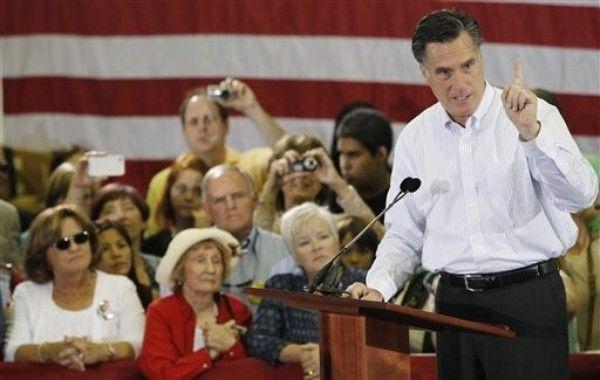
Rewind. It’s early summer. There Romney is seated with jobless Floridians. It’s a typical I-feel-your-pain photo-op. But then came his tin-ear quip, “I’m also unemployed.”
Late summer in Iowa. Romney’s arguing that “corporations are people.” His point: People own companies. But how you make the case impacts whether you win the case.
It’s a mid-December debate. Rick Perry’s hammering Romney’s health care plan. And what was Romney’s rejoinder? “Rick, I’ll tell you what -- 10,000 bucks?” Romney presses, “$10,000 bet?” That's a fifth of America’s median household income.
New Hampshire in early January. Romney is on stage. He’s telling people that he has lived outside the Washington bubble. You see, he may have grown up wealthy, become a millionaire about 200 times over, but he too has “wondered whether I was going to get a pink slip” in the past.
Speaking of bubbles. Romney is at a press conference in mid-January. Reporter tosses the foreseeable question. What’s your income tax rate? Romney waffles. Then he says about 15 percent. Oh, he almost forgot, he earned money from speeches. But it’s “not very much,” he says. The amount is $374,000.
Sometimes context fully explains the comment. "I like being able to fire people," Romney said in January. But hold on. What did he entirely say? That he likes firing people who provide bad work. It was a solid free-market point. But, again, Romney chose poor words to make his point.
Then came Wednesday morning. He’s fresh off his Florida landslide. And Romney steps on his momentum. He tells CNN that he’s “not concerned about the very poor.” They have safety nets, he explained. Later, on his flight between Florida and Minnesota, Romney tried to contextualize. He is asked about the quote. "No no no no no no no no," Romney reportedly says. "You’ve got to take the whole sentence.”
But, as I wrote last cycle, context is difficult after the gaffe. Obama’s great gaffe in 2008 was the polar opposite of Romney’s. Yet both have the feel of Michael Kinsley’s rule: “A gaffe is when a politician tells the truth.” Or the truth, as he sees it.
Obama’s characterization of small-town America as “bitter” substantiated the worst image of Democrats. It became the linchpin for the cultural populism, circa 2008, that was threaded through Sarah Palin’s acceptance speech. Most analysts ignore it. But, despite every advantage, Obama was behind in national polling and retreating from reddish swing states at the time. Then the market crashed. It airbrushed Obama’s mistakes and bore his majority. Romney cannot rely on the rare event that suspends the laws of political physics.
Romney also has a pedestal problem. His first television ad of this campaign quoted Obama saying, “If we keep talking about the economy, we’re going to lose." Obama was actually paraphrasing a McCain aide back in 2008. But Romney’s team used the quote. It fit their strategic frame.
Romney can’t cry foul. And he will want to if he wins the nomination. The Democratic ads will pound him. But as Romney recently said of Gingrich’s complaints, politics “ain’t bean bag.” Oh, how the past informs the present.
The GOP Context
In 1952 and 1960, Gallup asked Americans which party best “serves the interests” of five sectors: business and professional people, white-collar workers, farmers, skilled workers and unskilled workers. In both years, Americans thought Republicans best represented the interests of only one sector: business and professional people.
The FDR coalition is long gone. Democrats have lost significant clout with the middle and working class in recent decades. But Republicans still retain their economically elitist image.
Nearly two-thirds of Americans said they are “worried that the Republican plan for reducing the budget deficit” will “protect the rich at the expense of everyone else,” according to an April Gallup poll. And among them, nearly three out of four self-described moderates agreed.
In September, ABC-Washington Post pollsters asked whether Obama or congressional Republicans “care more about protecting the economic interests” of “wealthy Americans.” Seven out of 10 respondents said Republicans. A month later, CBS-New York Times pollsters asked whether congressional Republican policies favor the rich, the middle class, the poor or treat everyone equally? Again, seven out of 10 Americans said Republican policies “favor the rich.”
This helps explain why the Pew Research Center has found, in polling from 1988 to 2011, that more Americans consistently say -- often by margins upwards of 20 percentage points -- that Democrats are “more concerned with the needs of people like me” than Republicans. Pew bluntly asked, in 2008, whether the Republican Party “favors the rich.” Yes, said six out of 10 Americans. And the same share of independents agreed.
Romney is framing himself as a near perfect Democratic foil. Republicans usually attempt the opposite.
Today, the most salient political issue is not economic inequality but the sense of unequal opportunity. As Pew’s Andy Kohut noted, Americans have said for decades that the “rich are getting richer and the poor are getting poorer.” Today, six in 10 Americans say their nation’s economic system favors the wealthy. And they have their reasons. The United States is no longer ranked among the best nations to improve your economic status.
A majority of Americans do not see the issue through either party’s lens, however. It’s not Big Government vs. Big Business to them. They believe both institutions make it harder for them to realize success.
Six in 10 Americans want Uncle Sam to reduce income equality, according to ABC-Washington Post polling. But they see the issue in terms of government’s cozy relationship with the rich. Last year, Pew asked Americans what economic classes they believe government helps a “great deal.” Less than a 10th said the middle class or “people like them.” Less than a fifth said the poor. A majority said the rich.
It’s Also About Romney
In his first two years in office, Obama made the mistake of appearing on the wrong side of the two antagonists of the day. But Romney’s problem is that he seemingly personifies the marriage of Big Government and Big Business. Romney’s gaffes solidify not merely Republican problems but Romney’s personal problems.
Obama is a flawed populist hero. But Romney increasingly appears to be the polar opposite. He fits the part of populist antihero more than any Republican front-runner in generations.
Which brings us to Bain Capital. Romney is a co-founder of the high-finance firm. He has made that experience the keystone of his campaign. Romney talks about the jobs he helped create through his investments. And there are great success stories, like Staples. But he excludes the jobs lost through his investments due to restructuring or failure. This is why Romney’s claim that he “helped create over 100,000 new jobs” earned three Pinocchios -- meaning “significant factual error and/or obvious contradictions” -- from the Washington Post’s fact checker.
Democrats need only quote Rick Perry to mount their attack. On Romney’s executive experience with Bain, Perry said, “There’s a real difference between venture capitalism and vulture capitalism.” Is that criticism in bounds? Sarah Palin said yes.
It’s not a good time to run as a big man of high finance. Americans fault government more than Wall Street for this recession. Yet about three in four Americans still say financial institutions deserve a “great deal” or a “fair amount” of the blame, according to Gallup.
Obama’s populism has always been undercut by his fundraising on Wall Street. But the latest financial disclosers indicate Romney is fast becoming Wall Street’s choice. It’s just one more nail in the image.
Neither Obama nor Romney wields the common touch. Romney’s problem is not his wealth alone (think FDR or JFK). Americans esteem the self-made man. Presidential candidates need not be that. But they cannot appear divorced from the concerns of the everyman (FDR and JFK did not).
Romney not only lacks the common touch. His gaffes encourage the caricature of a rich man who is out of touch.
The Repercussions
Romney’s gaffes, like Obama’s, largely concern Americans outside his base. But there could be primary repercussions. The day of Romney’s “poor” phrasing, he told reporters that he supported automatic increases in the federal minimum wage. That’s general election damage control. It’s not going to win over the right.
More importantly, the gaffes undermine the centerpiece of Romney’s primary campaign. That is, electability. He seems to habitually shoot himself in the foot when he shoots from the hip. Presidential candidates cannot. And Romney’s been running for at least five years. Why might it not matter? See Romney’s flawed competition.
Most importantly, the gaffes undercut Romney’s general election strategy. Consider what his campaign’s senior strategist, Stuart Stevens, told The New York Times last year: “Our whole campaign is premised on the idea that this is a referendum on Obama, the economy is a disaster and Obama is uniquely blocked from being able to talk about jobs.”
The bane of that strategy was always Bain. The son does not have the father’s story. George Romney came from nothing. He went on to lead American Motors Corp., an icon of the mid-century middle class. He brought that biography to his presidential campaign. But, in the end, a gaffe helped undermine the father as well.
Romney reportedly never got over his father’s mistake. At Harvard Business School, Romney carried his father’s old briefcase. And, with each week, he seems to know his father’s burdens as well.
Romney seeks a referendum on the struggling president. But it’s now difficult to imagine a race against Romney where Democrats don’t convince independents to critically consider the alternative as well. The campaign may become a choice between “out of touch” and “out of touch.” But it did not have to be.
RCP Today
Top stories on RealClearPolitics
The Takeaway
Polling intelligence and analysis delivered to your inbox
World News
Featuring the latest world news
Policy
Featuring the latest policy news
Support Our Mission
As part of RealClearPolitics, authors aim to provide balanced, non-partisan analysis by presenting top reporting and commentary from all sides of the political spectrum.
Trusted by policymakers and citizens alike since 2000